
One of the most common questions guests ask before booking a luxury yacht charter at Lake of the Ozarks is about water depth. It is a smart question. A large yacht is not like a small fishing boat. It sits deeper in the water. It has specific clearance requirements. It cannot go everywhere on the lake safely.
Understanding water depth requirements helps you plan a better charter. It helps you understand why your captain makes certain routing decisions. It also gives you confidence that your vessel is always in safe, appropriate water throughout your trip.
This guide covers everything you need to know. We explain what draft means, how deep the lake actually is, which areas are safe for large yachts, and how experienced captains navigate Lake of the Ozarks with precision and safety.
What Is Draft and Why Does It Matter for Luxury Yachts
Before talking about depth, you need to understand draft. Draft is the measurement of how far a vessel extends below the waterline. It is the distance between the surface of the water and the lowest point of the boat’s hull.
A small pontoon boat might have a draft of just one to two feet. A mid-size cabin cruiser typically has a draft of two to three feet. A major luxury yacht in the 45 to 65-foot range often has a draft of three to five feet. Some larger vessels go deeper than that. The draft determines the minimum water depth the vessel needs to float and move safely.
If the water depth is less than the vessel’s draft, the boat will run aground. Running aground means the hull hits the bottom. This can cause serious damage to the vessel. It can also create a safety risk for everyone on board. This is why draft is one of the most important specifications for any yacht operating on an inland lake.
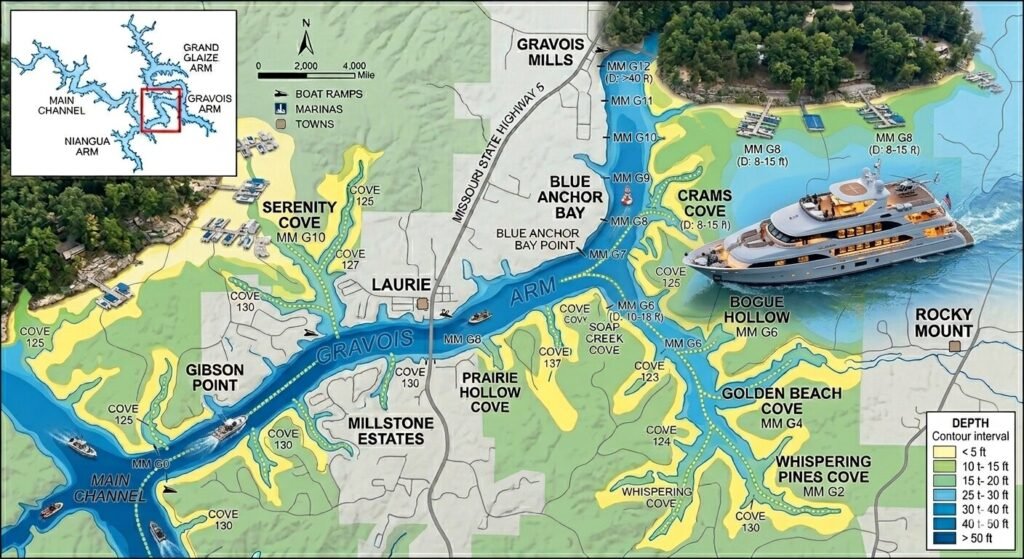
At Lake of the Ozarks, the water depth varies enormously from one area to another. The main channel near Bagnell Dam reaches depths of over 100 feet in some spots. But move toward a shallow cove or upper arm, and the depth can drop to just three or four feet near the shoreline. Knowing the difference between these areas is essential for safe luxury yacht navigation.
How Deep Is Lake of the Ozarks in Different Areas
Lake of the Ozarks has a very wide range of depths. This is partly because it was created by flooding a river valley. River valleys are naturally deep in the center and shallower along the sides and upstream reaches.
The deepest water is near Bagnell Dam at mile marker 0. The lake can reach depths of 100 feet or more in this zone. This area is excellent for large vessel navigation. There is no risk of grounding in the main channel near the dam. The water is consistently deep and well-charted.
From mile marker 0 to approximately mile marker 30, the main channel stays deep. Average depths in this zone range from 40 to 80 feet in the center. This is the most commercially active stretch of the lake. Marinas, boat docks, and waterfront businesses line both shores. The deep main channel makes it accessible to larger vessels throughout the season.
Between mile marker 30 and mile marker 60, the average depth begins to decrease gradually. The channel is still navigable for luxury yachts in most areas. Depths in the main channel typically range from 20 to 50 feet. However, as you move off the channel toward coves and secondary inlets, the depth drops more quickly. Careful navigation is required when deviating from the main channel in this stretch.
Above mile marker 60 in the upper lake and upper arms, depth becomes more variable. The main channel may still hold 15 to 30 feet of water. But coves and side channels can become quite shallow very quickly. Some upper-arm inlets have depths of only four to six feet even in their center sections. This limits which vessels can safely access these areas.
The Niangua Arm and Osage Arm have their own depth profiles. The upper portions of both arms tend to be shallower than the main body of the lake. Experienced captains who regularly navigate these areas know where the deep pockets are and where the bottom rises unexpectedly.
Draft Requirements for Common Luxury Yacht Sizes
Different yacht sizes have different draft requirements. Understanding these numbers helps you appreciate the level of planning your captain puts into every charter route.
A 40 to 45-foot luxury yacht typically has a draft of approximately 3 to 3.5 feet. This vessel needs a minimum water depth of around 4 to 5 feet to operate safely, leaving adequate clearance below the keel. This size can access most of the main channel and many coves throughout the lake with proper navigation.
A 50-foot luxury yacht generally has a draft of 3.5 to 4.5 feet. This is one of the most popular sizes for group charters at Lake of the Ozarks. It needs a consistent minimum depth of 5 to 6 feet in the areas it navigates. The main channel and the lower to mid-lake zones accommodate this vessel size very comfortably. Some upper coves may be off-limits depending on seasonal water levels.
A 60 to 65-foot yacht carries a deeper draft. These vessels typically require 5 to 7 feet of water minimum, and some may need even more depending on their hull design. At this size, the vessel is limited to the deeper sections of the lake. The main channel from the dam up through the mid-lake region is accessible. Remote upper arms and narrow coves are generally not suitable for a vessel of this size.
It is also important to note that water levels at Lake of the Ozarks fluctuate seasonally. The Army Corps of Engineers and Ameren Missouri manage the lake’s water level. In summer, the lake is typically held at or near full pool. In winter and early spring, levels may be drawn down by several feet for flood control. A cove that has eight feet of water in July might have only five feet in October. Your captain always accounts for current water levels when planning your route.
Areas of Lake of the Ozarks Safe for Major Luxury Yachts
Knowing which areas comfortably accommodate major luxury yachts helps you plan a better charter experience. Some zones are consistently deep and accessible. Others require caution or should be avoided entirely with larger vessels.
The main channel from mile marker 0 to mile marker 55 is the most reliably deep stretch of the lake. This entire zone is suitable for luxury yachts up to 65 feet in normal water conditions. Your captain can navigate this stretch confidently. The channel is well-marked, regularly used by large vessels, and free of most underwater hazards in the central lane.
The Gravois Arm is one of the more accessible side arms for larger yachts. The entrance is wide and deep. The main body of the arm holds adequate depth for 50-foot yachts through most of its length. As you push deeper into the smaller coves branching off the arm, depth decreases. An experienced captain knows exactly where to anchor and where to stop approaching.
Hurricane Deck area coves around mile marker 98 to 100 offer some deep water pockets that accommodate mid-size luxury yachts. However, navigation in this area requires local knowledge. Some coves are deep and protected. Others become shallow quickly. A captain who knows this part of the lake well can take your group to beautiful, deep-water spots that most visitors never find.
The area around Osage Beach and the lower lake marinas near mile marker 15 to 25 is very accessible for large vessels. This stretch has wide, deep water. Multiple marinas in this zone have slips large enough to accommodate luxury yachts. Fuel, pump-out services, and amenities are readily available here.
Areas that are generally not suitable for major luxury yachts include the far upper reaches of the Niangua Arm, narrow secondary coves in the upper Osage Arm, and shallow tributary inlets throughout the lake. These areas may be beautiful and peaceful, but they simply do not have the water depth needed to safely host a 50 or 60-foot vessel.
How Captains Navigate Depth Safely on Lake of the Ozarks
An experienced USCG certified captain does not guess about water depth. They use a combination of tools, charts, and local knowledge to navigate safely at all times.
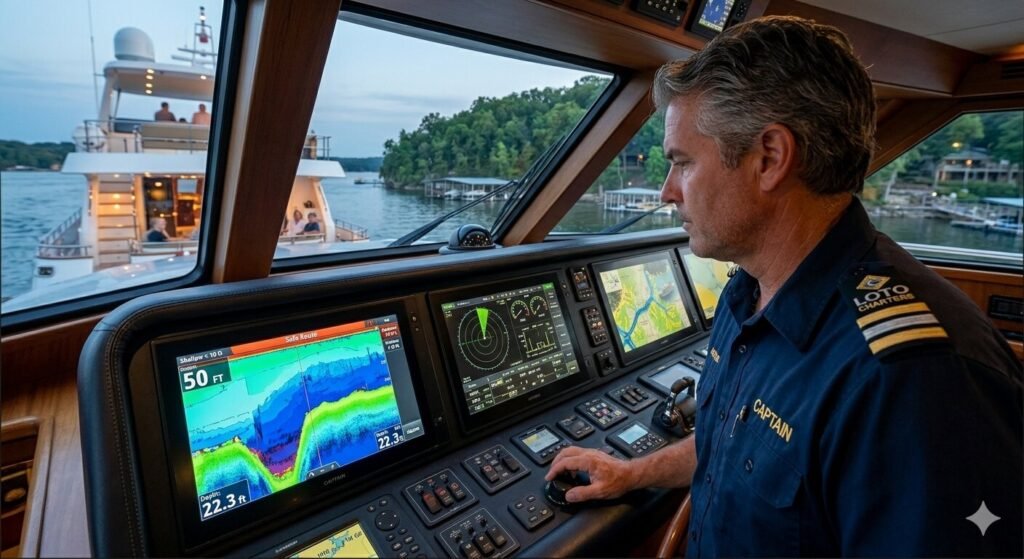
The primary tool is the depth finder, also called a fish finder or sonar unit. This instrument sends sound waves downward from the hull and measures the time it takes for them to bounce back. The result is a real-time reading of the water depth directly below the vessel. Modern depth finders display this information continuously on a screen. Your captain monitors it constantly while underway and pays close attention whenever the vessel moves toward shallower water.
Nautical charts are the second key tool. Lake of the Ozarks has detailed charts that show depth information across the entire lake. These charts are updated periodically to reflect changes in the lake bottom and sediment deposits. Professional captains study these charts thoroughly and use digital versions on chart plotters mounted at the helm. A chart plotter overlays the vessel’s GPS position onto the depth map in real time. The captain can see exactly where the boat is relative to shallow zones at all times.
Local knowledge is arguably the most valuable asset of all. A captain who has spent years navigating Lake of the Ozarks knows the lake far better than any chart can show. They know which coves silted up after recent rains. They know which channel markers shifted over the winter. They know the exact spot where a submerged rock lies just below the surface in one particular cove. This knowledge comes from experience. It cannot be downloaded or purchased. It is the reason hiring a professional captain matters so much for a luxury charter.
Captains also pay close attention to seasonal water level reports. Ameren Missouri publishes regular updates on the lake’s current pool level. A drop of even two feet changes the navigable areas of the lake significantly. Before any charter, a professional captain checks the current level and adjusts the planned route accordingly.
What Guests Should Know About Depth and Charter Planning
You do not need to monitor the depth finder yourself during your charter. That is your captain’s job. But understanding a few basics will make your charter communication much more effective.
When you discuss your preferred destinations with your captain before the trip, mention if you want to visit any specific coves or upper lake areas. Your captain will immediately know whether those areas are suitable for your vessel size. If a spot you want to visit is too shallow, they will suggest an equally beautiful alternative nearby.
Do not be surprised if your captain adjusts the route on the day of your charter. Water conditions change. Seasonal drawdowns affect depth. A cove that was accessible on a charter last month might be a few inches shallower today. Your captain makes these calls in real time based on what they see on the depth finder and what they know about current lake levels.
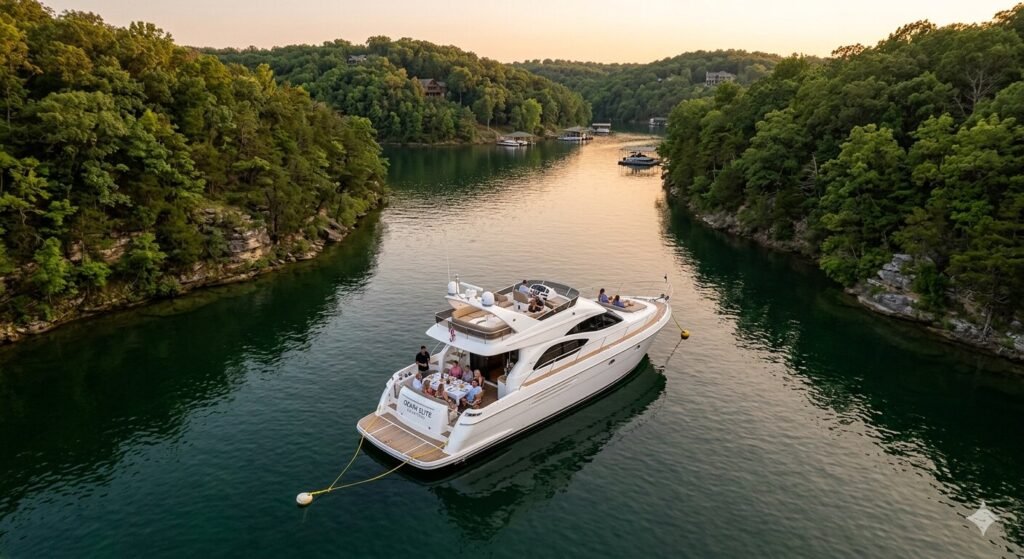
Anchoring spots are also chosen based on depth. Anchoring in water that is too shallow can put the hull at risk, especially as the tide in a reservoir shifts slightly with wind and water movement. Anchoring in extremely deep water creates its own challenges with anchor scope and holding. The ideal anchoring depth for a large yacht is typically between 10 and 25 feet. Your captain will always choose an anchoring spot within this range when possible.
Finally, if you are planning a charter that includes swimming stops, depth matters for safety as well. Jumping from the deck of a yacht into water that is too shallow is dangerous. Your captain will always verify that the swim stop location has sufficient depth before allowing guests to enter the water. This is a standard safety practice on every Yacht Rental Lake Ozark charter.
Frequently Asked Questions
How deep is Lake of the Ozarks near Bagnell Dam?
The lake reaches depths of over 100 feet near Bagnell Dam at mile marker 0. This is the deepest section of the entire lake and is easily navigable by luxury yachts of all sizes.
What is the minimum water depth needed for a 50-foot luxury yacht?
A 50-foot luxury yacht typically has a draft of 3.5 to 4.5 feet. It needs a minimum water depth of approximately 5 to 6 feet for safe navigation, with additional clearance recommended for comfort and safety.
Are all coves at Lake of the Ozarks deep enough for luxury yachts?
No. Many coves, especially in the upper arms and narrow inlets, are too shallow for large vessels. Your captain uses depth finders, charts, and local knowledge to identify which coves are suitable for your specific yacht.
Does the water level at Lake of the Ozarks change throughout the year?
Yes. Ameren Missouri manages the lake level. The lake is typically at full pool in summer. Levels may be drawn down by several feet in fall and winter for flood control purposes. These changes affect which areas are accessible to large yachts.
How do captains know the water depth while navigating?
Captains use a depth finder or sonar unit that gives real-time depth readings below the hull. They also use nautical charts with depth information and digital chart plotters that overlay GPS position onto depth maps.
What happens if a yacht runs aground at Lake of the Ozarks?
Running aground means the hull contacts the lake bottom. This can cause hull damage and create a safety situation. Professional captains take every precaution to avoid this. Proper draft awareness, depth monitoring, and local knowledge prevent grounding incidents.
Which areas of Lake of the Ozarks are safest for large luxury yachts?
The main channel from mile marker 0 to approximately mile marker 55 is consistently safe for large vessels. The lower lake near Osage Beach and Bagnell Dam is particularly deep and well-navigated by luxury yachts regularly.
Can a luxury yacht access the upper Osage Arm or Niangua Arm?
Partially. The main body of both arms holds adequate depth for mid-size yachts in most conditions. However, the far upper reaches and narrow tributary coves become too shallow for large vessels. Your captain will know exactly how far up each arm is safe to travel.
Is it safe to swim in areas where the yacht anchors?
Yes, as long as the captain has verified the depth at the swim stop. Your captain always checks that the anchoring location has sufficient depth for safe swimming before guests enter the water. This is a standard safety step on every charter.
Book a Depth-Smart Luxury Charter at Lake of the Ozarks
Water depth is one of the most important factors in a safe and enjoyable yacht charter. A skilled captain who understands the depth profile of Lake of the Ozarks makes all the difference. They navigate with precision. They choose the right routes. They find the best swim stops and anchorages that work perfectly for your vessel size.
At Yacht Rental Lake Ozark, our USCG certified captains know this lake inside and out. They understand every mile marker, every cove entrance, and every depth change across the entire lake. Your safety and comfort are always the top priority. Contact us today to book your luxury yacht charter and experience Lake of the Ozarks the right way.