
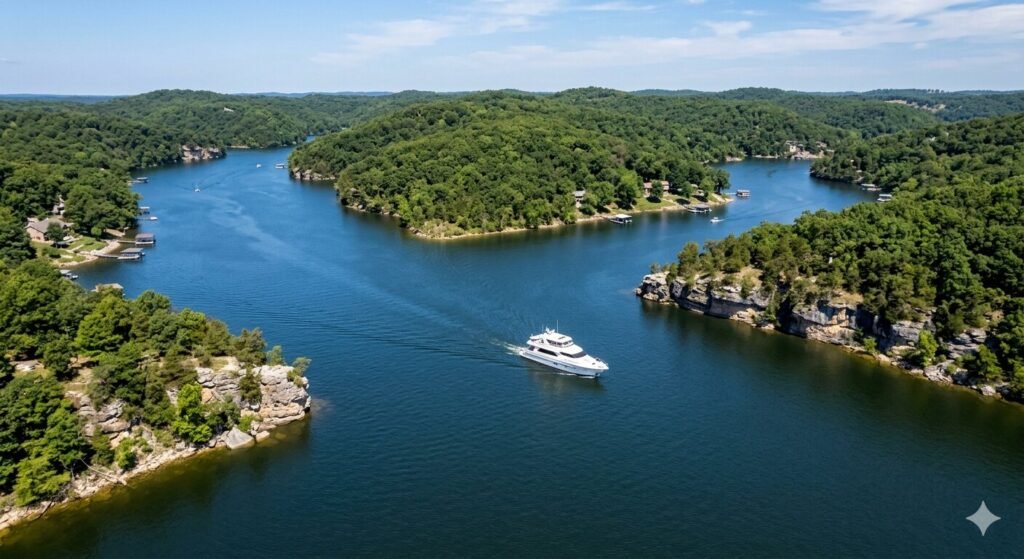
The Big Niangua Arm is one of the most scenic and rewarding stretches of Lake of the Ozarks. It runs deep into the surrounding hills. The water is calm in most areas. The coves are quiet and well-protected. And the scenery is hard to beat anywhere on the lake.
Many boaters stick to the main channel. But experienced boaters know the Big Niangua Arm offers something different. It is peaceful. It is less crowded. And it has some of the most beautiful anchorages on the entire lake. Whether you are renting a yacht at Lake Ozark for the first time or you have been coming here for years, this arm deserves your full attention.
This guide covers everything you need to know before you head out. You will learn where to go, what to watch for, and how to make the most of your time on this stretch of water.
Where the Big Niangua Arm Begins and How to Navigate It
The Big Niangua Arm branches off from the main channel of Lake of the Ozarks in the upper portion of the lake. It stretches several miles into the heart of Missouri’s Ozark terrain. The arm runs roughly northwest from the main body of the lake. It is wide enough for comfortable cruising but narrow enough to feel intimate.
Mile markers are your best friend on this arm. Lake of the Ozarks uses a mile marker system that starts at Bagnell Dam and increases as you move up the lake. The Big Niangua Arm has its own mile marker sequence that branches off from the main channel. Pay close attention when you first enter the arm. The water depth can change quickly in some areas. Local knowledge matters a lot here.
The Niangua Bridge is one of the key landmarks in this area. It is easy to spot and serves as a useful reference point when navigating. If you are new to the arm, use it to get your bearings. From there, the channel continues further into quieter territory. Boat traffic thins out noticeably past the bridge. That is part of the charm of this area.
Navigation on the Big Niangua Arm is generally straightforward. The channel is well-marked. But you should still keep your charts or GPS active. There are some shallow spots near the banks and in certain coves. A pontoon or tritoon rental handles this arm with ease. A larger yacht can also navigate the main section comfortably. Just stay aware of your depth as you explore side coves.
The Best Coves and Anchoring Spots on the Big Niangua Arm
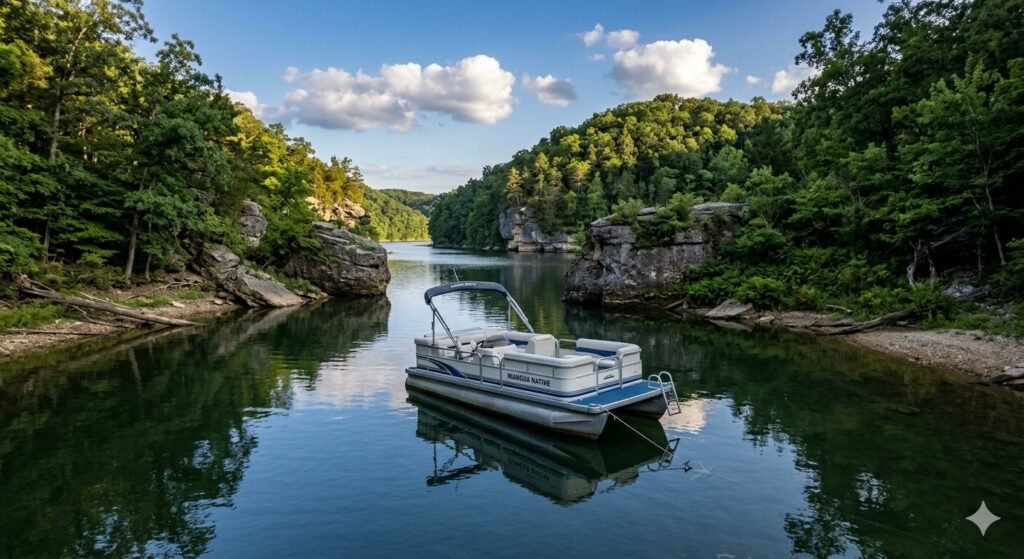
The coves off the Big Niangua Arm are some of the most sought-after anchorages on the lake. They offer shelter from wind and wave action on the main channel. The water in many of these coves is clear and calm. It is ideal for swimming, fishing, or just floating in the afternoon sun.
One of the biggest advantages of this arm is the lack of heavy boat traffic. On a summer weekend, the main channel near Osage Beach and Party Cove can feel overwhelming. The Big Niangua Arm stays significantly calmer. You can find a cove, drop anchor, and enjoy your day without constant wake from passing boats. That makes it a top choice for groups looking for a private and peaceful charter experience.
When anchoring in a cove on the Big Niangua Arm, give yourself enough scope. The bottom composition varies from cove to cove. Some areas have a sandy bottom. Others are rocky or muddy. A good anchor with adequate chain and rode will hold well in most spots. Set your anchor properly and check it before you settle in. If you are not confident about anchoring, a captained charter is the smarter choice. Your captain will know exactly where to set the hook and how to do it safely.
Several coves along this arm are perfect for overnight stays. The water is calm. The surroundings are wooded and quiet. You can watch the stars from the deck without any light pollution from the main channel areas. If overnight anchoring is part of your plan, make sure your vessel has the required lighting and that you notify your charter company in advance.
Fishing on the Big Niangua Arm
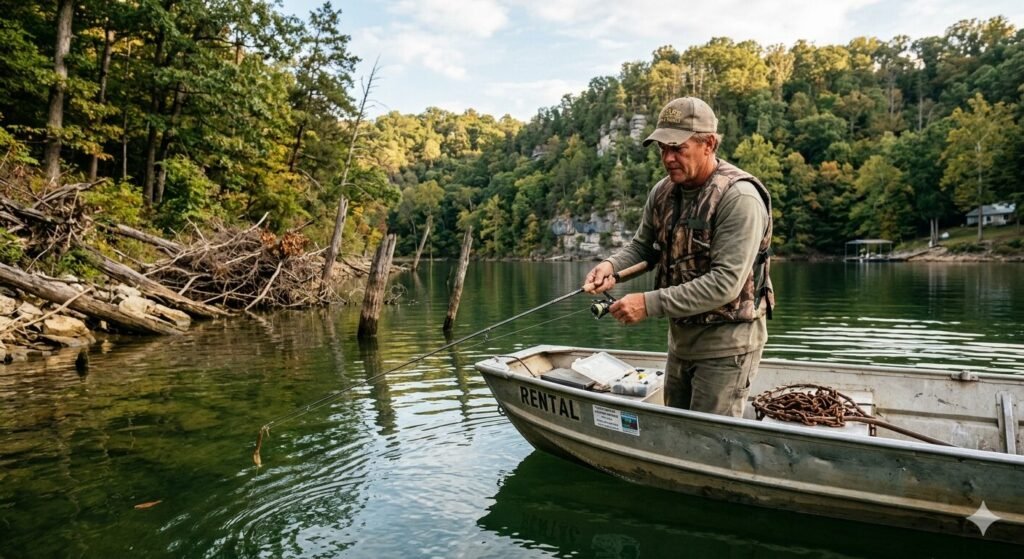
The Big Niangua Arm has a strong reputation among anglers. The arm is home to a healthy population of largemouth bass, crappie, white bass, and catfish. The deeper sections of the channel hold fish year-round. The shallower coves and creek mouths are productive during spring and early summer.
Bass fishing is especially good near rocky points and submerged structure. The Ozark terrain creates a lot of natural underwater features. Old creek beds, rock ledges, and submerged timber all attract fish. If you are targeting largemouth bass, work the edges of coves during the early morning and late evening. The fish move shallow during those hours.
Crappie are abundant throughout the arm. They tend to hold near brush piles and dock structures. Many of the private docks along the arm have underwater brush piles set by the property owners. You will need to stay in public waters, but the fish often roam from structure to structure. A jig or live minnow will get plenty of action.
White bass fishing heats up in late spring when the fish stage in the arm before their annual run. They school aggressively and hit small jigs and spinners readily. It is fast-paced, exciting fishing that is great for kids and beginners. Catfish are active throughout the warmer months. Cut bait or chicken liver fished near the bottom in deeper water will produce results.
If you are planning a fishing trip on a charter boat, let your rental company know in advance. They can help you choose the right size vessel for your group and coordinate timing around the best fishing windows.
What to Know Before You Boat the Big Niangua Arm
The Big Niangua Arm rewards boaters who come prepared. A few things are worth knowing before you leave the dock. First, fuel up before you enter the arm. There are no fuel docks along the arm itself. The nearest fuel is back toward the main channel near Osage Beach and the surrounding marina areas. Running low on fuel far up the arm is a situation you want to avoid.
Second, cell service can be spotty in parts of the Big Niangua Arm. The Ozark hills surrounding the arm create dead zones in certain areas. Download offline maps before you go. Let someone on shore know your float plan. If you are on a crewed charter, your captain will already have a communication plan in place.
Third, be aware of no-wake zones. Certain sections near docks and marinas require you to idle down. Respect these zones at all times. Wake damage is a real issue on any arm of the lake. Private property lines extend to the water’s edge in many areas. Stay in public water and be respectful of residential areas along the shoreline.
Fourth, weather on Lake of the Ozarks can change quickly. The Big Niangua Arm is somewhat sheltered compared to the main channel. But afternoon thunderstorms can develop fast during summer months. Watch the sky and check your weather app before heading out. If you see dark clouds building to the west, head for shelter. A captained charter captain will make this call for you. That is another reason why a USCG-certified captain on board is a smart investment for first-time visitors.
Renting a Yacht or Pontoon for a Big Niangua Arm Trip
The Big Niangua Arm is accessible on almost any vessel available through Yacht Rental Lake Ozark. A luxury pontoon or tritoon is an excellent choice for a relaxed day of cruising, swimming, and fishing. These vessels are spacious, easy to operate, and perfect for groups of all sizes.
A larger yacht with a captain is the ideal option if your group wants a premium experience. You can cruise the arm at your own pace. Your captain handles navigation and anchoring. You simply enjoy the ride. A crewed charter is also the best option if any members of your group are new to boating. There is no learning curve. Everything is taken care of.
When booking your rental, mention that you plan to spend time on the Big Niangua Arm. Your charter team can advise on the best departure time and vessel for that specific stretch of water. Booking 2 to 4 weeks in advance during summer months is strongly recommended. The lake gets busy from Memorial Day through Labor Day. Earlier bookings secure the best time slots.
If you are planning a group outing, corporate event, or private party, the Big Niangua Arm is an excellent setting. The calm water and scenic surroundings create a relaxed atmosphere. It is far enough from the main channel to feel exclusive, but easy enough to access from any marina in the Osage Beach and Lake Ozark area.
Frequently Asked Questions
How do I get to the Big Niangua Arm of Lake of the Ozarks?
The Big Niangua Arm branches off the main channel of Lake of the Ozarks in the upper portion of the lake. You can access it from marinas near Osage Beach and Lake Ozark. Your charter captain or rental company can provide specific directions based on your departure point.
Is the Big Niangua Arm safe for beginner boaters?
The Big Niangua Arm is generally calm and manageable. But beginner boaters should still be cautious around depth changes near coves and banks. Booking a captained charter removes the guesswork entirely and is the safest option for first-timers.
Can I anchor overnight on the Big Niangua Arm?
Yes, overnight anchoring is allowed in many areas of the arm. You need proper lighting and must follow Missouri state boating regulations. Always confirm overnight anchoring details with your charter company before your trip.
What kind of fish can I catch on the Big Niangua Arm?
The arm holds largemouth bass, crappie, white bass, and catfish. Bass and crappie are the most popular targets. Spring and early summer are peak seasons for most species.
Are there restaurants or fuel stops on the Big Niangua Arm?
There are no fuel docks or restaurants directly on the Big Niangua Arm. Fuel up and stock your cooler before entering the arm. The nearest services are near Osage Beach and the main channel marina areas.
How long does it take to cruise the Big Niangua Arm?
A comfortable cruise of the main section takes about 1 to 2 hours round trip depending on your speed and how many stops you make. If you plan to anchor, swim, or fish, budget a full day on the water.
What size vessel works best on the Big Niangua Arm?
Pontoons, tritoons, and mid-size yachts all work well on this arm. Very large vessels may have limited access in the shallower upper sections. Your charter company can match the right boat to your plans.
Is the Big Niangua Arm crowded on weekends?
The arm is much quieter than the main channel and popular spots like Party Cove. Weekend traffic is noticeable near the entrance but thins out significantly as you move further up the arm. It is one of the better choices for groups seeking privacy.
Do I need a boating license to rent on the Big Niangua Arm?
Missouri boating license requirements apply to all operators on Lake of the Ozarks. Age requirements and licensing rules vary. For bareboat rentals, all operators must meet state requirements. For captained charters, your licensed captain handles all navigation.