
Planning a private charter yacht day on Lake Ozark is one of the best ways to celebrate anything. Birthday parties, bachelor and bachelorette trips, corporate outings, family reunions. The lake is stunning, the yachts are incredible, and the experience is hard to beat anywhere in the Midwest. But before you load up the cooler and head out on the water, there is one thing every group needs to understand clearly: the rules around alcohol on private charter yachts.
A lot of people assume that being on a private boat means anything goes. That is not how it works. There are federal laws, Missouri state laws, local Lake Ozark regulations, and charter company policies that all apply to alcohol consumption on the water. Not knowing these rules does not protect you from the consequences of breaking them. A great day on the lake can turn into a very expensive and stressful situation if someone in your group crosses a line that was completely avoidable with a little knowledge upfront.
This guide covers everything you need to know. From Missouri boating and alcohol laws, to what your charter company actually allows, to how to keep your group safe and compliant from the moment you board to the moment you dock. Read this before your trip and enjoy your day on Lake Ozark with total confidence.
Missouri Boating Laws and Alcohol | What the State Actually Says
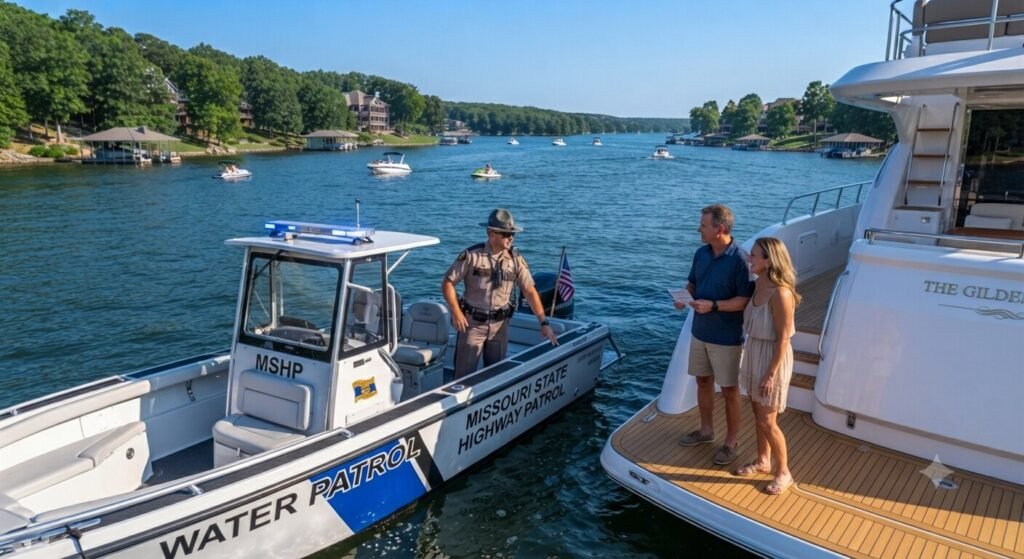
Missouri state law is the starting point for understanding alcohol rules on any boat, including private charter yachts on Lake Ozark. The Missouri State Highway Patrol Marine Division enforces boating laws on the lake, and they take alcohol-related violations seriously, especially during peak summer season when the lake is busiest.
Missouri law prohibits operating a vessel while intoxicated. This is called Boating Under the Influence, commonly referred to as BUI. The legal blood alcohol concentration limit for operating a boat in Missouri is 0.08 percent, which is the same as the legal limit for driving a vehicle on public roads. A BUI conviction in Missouri carries serious consequences. First-time offenders can face fines up to 1,000 dollars, up to six months in jail, and suspension of boating privileges. Repeat offenses carry significantly heavier penalties including longer jail sentences and larger fines.
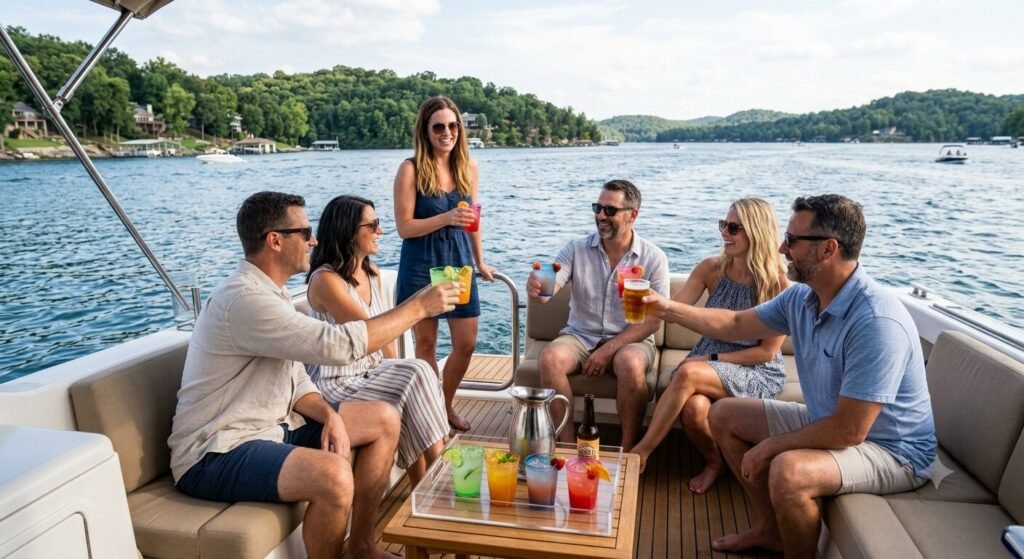
It is critically important to understand that BUI applies to the operator of the vessel only, not to passengers. Passengers on a private charter yacht in Missouri are legally permitted to consume alcohol while the boat is underway, as long as they are of legal drinking age. This is one of the key differences between boating laws and road traffic laws. In a car, open containers are prohibited for everyone including passengers in most circumstances. On a boat in Missouri, passengers can legally drink while the boat is moving.
However, there is an important nuance here. Missouri does have open container laws that apply in certain marina areas and dock zones. Some marinas and public access areas around Lake Ozark designate specific no-drinking zones or require that alcohol be in closed containers when moving between the boat and the shore. These zone-specific rules vary by location, so checking with your specific marina before your trip is always a smart step.
Federal Regulations That Apply on Lake Ozark Waters
Lake Ozark sits on the Lake of the Ozarks, which is a man-made reservoir. Parts of the lake fall under federal jurisdiction, particularly where federal waterways and U.S. Army Corps of Engineers regulations apply. Understanding how federal rules interact with Missouri state law matters when you are on a private charter yacht.
The U.S. Coast Guard has authority over all navigable waterways in the United States, including the Lake of the Ozarks. Federal BUI laws mirror Missouri state law with a 0.08 percent BAC limit for vessel operators. The Coast Guard can stop and board any vessel on the lake for a safety inspection, and if they observe signs of intoxication in the operator, they have full authority to conduct sobriety testing and enforce federal BUI penalties.
Federal law also requires that all vessels carry specific safety equipment regardless of whether alcohol is present on board. This includes properly rated life jackets for every person on board, a functioning fire extinguisher, visual distress signals, and a sound-producing device like a horn or whistle. These are not alcohol-specific rules, but they become especially relevant on party boats where the presence of alcohol can distract from safety preparedness. Your charter company is responsible for maintaining this equipment, but as a group organizer, confirming that everything is in order before you leave the dock is always a responsible move.
One federal rule that often surprises people is related to minors and alcohol on vessels. Federal law and Missouri state law both prohibit providing alcohol to anyone under the age of 21. This applies on a boat exactly the same way it applies on land. There is no exception for being on the water. If someone in your group is under 21, they cannot consume alcohol on the charter yacht regardless of what any adult in the group says or agrees to. This rule is enforced seriously by both Missouri marine patrol officers and the U.S. Coast Guard.
Charter Company Alcohol Policies at Lake Ozark | What You Need to Know
Beyond state and federal law, your specific charter yacht company will have its own alcohol policies that you agree to when you book. These policies vary between companies, but there are common elements that appear across most reputable Lake Ozark charter operations. Understanding these policies before your trip prevents disputes, unexpected charges, and situations where your group gets removed from the vessel before the trip even ends.
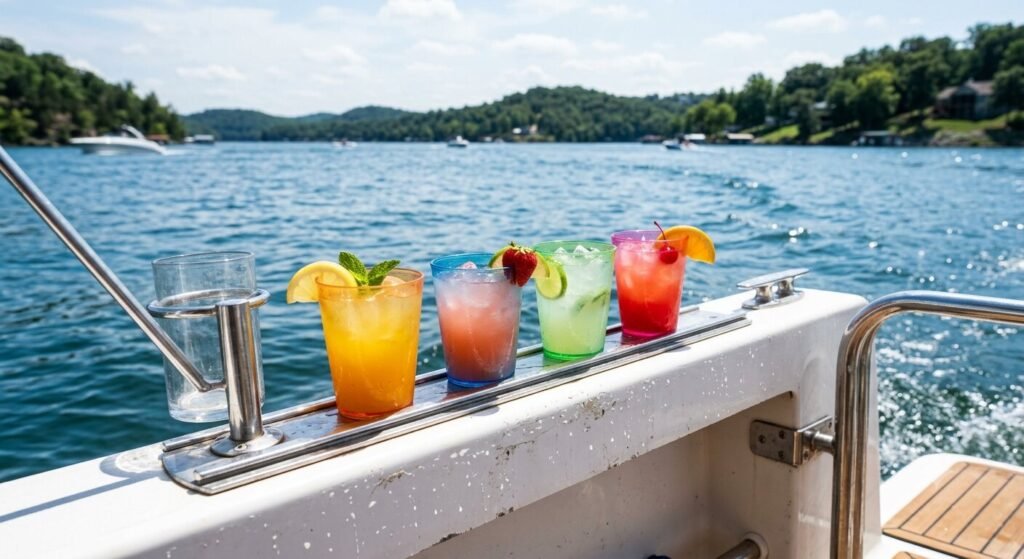
Most Lake Ozark charter companies allow guests to bring their own alcohol on board for private charter rentals. This is one of the most common questions people ask when booking, and the answer is generally yes with specific conditions attached. You are typically permitted to bring beer, wine, and spirits in reasonable quantities for your group size. However, most companies have rules about glass containers on the boat. Glass bottles are a safety hazard on a moving vessel, particularly on a wet deck. Many charter companies require that all beverages be transferred to plastic or acrylic containers before boarding. Check this specific rule with your company when you book.
Some charter companies include a licensed captain with every rental, while others offer bareboat charters where a licensed member of your group operates the vessel. This distinction matters significantly for alcohol consumption. When a company captain is operating the vessel, they are subject to strict sobriety requirements and your group is responsible for ensuring that the captain is never pressured to drink. A captain who is BUI puts your entire group at risk legally and physically. Reputable charter companies make this policy very clear, and your group should respect it completely without exception.
Excessive intoxication policies are another important element of charter company rules. Most companies reserve the right to return the vessel to the dock and end the charter early if guests become dangerously intoxicated, aggressive, or destructive. This is not just a policy preference. It is a liability protection that the company has a legal right to enforce. The cost of the charter is typically not refunded in these circumstances. Keeping your group at a responsible level of celebration ensures the day runs its full course and everyone has the experience they planned and paid for.
Some charter companies also have rules about what types of alcohol are permitted. A small number of premium yacht rental operations on Lake Ozark restrict certain types of spirits or require that only beer and wine be consumed on board. This is more common on higher-end vessels where the company is protecting the interior finishes and upholstery from potential damage caused by spilled spirits. Again, confirming this detail during the booking process eliminates any unpleasant surprises on the day of your trip.
Alcohol Safety on the Water | Keeping Your Group Smart and Responsible
Understanding the legal rules is one part of the equation. The other part is practical safety. Alcohol affects the body differently on the water than it does on land, and most people underestimate this significantly until they experience it firsthand.
Being on a boat exposes your body to a combination of factors that accelerate the effects of alcohol. Direct sun, heat, wind, motion, and dehydration all work together to make alcohol hit harder and faster than it would in a climate-controlled indoor environment. A drink that would leave you feeling mildly relaxed at a house party can leave you significantly impaired after the same amount consumed on a sunny afternoon on Lake Ozark. This is sometimes called boater’s fatigue, and it is a recognized phenomenon that marine safety organizations take seriously.
The practical implication of this is straightforward. Everyone in your group should drink more slowly and consume significantly more water than they typically would at a land-based event. Keep a large supply of cold water and non-alcoholic drinks in the cooler alongside the alcohol and make sure they are easy to reach. Hydration is not optional on a hot summer boat day. It is a genuine safety necessity that affects how everyone in your group feels and functions throughout the trip and for the rest of the evening after you dock.
Designating a sober or minimally drinking point person within your group is a smart practice on any charter boat day. This person is not the captain. They are a guest who takes responsibility for monitoring the group’s overall condition, recognizing when someone has had too much, and making sure no one ends up in the water unexpectedly. Lake Ozark has serious boat traffic during summer months. The water is not a forgiving environment for someone who is heavily intoxicated. Having one responsible person keeping an eye on the group is a simple precaution that costs nothing and can make a critical difference in an emergency.
Never swim while intoxicated. This rule sounds obvious but it is violated regularly on Lake Ozark every summer with tragic results. If your charter day includes swimming stops, establish a clear group rule before anyone enters the water. People who have been drinking significantly do not swim. They stay on the boat. Lake Ozark has boat traffic, underwater hazards, and depth variations that make it genuinely dangerous for impaired swimmers regardless of how strong a swimmer they are when sober.
Practical Tips for Staying Compliant and Having the Best Possible Day
Knowing the rules and actually executing a compliant, enjoyable charter day are two different things. These practical tips bridge that gap and make the whole day run smoothly from start to finish.
Confirm everything with your charter company before you arrive. Call or email them directly and ask specific questions about their alcohol policy, glass container rules, BYOB permissions, and any other conditions related to drinking on their vessel. Get the answers in writing if possible. This protects you and eliminates any ambiguity on the day of your trip when you are standing at the dock with your cooler.
Check the specific marina and dock zone rules for where your charter departs. Some Lake Ozark marina areas have posted rules about alcohol in parking areas, on docks, and in loading zones. Respecting these rules before you even board keeps your trip starting on the right foot without any confrontations or warnings from marina staff.
Pack smart. Use plastic or acrylic containers for all beverages. Bring a high-quality cooler with plenty of ice. Pre-mix any cocktails the night before so you are not fumbling with bottles and mixers on a moving boat. Pack significantly more water than you think you need. Bring food because eating while drinking significantly slows alcohol absorption and keeps everyone feeling better throughout a long day on the water.
Know who to contact in an emergency. The Missouri State Highway Patrol Water Patrol can be reached for emergencies on Lake Ozark. Save the local number in your phone before you leave the dock. If someone in your group needs medical attention on the water, calling the right number immediately is the most important thing you can do. Most charter companies will also brief you on their emergency procedures at the start of the trip. Pay attention to that briefing even if it feels like a formality.
Frequently Asked Questions
1. Can passengers drink alcohol on a private charter yacht on Lake Ozark?
Yes, passengers of legal drinking age can consume alcohol on a private charter yacht in Missouri. State law allows passengers to drink while the vessel is underway. Only the operator is prohibited from drinking and subject to the 0.08 percent BAC limit under Missouri BUI law.
2. Can I bring my own alcohol on a charter yacht at Lake Ozark?
Most Lake Ozark charter companies allow guests to bring their own alcohol for private rentals. However, many have specific rules about glass containers, quantity limits, and types of spirits permitted. Always confirm the specific BYOB policy with your charter company before you arrive at the dock.
3. What is the penalty for BUI on Lake Ozark in Missouri?
A first-time BUI conviction in Missouri can result in fines up to 1,000 dollars, up to six months in jail, and suspension of boating privileges. Repeat offenses carry significantly heavier penalties. The legal BAC limit for vessel operators in Missouri is 0.08 percent, the same as for driving a motor vehicle.
4. Are minors allowed on charter yachts where alcohol is being consumed?
Minors are allowed on the vessel but cannot consume alcohol under any circumstances. Missouri law and federal law both prohibit providing alcohol to anyone under 21 on the water exactly as they do on land. There is no exception for private charters or parental consent in this regard.
5. Can the charter company end the trip early if guests are too intoxicated?
Yes. Most Lake Ozark charter companies reserve the right to return to the dock and end the charter early if guests become dangerously intoxicated, aggressive, or destructive. The charter fee is typically not refunded in these situations. Keeping your group at a responsible level of celebration protects the experience for everyone on board.
6. Is swimming allowed while drinking on a Lake Ozark charter?
Swimming while intoxicated is extremely dangerous and strongly discouraged on Lake Ozark. While there is no specific law that prohibits it, most charter companies have policies against it for liability and safety reasons. The lake has active boat traffic and underwater hazards that make it genuinely dangerous for anyone who is significantly impaired.
7. Do open container laws apply on boats in Missouri?
Missouri open container laws that apply to road vehicles do not extend to boat passengers in the same way. Passengers on a private charter can have open containers while the boat is on the water. However, some marina areas and dock zones have their own open container restrictions that apply when you are near shore or at the dock.
8. What should I do if someone in my group gets too drunk on the yacht?
Stop serving them alcohol immediately and give them water and food. Have them sit in a shaded area away from the edge of the boat. Monitor them closely for signs of alcohol poisoning including confusion, vomiting, unconsciousness, or difficulty breathing. If their condition is serious, contact the Missouri State Highway Patrol Water Patrol or emergency services immediately without hesitation.