
The water outside Party Cove is nothing like the calm, protected water inside the anchorage itself. Once you leave the raft and head into the main channel, you are dealing with heavy boat traffic and constant wake coming from every direction. Choosing the right vessel size before you book your trip makes a real difference in how comfortable and safe your day feels once you leave the crowded cove behind. This guide explains the best size yacht to handle the wake outside Party Cove so you can make an informed decision before your next Lake of the Ozarks trip.
This guide walks through why wake conditions near Party Cove are so intense, which yacht sizes handle rough water best, how hull design factors into the equation, and practical tips for choosing the right vessel for your group. Whether you are booking a Lake Ozark yacht rental for the first time or upgrading from a smaller boat you have used in the past, this guide covers everything you need to know before making your decision, including the tradeoffs that come with each size category.
Why Wake Conditions Near Party Cove Are So Intense
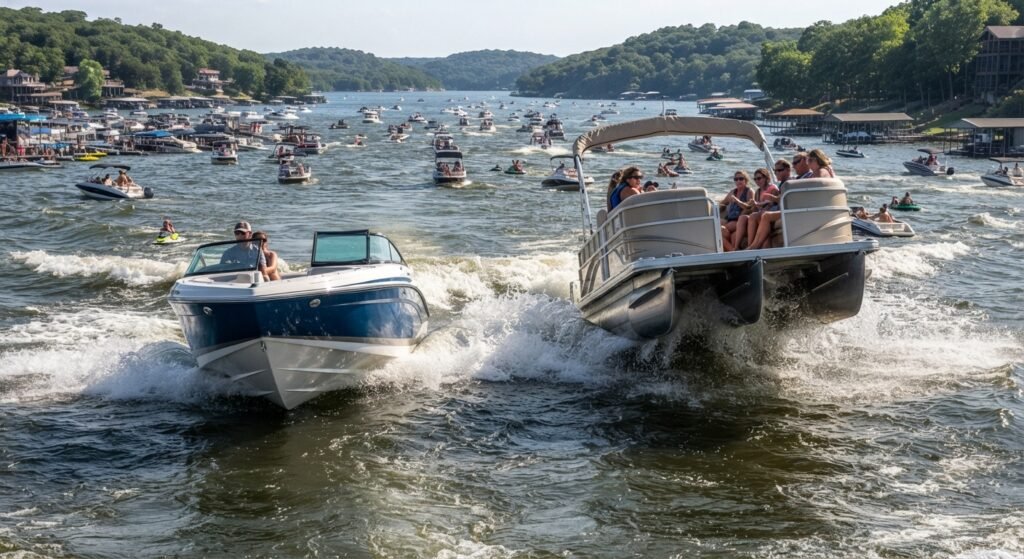
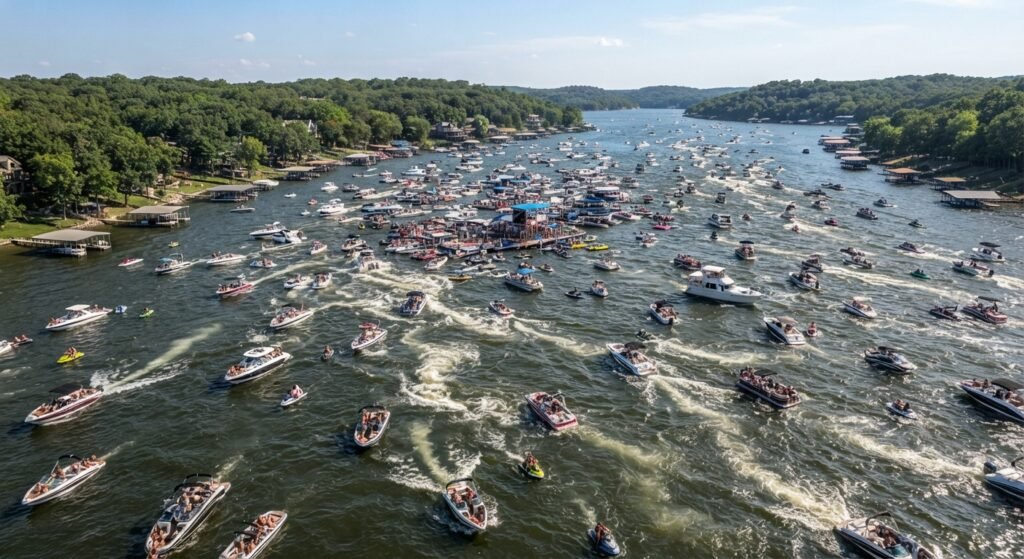
The main channel leading toward Party Cove sees some of the heaviest boat traffic anywhere on Lake of the Ozarks, especially during peak summer weekends. Hundreds of boats moving in and out of the cove throughout the day create a constant pattern of overlapping wake that never really settles down during busy hours. Unlike a quiet cove elsewhere on the lake where the water stays relatively calm, this section of the channel behaves more like a choppy, unpredictable surface that shifts constantly as different sized boats pass through at different speeds and angles.
This wake intensity is made worse by the sheer variety of vessels sharing the same water. Everything from small personal watercraft to large charter yachts moves through this same stretch, and each type of vessel produces a different wake pattern that interacts with all the others moving nearby. Smaller boats feel this chop far more dramatically than larger vessels, since their lighter weight and shorter hull length make them far more responsive to every wave passing underneath them throughout the trip. Understanding this reality before you book your rental helps explain why vessel size becomes such an important factor for anyone planning to spend time near this specific section of the lake during a typical summer weekend.
The problem compounds itself the closer you get to the actual entrance of Party Cove. As boats converge from multiple directions to funnel into the same relatively narrow access point, the wake patterns overlap and amplify rather than canceling each other out. This creates what many experienced boaters describe as a genuinely rough patch of water immediately surrounding the cove entrance, even on days when the rest of the lake feels perfectly calm and manageable for a smaller vessel.
How Yacht Size Affects Wake Handling
Larger vessels generally handle wake more comfortably than smaller ones, and the physics behind this is fairly straightforward once you understand the basic principles involved. A longer hull sits across more wave surface at once, which naturally smooths out the up and down motion that smaller boats experience much more sharply as they hit each individual wave. Weight also plays a significant role in this equation, since a heavier vessel simply does not get pushed around by wake the same way a lighter boat does, giving passengers a noticeably steadier ride even when the surrounding water looks genuinely rough and unpredictable.
Hull design matters just as much as overall length and weight when it comes to wake performance in this specific environment. Deep V hulls, commonly found on larger cruisers and yachts, cut through chop far more effectively than the flatter hull designs used on many pontoon boats currently available for rental across the lake. This is why a 40 foot yacht with a proper deep V hull can glide through the same wake that would send a smaller flat bottom pontoon boat bouncing uncomfortably from side to side throughout the same stretch of water. For anyone planning to spend significant time navigating the busy channel near Party Cove, understanding this relationship between hull design and wake performance is just as important as simply looking at the overall length listed in a rental brochure or booking website.
Beam width, or the overall width of the vessel, also contributes to stability in ways that many first time renters do not fully consider before booking. A wider beam generally provides more lateral stability, reducing the side to side rocking motion that can make choppy water feel far more uncomfortable than the actual wave height might suggest. Combining a longer hull length with a reasonably wide beam and a proper deep V design gives you the most stable possible platform for handling the specific wake conditions found near this particular section of Lake of the Ozarks.
Recommended Yacht Sizes for Different Group Needs
For groups specifically planning to spend a full day navigating in and out of the busy water near Party Cove, yachts in the 35 to 45 foot range generally offer the best combination of stability, comfort, and practical maneuverability throughout the entire trip. Vessels in this size category are large enough to handle the chop comfortably without feeling overwhelming to operate, and they still fit reasonably well within the crowded anchoring space once you actually reach the cove itself and need to find room among the other boats. This size range works particularly well for groups of 10 to 15 people who want a stable ride to and from the destination along with enough deck space to enjoy the day once anchored comfortably.
For larger groups or those prioritizing maximum comfort above all else, yachts in the 50 foot and above range provide an even smoother experience through the roughest sections of wake near the cove entrance. These larger vessels barely register the chop that would feel significant on a smaller boat, making them an excellent choice for groups including guests who might be prone to seasickness or simply prefer the smoothest possible ride throughout the entire journey. The tradeoff comes in maneuverability once you reach the crowded anchorage itself, since larger vessels require more space to safely navigate into a rafting position and may need to anchor slightly further from the densest part of the cove during the busiest hours of a typical weekend afternoon.
Smaller groups of six to eight people might find that a slightly shorter vessel in the 30 to 35 foot range still offers reasonable wake handling while being noticeably easier and more affordable to rent for the day. This size category still benefits from a proper hull design and reasonable weight, meaning the wake handling remains significantly better than what a standard pontoon boat would offer, even though the overall dimensions are somewhat more modest than the larger recommended range for bigger groups.
Why Smaller Pontoon Boats Struggle in This Environment
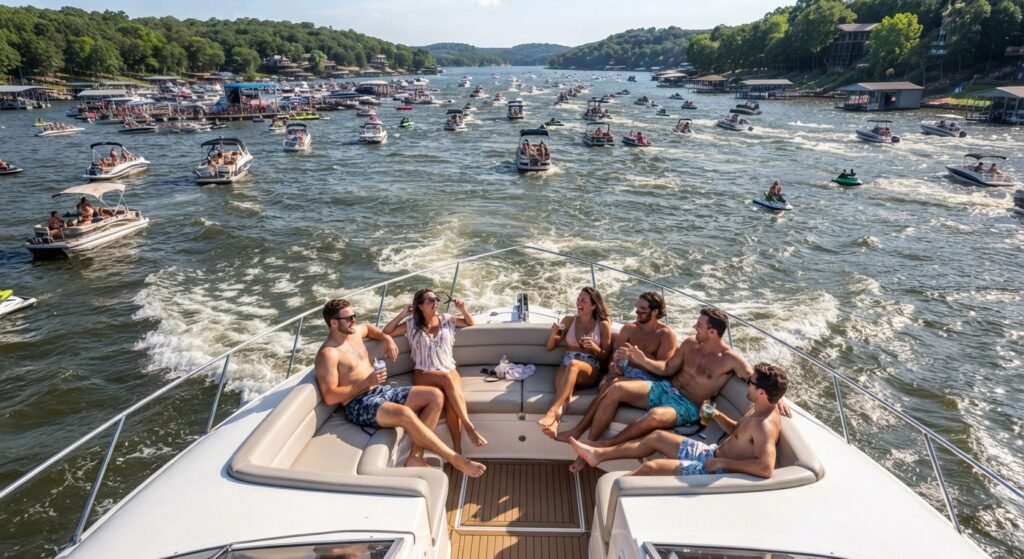
Standard pontoon boats, while extremely popular for casual lake days elsewhere on Lake of the Ozarks, genuinely struggle in the specific wake conditions found near Party Cove. Their flat, wide hull design is excellent for calm water and provides great stability while anchored and stationary, but this same design becomes a real liability once significant wake starts hitting the boat from multiple directions at once during travel. Passengers on a smaller pontoon boat navigating this channel during peak hours often experience a noticeably bumpier and less comfortable ride compared to those on a larger, deep V hulled vessel making the exact same trip at the exact same time.
This does not mean pontoon boats are unsafe for the trip, but it does mean groups choosing this option should be realistic about the comfort level they can expect during the busiest hours of a summer weekend afternoon. Timing your travel to avoid the absolute peak traffic periods, generally between 1 PM and 4 PM, can meaningfully reduce the wake intensity a smaller pontoon boat encounters compared to attempting the same trip during the height of the afternoon rush when boat traffic reaches its maximum density throughout the entire channel leading toward the cove.
Pontoon boat operators should also pay close attention to their speed and angle when crossing particularly rough patches of wake near the cove entrance. Taking waves at a slight angle rather than head on, and reducing speed through the roughest sections rather than trying to power through quickly, both help reduce the jarring impact that a flat bottom hull experiences when hitting choppy water directly. These small adjustments in technique can meaningfully improve comfort even without changing the actual vessel being used for the day.
Balancing Size Against Practical Considerations
While bigger generally means smoother when it comes to handling wake, choosing the largest possible yacht is not automatically the right decision for every group planning a trip to this destination. Larger vessels come with higher rental costs, require more experienced operation, and can be genuinely difficult to maneuver into a tight rafting position once you actually reach the crowded cove during peak season. Groups need to weigh the comfort benefits of a larger vessel against these practical tradeoffs, particularly if your group is smaller and does not need the extra deck space that comes with a 50 foot or larger yacht sitting in your budget.
For most groups planning a day that includes both the busy channel travel and time anchored inside Party Cove itself, the 35 to 45 foot range genuinely represents the sweet spot most experienced Lake Ozark boaters recommend to friends and first time visitors alike. This size category provides enough hull length and weight to meaningfully smooth out the wake during your approach and departure, while still remaining practical to maneuver once you need to find a spot within the crowded anchorage during peak hours of a busy summer day.
Rental cost also deserves honest consideration alongside comfort when making this decision. A 45 foot yacht typically costs noticeably more per day than a 30 foot vessel, and groups on a tighter budget might reasonably decide that a slightly bumpier ride is an acceptable tradeoff for significant savings on the overall rental price. Being upfront with your group about this tradeoff before booking helps set realistic expectations and avoids any disappointment once you are actually out on the water experiencing the wake conditions firsthand.
Frequently Asked Questions
What size yacht handles wake best near Party Cove?
Yachts in the 35 to 45 foot range generally offer the best combination of wake handling and practical maneuverability for most groups. Vessels in this size category have enough hull length and weight to smooth out choppy conditions while remaining manageable to anchor within the crowded cove during peak hours throughout the day.
Are pontoon boats safe to use near Party Cove?
Pontoon boats are generally safe but tend to feel bumpier in heavy wake conditions compared to larger deep V hulled vessels. Groups using a pontoon boat should consider timing their travel outside the busiest traffic hours, typically between 1 PM and 4 PM, to reduce the wake intensity they encounter along the way.
Does a bigger yacht always mean a smoother ride?
Generally yes, since longer hulls and heavier vessels naturally handle wake more comfortably than smaller, lighter boats. However, extremely large yachts can become harder to maneuver once you reach the crowded anchorage inside Party Cove, so bigger is not always the most practical choice for every group’s specific needs.
What hull design works best for choppy water near Party Cove?
Deep V hulls, commonly found on larger cruisers and yachts, cut through chop significantly better than the flatter hull designs used on most pontoon boats. This hull shape allows the vessel to slice through wake rather than bouncing across the surface, resulting in a noticeably smoother ride for everyone on board.
How many people can comfortably fit on a 40 foot yacht near Party Cove?
A 40 foot yacht typically comfortably accommodates groups of 10 to 15 people, providing both stable wake handling during travel and enough deck space for everyone to relax comfortably once anchored. This size range works well for most bachelor parties, birthday celebrations, and general group outings planned around a Party Cove visit.
Is it worth renting a larger yacht just for smoother wake handling?
For groups that prioritize comfort above all else, or that include guests prone to seasickness, renting a larger yacht in the 50 foot and above range can be worth the additional cost. However, most groups find that a mid sized vessel in the 35 to 45 foot range offers sufficient wake handling without the added expense and maneuvering challenges of an oversized vessel.
Does time of day affect how rough the wake gets near Party Cove?
Yes, wake intensity generally peaks between 1 PM and 4 PM during summer weekends when boat traffic through the main channel reaches its highest volume. Traveling earlier in the morning or later in the evening typically results in noticeably calmer conditions, regardless of the specific vessel size you have chosen for your trip.
Should first time boaters choose a larger yacht for their first Party Cove trip?
First time visitors often benefit from a mid sized yacht in the 35 to 45 foot range, since it offers a comfortable balance between stable wake handling and manageable operation for someone less experienced with larger vessels. This size gives newcomers a smoother introduction to the busy channel without the added complexity of piloting an oversized boat through crowded conditions.
Final Thought
Choosing the right yacht size for a trip near Party Cove genuinely changes how enjoyable your entire day feels, especially once you leave the calm anchorage and head back into the busy main channel surrounded by heavy traffic. A mid sized vessel in the 35 to 45 foot range strikes the best overall balance between comfortable wake handling and practical maneuverability for most groups visiting Lake of the Ozarks.
Larger yachts offer an even smoother ride for those willing to accept the added cost and maneuvering challenges, while smaller pontoon boats remain a workable option as long as you plan your travel around the busiest traffic hours and adjust your technique through the roughest patches. With the right vessel size and a bit of smart timing, your trip to and from Party Cove can feel just as enjoyable as the time spent anchored once you finally arrive at your destination for the day.