Author name: admin

Aerial view of Lake of the Ozarks showing the main channel and branching arms from above
Guides

Understanding the Arms of Lake of the Ozarks for Boaters

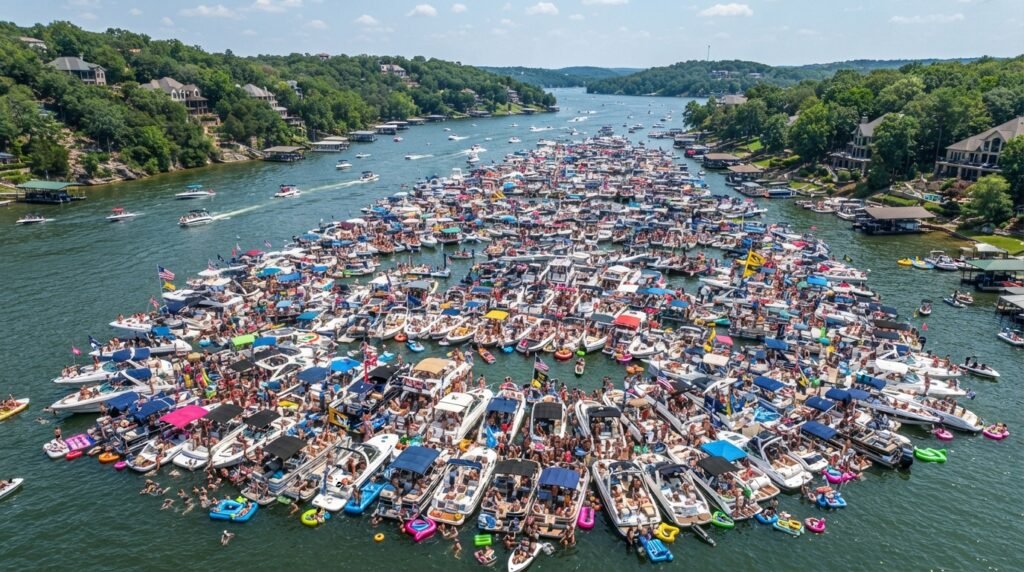
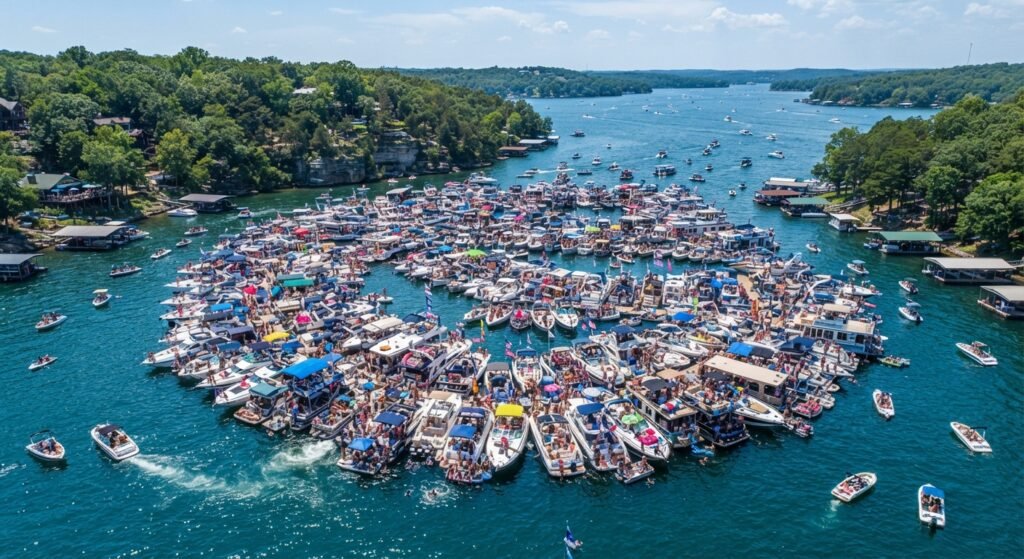
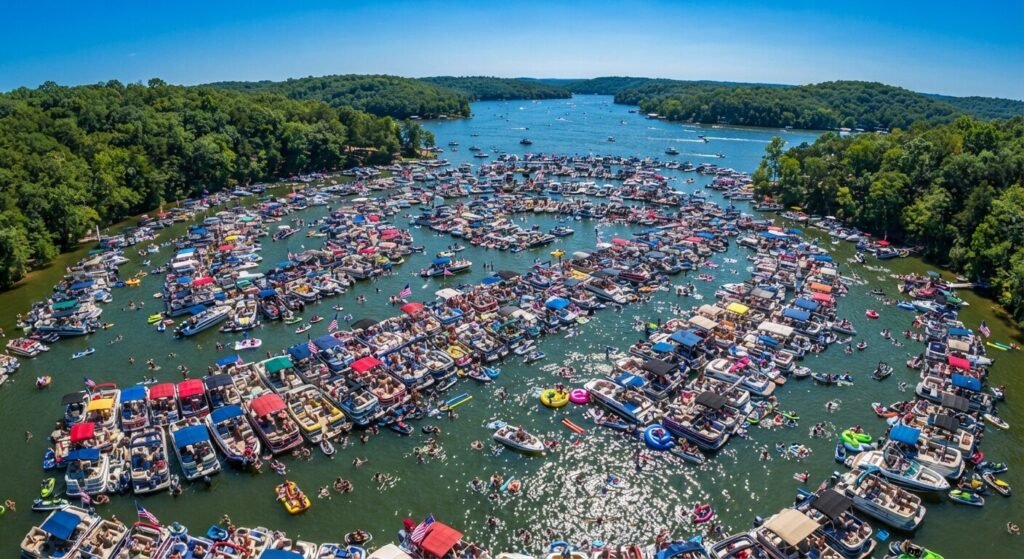
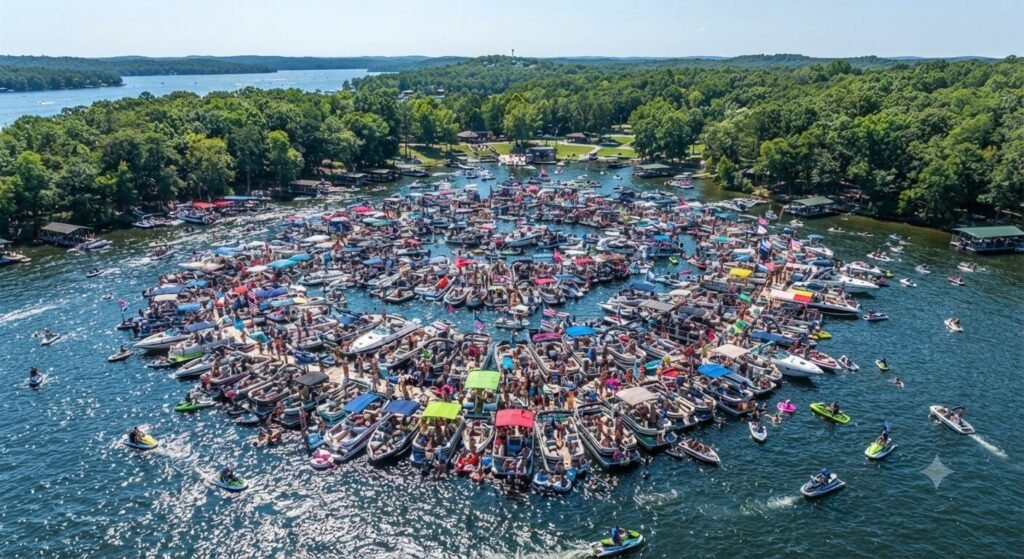
The Lake of the Ozarks is not your typical lake. It does not sit in a simple oval or rectangle like most inland reservoirs. It winds, twists, and branches across central Missouri in a shape so serpentine that locals gave it a fitting nickname, the Magic Dragon. With over 1,150 miles of shoreline and a surface area of roughly 54,000 acres, this is one of the largest man-made lakes in the entire United States. For first-time visitors and even returning boaters who have only explored part of the lake, understanding how it is laid out makes a huge difference. The lake is organized around a central spine called the main channel, and branching off from that spine are several distinct arms, each with its own character, its own mile marker system, and its own appeal. This guide breaks down every arm of the Lake of the Ozarks so you can plan smarter trips, navigate with confidence, and get the most out of every day on the water. How the Lake Is Structured and Why the Arms Matter Lake of the Ozarks was created in 1931 when Bagnell Dam was built across the Osage River in central Missouri. The dam flooded the entire Osage River valley along with several of its tributaries, and those flooded tributary valleys became the arms of the lake you see today. The main channel follows the original path of the Osage River, and the arms follow the paths of the rivers and creeks that once fed into it. The main channel, known as the Osage Arm, runs approximately 92 miles from Bagnell Dam at its northeastern end all the way to Truman Dam near Warsaw at the western end. This is the backbone of the entire lake. Every arm branches off from this central spine. The four primary arms are the Gravois Arm, the Grand Glaize Arm, the Big Niangua Arm, and the Little Niangua Arm. Each one was formed by a different tributary feeding into the original Osage River. The reason this structure matters so much for boaters is simple. Each arm has its own mile marker system that starts at zero where the arm meets the main channel. So when you hear someone say they are at the 6 Mile Marker on the Gravois Arm, that means they are 6 miles up the Gravois from where it connects to the main channel. Without understanding which arm someone is on, a mile marker number means very little on a lake this large and complex. Every marina, restaurant, resort, vacation rental, and waterfront business on the lake uses this combined system of main channel markers and arm markers to communicate location. Learning to read it is the single most important navigation skill you can develop before your first day on the water. The Main Channel | The Osage Arm The Osage Arm is the primary artery of the entire lake. It is the widest, longest, and most traveled section of water at Lake of the Ozarks. Mile Marker 0 begins at Bagnell Dam and the numbers increase as you travel south and west along this channel. The most developed, most visited, and most active stretch of the entire lake runs from approximately Mile Marker 0 to Mile Marker 25. This lower section of the main channel is where you will find the Bagnell Dam Strip, the cities of Lake Ozark and Osage Beach, the highest concentration of waterfront restaurants and bars, the majority of marinas and fuel docks, and many of the lake’s most famous events including the Lake of the Ozarks Shootout powerboat races. The Horseshoe Bend peninsula wraps around the channel between roughly Mile Markers 3 and 10. The Osage Beach area sits between approximately Mile Markers 14 and 21, and this stretch is considered the commercial and social heart of the entire lake. As you travel west beyond Mile Marker 25 and further up the Osage Arm, the lake gradually becomes quieter and less developed. The shoreline transitions from dense resort and residential development into more rural, forested terrain. By the time you reach Mile Markers 40 to 60 near the Hurricane Deck community and beyond, the lake has a noticeably different feeling. It is wider in some sections, quieter overall, and the boat traffic thins significantly compared to the busy lower channel. This upper section is excellent for fishing, quiet cruising, and exploring the more natural, undisturbed side of Lake of the Ozarks. The Grand Glaize Arm The Grand Glaize Arm is the most famous and most visited of all the lake’s tributary arms. It branches off the main Osage channel at approximately Mile Marker 19, right where the Grand Glaize Bridge carries US Highway 54 over the water in Osage Beach. When you pass under that bridge heading southeast, you have entered the Grand Glaize Arm. The arm runs approximately 16 miles from its junction with the main channel before narrowing into a stream near the upper end. This arm is home to one of the most iconic destinations on the entire lake. Party Cove, officially known as Anderson Hollow Cove, is located within Lake of the Ozarks State Park at approximately the 4 Mile Marker of the Grand Glaize Arm. On peak summer weekends, over 3,000 boats gather here in what is widely described as the largest floating party in the country. It is a cultural institution of the lake and a bucket list destination for boaters from across the Midwest. Beyond Party Cove, the Grand Glaize Arm is known for its calm, protected waters that are particularly well suited to tubing, water skiing, and relaxed anchoring in coves. The arm is also home to two of the lake’s only public swimming beaches, both located within Lake of the Ozarks State Park. Public Beach 1 sits at approximately the 12 Mile Marker on the Grand Glaize Arm, and Grand Glaize Beach is nearby. Both offer sandy shoreline swimming in a park setting, a rare find on a lake where

Hurricane Deck Bridge carrying Missouri Route 5 over the Osage Arm of Lake of the Ozarks
Guides

How to Cross the Hurricane Deck Bridge on a Tall Yacht at Lake of the Ozarks

Lake of the Ozarks is a massive lake. Its main channel stretches 92 miles from Bagnell Dam all the way to the western end near Warsaw. Most casual boaters and yacht renters spend their time in the lower portion of the lake, roughly between Mile Marker 0 and Mile Marker 30. But if you are planning to push further west toward the Hurricane Deck area, there is one question every tall vessel operator needs to answer before heading out. Can your yacht clear the Hurricane Deck Bridge? This is not a question most boaters think about on a typical lake day. Standard pontoon boats and mid-size rental vessels have no issue. But tall yachts, flybridge cruisers, large houseboats, and vessels with elevated upper decks face a real consideration at this bridge. Getting this wrong is not just an inconvenience. It can cause serious damage to your vessel and create a dangerous situation on the water. This guide covers everything you need to know. What the Hurricane Deck Bridge is, why it matters for tall vessels, how to determine if your yacht can safely pass, and what your options are if it cannot. What Is the Hurricane Deck Bridge and Where Is It The Hurricane Deck Bridge carries Missouri Route 5 across the Osage Arm of Lake of the Ozarks. It is located in the unincorporated community of Hurricane Deck in Camden County, roughly in the mid-to-upper section of the main channel, connecting the communities of Laurie and Camdenton on either side of the lake. The original Hurricane Deck Bridge was built in 1936 and was one of the most iconic structures on the entire lake. It was an upside-down truss design, meaning the support structure sat below the road deck rather than above it. This gave drivers spectacular views of the lake as they crossed, and it became one of the most photographed and distinctive features on the water for decades. That original bridge was eventually replaced. The new Hurricane Deck Bridge was completed in 2014, built by the Missouri Department of Transportation at a cost of approximately 32 million dollars. The replacement is a modern plate girder bridge, 2,260 feet long, supported on large diameter drilled shaft foundations that reach down through 85 feet of water into bedrock. It is built to carry traffic for the next 100 years. The new structure has two 12-foot lanes and seven-foot shoulders, making it wider and safer than its predecessor. But the plate girder design sits lower over the water in certain areas compared to the tall clearance of the old upward-arching truss design, which is exactly why tall vessel operators need to pay attention. Why Bridge Clearance Matters for Tall Yachts Bridge clearance is the vertical distance between the water surface and the lowest point of the bridge structure above. For most recreational boats, this number is irrelevant. A standard pontoon rental sits low and passes comfortably under almost any bridge on the lake. But as vessel size increases, so does the height of the structure above the waterline. A typical center console or pontoon boat might stand 6 to 9 feet above the water at its highest point. A flybridge yacht or cruiser can reach 14 to 18 feet or more above the waterline when you account for the upper helm station, radar arch, antennas, and any hardtop or canopy structure. Large houseboats with second-floor decks can be even taller. These vessels require significantly more vertical clearance to pass safely under a bridge without contact. On Lake of the Ozarks specifically, bridge clearance information is not officially published in a centralized or easily accessible format the way it is for coastal or federally regulated waterways. The Army Corps of Engineers and standard marine chart apps like Navionics do not consistently list bridge clearance heights for the bridges on this lake. This makes it the operator’s responsibility to research the specific bridge before approaching it in a tall vessel. Arriving at a bridge and discovering mid-approach that your yacht will not fit is one of the most preventable problems in boating, yet it happens every season somewhere on this lake. How to Know if Your Yacht Can Clear the Hurricane Deck Bridge The key step before attempting any bridge crossing in a tall yacht is knowing your vessel’s air draft. Air draft is the total height of your boat measured from the waterline to the highest fixed point on the vessel. This includes radar arches, antennas, hardtops, flybridge railings, and any other structure that cannot be lowered or removed. If you are renting a yacht, your rental company should be able to tell you the air draft of the specific vessel you are booking. Once you know your vessel’s height, the next step is finding the actual clearance at the Hurricane Deck Bridge. Because this information is not officially published for recreational boaters on Lake of the Ozarks, you need to go directly to the best local sources. The most reliable approach is to contact MoDOT (Missouri Department of Transportation) directly and ask for the vertical clearance data for the Highway 5 Hurricane Deck Bridge over the Osage Arm. MoDOT has engineering records for the bridge and can provide this measurement. You can also contact the Camden County office or local marina operators in the Hurricane Deck and Sunrise Beach area who have practical, firsthand knowledge of what has and has not passed safely under that bridge. Additionally, lake level matters. Lake of the Ozarks operates at a normal pool elevation of 660 feet above mean sea level, and the lake rarely varies by more than 5 feet in either direction. When lake levels are higher than normal pool, there is less clearance under every bridge on the lake. When levels are below normal pool, clearance increases. If you are planning a tall vessel trip past Hurricane Deck, check the current lake level through Ameren Missouri’s website before your departure. A difference of even two to three feet in lake

Aerial view of Horseshoe Bend peninsula on Lake of the Ozarks on a sunny summer day
Guides

Where Is Horseshoe Bend and Where Is Party Cove

Before you can plan the route, you need to know exactly where both destinations sit on the lake. Lake of the Ozarks uses a mile marker system that starts at Mile Marker 0 at Bagnell Dam and increases as you travel south and west along the main Osage channel. This system is how every boater, marina, restaurant, and local business on the lake communicates location, and knowing it makes navigation on this massive lake far easier. Horseshoe Bend is a large, seven-mile-long peninsula that wraps around a bend in the main channel, sitting between roughly Mile Marker 3 and Mile Marker 10 on the main channel. It gets its name from the horseshoe-like shape the lake forms as it curves around this stretch of land. The peninsula is dense with resorts, condos, restaurants, private homes, and marinas. Its position on the main channel means it is one of the most active and accessible areas on the entire lake. The Community Bridge connects Horseshoe Bend with Shawnee Bend on the other side of the water, and the area is only minutes from both Lake Ozark and Osage Beach by road or boat. Party Cove, officially known as Anderson Hollow Cove, sits within the boundaries of Lake of the Ozarks State Park on the Grand Glaize Arm of the lake. Its exact location is approximately the 4 Mile Marker of the Grand Glaize Arm. To reach Party Cove from the main channel, you pass under the Grand Glaize Bridge at the 19 Mile Marker on the main channel, then turn right and travel approximately 4 miles up the Grand Glaize Arm to reach Anderson Hollow Cove. Party Cove has had a few different locations over the decades, but its current home in the state park is where tens of thousands of boaters gather every summer weekend. The Distance by Boat from Horseshoe Bend to Party Cove Now for the key number everyone wants to know. The total distance by boat from Horseshoe Bend to Party Cove is approximately 20 to 26 miles, depending on exactly where you launch from within the Horseshoe Bend area and where you anchor at Party Cove. Here is how that distance breaks down. If you depart from the southern end of Horseshoe Bend near Mile Marker 10, you travel south along the main channel for roughly 9 miles to reach the Grand Glaize Bridge at Mile Marker 19. From there, you turn right and head up the Grand Glaize Arm for another 4 miles to reach Anderson Hollow Cove. That puts you at approximately 13 miles total from the southern tip of Horseshoe Bend. If you are launching from the northern end of Horseshoe Bend near Mile Marker 3, the math changes. You first travel south along the main channel for about 16 miles to reach the Grand Glaize Bridge at MM 19, and then 4 more miles up the arm to Party Cove. That puts the total closer to 20 miles from the northern end of the peninsula. The most common launching point for visitors at Horseshoe Bend is the mid-peninsula range, around Mile Markers 5 to 7. From there, the total water distance to Party Cove works out to roughly 16 to 18 miles. This is a very manageable trip for any boat or yacht, and it gives you a scenic run along one of the busiest and most entertaining stretches of the entire lake before turning into the calmer, more sheltered water of the Grand Glaize Arm. How Long Does the Boat Trip Take Travel time between Horseshoe Bend and Party Cove depends on your boat type, the speed you are comfortable cruising at, and how busy the main channel is on the day you go. On a clear weekday morning with moderate traffic, the trip takes between 40 minutes and one hour at a comfortable cruising pace of 20 to 25 mph. On a peak summer Saturday when the main channel between Horseshoe Bend and the Grand Glaize Bridge is packed with boats, expect closer to 60 to 90 minutes, particularly if you hit no wake zones around marinas and docks along the way. A helpful way to think about travel time on this lake is to use a simple formula. Take your distance in miles, divide it by your average speed, and multiply by 60 to get minutes. For a 17 mile trip at an average of 20 mph accounting for no wake zones and light traffic, you are looking at just over 50 minutes of actual boat time. Add in time to top off fuel, navigate a busy section of channel, and find your spot to anchor at Party Cove, and you have a total departure-to-arrival window of about one to one and a half hours. It is always worth leaving earlier than you think you need to. Party Cove fills up fast on summer weekends, and the best anchoring spots go quickly. Heading out by mid-morning gives you the advantage of lighter channel traffic on the way and a better position when you arrive at the cove. The Best Route to Follow by Water The route from Horseshoe Bend to Party Cove is straightforward once you know what to look for. You do not need to navigate through any confusing side channels or unmarked areas. The whole trip follows well-traveled, clearly marked water the entire way. You begin by heading south along the main Osage channel. If you are departing from the northern tip of Horseshoe Bend near Mile Markers 3 to 5, you will be passing through some of the busiest boat traffic on the lake almost immediately. This section near Lake Ozark city is packed with marinas, docks, waterfront restaurants, and private slips, so respecting idle speed rules within 100 feet of docks and anchored vessels is important here. Take it slow through congested areas and keep your eye on other boats. As you continue south past Mile Marker 10 and into the Mile Marker 10 to

Aerial view of Bagnell Dam and Lake of the Ozarks main channel on a sunny summer day
Guides

How to Get from Bagnell Dam to Osage Beach by Water

One of the best things about the Lake of the Ozarks is that you can experience almost everything it offers without ever leaving the water. The drive between Bagnell Dam and Osage Beach takes only a few minutes by car. But by boat, that same stretch becomes a completely different experience. You get to pass through the heart of the lake, watch the shoreline open up, and enjoy every mile of one of Missouri’s most iconic waterways. If you are planning a yacht rental at Lake Ozark and want to make the most of your time on the water, this route is one you need to know. This guide covers everything, from understanding the mile marker system to travel time, what you will see along the way, and tips to keep your trip smooth from start to finish. Understanding the Lake of the Ozarks Before You Cast Off Before you start plotting your route, it helps to understand how this lake is laid out. Lake of the Ozarks is a large reservoir created by impounding the Osage River. The main channel of the Osage Arm stretches 92 miles from one end to the other, and the lake has roughly 1,150 miles of shoreline in total. That is a massive body of water, and getting your bearings before you leave the dock makes everything easier. The lake is long and winding in shape, with several arms branching off the main channel. These include the Gravois Arm, the Grand Glaize Arm, and the Niangua arms to the southwest. For the Bagnell Dam to Osage Beach route, you will be traveling primarily along the main Osage channel, which is the central spine of the entire lake. Bagnell Dam sits at the northeastern end of the lake, where the Osage River is impounded. The city of Osage Beach sits where the lake’s southeastern arm joins the main channel. Knowing this positioning gives you a clear mental picture of the route before you even touch the throttle. The Mile Marker System | Your Best Friend on the Water If you are new to Lake of the Ozarks, the mile marker system is the single most important thing to understand. Unlike navigating by street signs or landmarks, this lake uses a numbered reference system along the shoreline that tells every boater exactly where they are at any given moment. Mile Marker 0 begins at Bagnell Dam, and markers increase as you travel southward up the main Osage arm. Most marinas, restaurants, and vacation rentals identify their location by mile marker. So when a local tells you that a restaurant is at the 18 mile marker, they mean it is 18 miles along the main channel from Bagnell Dam. On the lake maps, you will notice a series of numbers printed along the waterways. These numbers represent lake mile markers and are used to communicate a location with lake access. When you see a number without any arm designation, it refers to a main channel location. Each arm of the lake has its own separate mile marker system that starts at zero where the arm meets the main channel. The Osage Beach area sits roughly between mile markers 14 and 21 on the main channel. This stretch is considered one of the best areas for visitors because it offers central access to dining, shopping, attractions, and the lake’s main channel. That means your water journey from Bagnell Dam to Osage Beach covers approximately 14 to 20 miles of open lake water, depending on exactly where you plan to dock in the Osage Beach area. The Water Route from Bagnell Dam to Osage Beach Starting your trip at or near Bagnell Dam puts you at Mile Marker 0, the very beginning of the lake’s main channel. From here, you head south along the Osage arm. The channel is wide and well marked in this section. The lake opens up quickly once you clear the dam area, and you will feel the full scale of this reservoir almost immediately. As you leave the dam area, the first several miles take you through the Lake Ozark city zone. The area around Osage Beach and Lake Ozark, roughly between mile markers 10 and 20, is the most developed stretch of the lake. This is where you will find the Bagnell Dam Strip, the majority of the resorts, and the highest concentration of restaurants and shops. This is also where boat traffic picks up significantly on weekends, so keeping your speed sensible and watching for wakes is important during this stretch. Between mile markers 7 and 10, you will begin passing several well-known marinas and fuel docks. There are gas docks near the 7 mile marker area, which are great for a quick fill-up if you are boating near the Bagnell Dam area, and at around mile marker 7.5, there is an upscale marina offering fuel, pump-out services, and a full-service resort if you want to dock and dine. This section of the route is busy but extremely well served with facilities. Continuing south along the main channel, you will pass through some of the most scenic and activity-filled water on the entire lake. Coves branch off on both sides. Houseboats and pontoons dot the shoreline. Private docks with boats tied up signal the dense residential and resort development that makes this corridor so lively. By the time you reach the 14 to 21 mile marker range, you have arrived in Osage Beach territory. The Grand Glaize arm branches off to your southeast in this section, and that is where several key docking spots and waterfront establishments are located. How Long Does the Boat Trip Take? Travel time on this route depends on a few factors. The most important ones are your speed, the amount of boat traffic on the water, and how many no wake zones you encounter along the way. When thinking about travel by boat, a simple formula helps with planning: time in minutes equals distance in miles

Missouri Water Patrol boat on Lake of the Ozarks during nighttime patrol
Guides

What Is the Speed Limit for Boats on Lake Ozark at Night?

The Lake of the Ozarks is one of the most popular boating destinations in the entire Midwest. Thousands of people come here every summer to enjoy the water. And while most of the fun happens during the day, plenty of boaters head out after sunset too. Sunset cruises, evening yacht trips, and night fishing are all huge draws at this lake. But once the sun goes down, the rules change. If you are planning a nighttime boat trip or renting a yacht at Lake Ozark after dark, there is one question you need to answer first. What is the speed limit for boats on Lake Ozark at night? This guide covers everything you need to know. The exact speed limit, when it kicks in, the no wake zones, navigation light requirements, and key safety tips for boating after dark. The Night time Boat Speed Limit at Lake of the Ozarks The speed limit for boats on Lake of the Ozarks at night is 30 mph. This nighttime limit begins half an hour after sunset and runs through one hour before sunrise. Fun Lake That window matters. It is not simply “after dark.” The law is very specific about timing. The limit starts one half hour after sunset and ends one hour before sunrise. If you are on the water during that window, you must stay at or below 30 mph. Ozark law center During the daytime, Missouri does not enforce a single fixed speed limit across the entire lake. Daytime boating has no specific speed limit, but operators must maintain a safe speed at all times. The nighttime rule is different. It is a hard legal cap, and the Missouri State Highway Patrol Water Patrol Division enforces it actively. Worlds best boat cover Even though 30 mph is the legal maximum at night, depending on visibility conditions, it may be wise for boaters to travel much slower than the posted limit. The lake can be dark, crowded, and unpredictable after sunset. Slowing down is always the smarter move. Why Does the Nighttime Speed Limit Exist? This rule is not arbitrary. It exists because nighttime boating carries real risks that simply do not exist during the day. When you are out on the water after dark, your depth perception drops significantly. Objects on the water are harder to judge from a distance. Other boats are harder to spot. Floating debris, docks, and shallow areas become much more difficult to see in time to react safely. Add the reflection of dock lights, shoreline lights, and other vessels, and it becomes easy to misread your surroundings. The Missouri Highway Patrol recognizes the inherent dangers of night boating, which is why they enforce the 30 mph speed limit on the Lake of the Ozarks. But speed is far from the only factor that impacts the dangers of night boating. Many accidents happen not because of excessive speed alone, but because boaters lack the right equipment or do not follow proper lighting rules. Horn Law The 30 mph limit gives boaters a reasonable window to react. It keeps wakes smaller and reduces the impact of any sudden encounter with another vessel or hazard. It is designed to protect everyone on the lake, including you and your passengers. No Wake Zones and Idle Speed Rules at Lake Ozark The nighttime speed limit is not the only rule you need to know. There are also strict no wake zone and idle speed rules that apply at all hours, day and night. It is illegal to operate a boat or personal watercraft at speeds greater than idle speed within 100 feet of a dock, occupied anchored vessel, or buoyed restricted area. This rule does not change at night. If anything, it becomes more important after dark because visibility is lower and it is harder to judge your distance from nearby structures. Fun Lake Missouri law states that vessels must not be operated within 100 feet of any dock, pier, occupied anchored boat, or buoyed restricted area at a speed exceeding slow no wake speed. Violating this rule is an infraction and can result in a fine. Missouri Revisor of Statutes Slow no wake speed means you are moving forward, but your vessel is not producing a significant wake. Think of it as barely above idle. This is especially important around marinas, yacht docks, and rental facilities where other boats are tied up close together. If you are renting a yacht at Lake Ozark, your rental company will walk you through the specific no wake zones near their facility. Pay attention to this briefing. These zones are clearly marked with buoys, but at night they can be easy to miss if you are not looking for them. Navigation Light Rules for Night Boating at Lake Ozark Beyond speed, navigation lights are one of the most critical legal requirements for nighttime boating. This is where many boaters get cited by the Water Patrol. Missouri state law requires boat operators to display the required navigation lights between sunset and sunrise. Generally, vessels are required to display a red light on the port side and a green light on the starboard side. These lights should be visible from at least one mile away on a dark, clear night. Lake Expo These lights serve a very specific purpose. They tell other boaters where you are and which direction you are traveling. Without them, a fast moving yacht becomes nearly invisible on a dark lake. That is an extremely dangerous situation, especially on a busy summer weekend when dozens of boats may be out after dark. It is illegal to display spotlights or docking lights continuously on the water. However, these lights may be used briefly to identify hazards. So while you can flash a spotlight to check for something in the water, you cannot leave it running as a substitute for proper navigation lights. Lake Expo Before any nighttime yacht trip, check every navigation light on the vessel. Make sure they are

Fenders deployed on both sides of an anchored luxury yacht protecting against wake damage at Lake of the Ozarks Missouri
Guides

How to Avoid Wake Damage When Anchoring a Yacht at Lake of the Ozarks

Lake of the Ozarks is one of the busiest recreational lakes in the United States. On a peak summer weekend, thousands of vessels are on the water simultaneously. High-powered ski boats, wake boats, pontoons, jet skis, and luxury yachts all share the same channel. Every one of those vessels creates wake. That wake travels across the lake in every direction and eventually reaches every anchored vessel on the water. Wake damage to an anchored yacht is a real concern on Lake of the Ozarks. It ranges from minor inconveniences like spilled drinks and knocked-over items to serious problems like hull-to-hull contact with other anchored vessels, anchor drag, and in worst-case scenarios, structural damage from repeated high-energy wake impacts. The good news is that wake damage when anchoring a yacht at Lake of the Ozarks is almost entirely preventable. The right cove selection, the right anchor setup, the right fender deployment, and the right situational awareness together create a protected anchoring situation that handles even the busiest lake traffic without incident. This guide covers every one of those elements in depth. Understanding Wake Behavior at Lake of the Ozarks Before you can protect your anchored vessel from wake, you need to understand how wake behaves on this specific lake. Lake of the Ozarks wake patterns are different from those on a smaller lake or on open coastal water. The main channel at Lake of the Ozarks generates the highest volume and most varied wake patterns on the lake. Every vessel passing through the main channel creates a wake that radiates outward in both directions from the vessel’s path. A large wake boat at speed generates waves that can travel hundreds of feet from the source. A fast-moving pontoon creates a V-shaped wake that fans out across the full width of the channel. When multiple vessels are operating simultaneously in the same channel section, their wakes intersect and create a confused cross-chop pattern that hits anchored vessels from multiple directions at unpredictable intervals. Coves off the main channel receive wake in a modified form. The cove entrance acts as a filter. Wide cove entrances with direct exposure to the main channel receive nearly the full energy of passing wakes. Narrow cove entrances with offset geometry relative to the main channel significantly reduce the wake energy that penetrates into the cove interior. The shape, orientation, and depth of the cove entrance determine how much of the main channel wake energy reaches an anchored vessel inside. Wake boats and large powered yachts generate the most damaging wake on Lake of the Ozarks. These vessels displace large amounts of water at speed and create steep-faced waves that retain their energy over significant distances. A wake boat at full speed 300 feet away from your anchored vessel can generate waves large enough to cause significant rolling motion and snap load on your anchor rode if you are not properly prepared. Reflected wake is a phenomenon that catches many anchored boaters off guard on Lake of the Ozarks. When a wave hits a bluff face, a concrete seawall, or a steep shoreline, it does not simply stop. It reflects back across the water at an angle. An anchored vessel that is positioned between a passing wake source on the main channel and a reflective shoreline behind it receives wake energy from two directions simultaneously. Understanding the reflection geometry of your anchoring position helps you anticipate this effect and position to minimize it. Cumulative wake loading is the sustained stress that multiple waves impose on your anchor system over time. A single large wake is manageable if your anchor is set correctly. Hours of repeated wake impacts, each pulling and releasing the anchor rode, create a cumulative loading effect that can work an improperly set anchor free of the bottom over time. This is how anchors drag without any single dramatic event triggering the failure. The anchor simply works loose gradually under repeated loading cycles. Cove Selection | Your First Line of Defense Against Wake Damage The single most effective way to protect an anchored yacht from wake damage at Lake of the Ozarks is choosing the right cove in the first place. A well-chosen anchorage dramatically reduces the wake energy your vessel is exposed to before you deploy a single fender. Choose coves with narrow or offset entrances. A cove whose entrance is narrow relative to its interior provides natural attenuation of incoming wake. The wake energy that passes through a narrow entrance spreads across a larger area inside the cove, reducing its height and energy by the time it reaches an anchored vessel. An offset entrance, where the cove opening faces a direction other than directly toward the main channel, provides even more protection because passing wakes must bend around the shoreline geometry to enter the cove at all. Prioritize bluff-lined coves for maximum protection. The rock bluff formations in the Hurricane Deck area and throughout the upper mid-lake section between Mile Marker 32 and Mile Marker 42 create some of the most naturally protected anchorages on the entire lake. Bluff walls deflect wind and reduce the fetch that allows waves to build inside the cove. They also absorb rather than reflect wake energy in a different way than smooth vertical surfaces. The calm water typically found in bluff coves on Lake of the Ozarks is not accidental. It is the result of excellent natural protection that the geological features provide. Put distance between your anchorage and the main channel. The further your anchored position is from the main channel, the more energy dissipation occurs before wake reaches you. Even 200 to 300 feet of additional distance from the cove entrance makes a measurable difference in the wave height and energy experienced at the anchoring position. In a well-shaped cove, positioning your anchor in the far interior rather than near the entrance reduces your wake exposure significantly. Avoid coves with wide open entrances facing the busiest traffic sections. A cove that opens directly toward a

Professional captain deploying anchor from a large yacht into a protected cove at Lake of the Ozarks Missouri
Guides

Safest Coves to Anchor a Large Yacht at Lake of the Ozarks

Anchoring a large yacht is not the same as dropping a hook from a small fishing boat. The vessel is heavier. It draws more water. It swings a wider arc on the anchor rode. It needs more room, more depth, and more natural protection from wind and wake to sit comfortably through the night or through an afternoon swim stop. Lake of the Ozarks has over 1,100 miles of shoreline and hundreds of coves scattered across its 54,000 acres. Some of those coves are perfect for a large yacht. Others are too shallow, too exposed, or too congested to be practical. Knowing which coves offer the right combination of depth, protection, and space is what separates a comfortable anchoring experience from a frustrating or unsafe one. This guide covers the safest coves to anchor a large yacht at Lake of the Ozarks. You will know which areas to prioritize, what to look for when evaluating any cove, and how to set up for a safe and comfortable stay whether you are anchoring for an afternoon or spending the night. What Makes a Cove Safe for a Large Yacht at Lake of the Ozarks Before naming specific locations, it is worth understanding what characteristics define a safe anchorage for a large vessel. Not every sheltered-looking cove delivers what a big boat actually needs. Evaluating each of these factors before you commit to an anchorage saves you from a bad night on the water. Adequate depth throughout the swing radius is the first requirement. A large yacht drawing 4 to 5 feet of water needs a minimum of 8 to 10 feet at the anchor position to provide safe clearance at any point in its swing arc. The swing radius is determined by the length of anchor rode deployed. A vessel with 80 feet of rode out can swing in a circle with an 80-foot radius. Every point within that circle needs adequate depth. Anchoring at 15 feet in the center of a cove that rises to 4 feet at its edges can result in grounding when wind shifts the vessel to the shallow side of its swing. Protection from wind and wave action defines how comfortable an anchorage will be. A cove that opens directly to the main channel receives the full force of traffic wake and wind-driven chop. A cove with a narrow entrance and high bluff or tree-covered banks on multiple sides creates a natural windbreak and blocks the majority of passing wake. Bluff-lined coves are particularly effective at wind protection because the rock faces deflect rather than absorb wind energy. These are consistently among the most comfortable anchorages for large vessels on this lake. Room to maneuver into and out of the cove matters significantly for a 50 foot vessel. Some coves on Lake of the Ozarks are narrow at their entrance and open up inside. Others are wide at the entrance and quickly narrow toward the back. A large yacht needs adequate turning radius to enter, position for anchoring, and exit safely. Coves that require sharp turns in confined spaces with shallow margins are not appropriate for large vessel anchorage regardless of their other qualities. Distance from high-traffic areas affects both comfort and safety. Coves adjacent to busy marinas, waterfront bars, or sections of the main channel with heavy traffic receive constant passing wake. That wake rolls into the cove entrance and creates a persistent rolling motion that makes for an uncomfortable experience. Coves situated away from the highest traffic corridors deliver significantly more rest and relaxation whether you are anchoring for an afternoon or overnight. Bottom composition affects anchor holding ability. Lake of the Ozarks has a mix of muddy, sandy, and rocky bottom conditions depending on location. Muddy and sandy bottoms provide the best holding for most anchor designs. Rocky bottoms are more challenging. A fluke-style anchor struggles on hard rock. A claw or plow design handles varied bottom conditions better. Bluff-lined coves often have rocky bottom near the cliff faces and softer substrate in the cove interior. Positioning your anchor in the softer interior substrate while using the bluff for wind protection gives you the best of both characteristics. Absence of submerged hazards is essential, particularly in less-frequently visited coves. Lake of the Ozarks was formed by flooding a river valley. Submerged timber, old fence lines, and flooded infrastructure exist in some sections. Using a depth finder at low speed to scan the cove before anchoring identifies bottom irregularities that might snag your anchor or damage your running gear during the swing. The Best and Safest Anchoring Coves by Lake Section Lake of the Ozarks is too large and too varied to describe as a single entity. The right anchoring cove depends partly on where you are operating on the lake and what your overall itinerary looks like. Here is a breakdown of the best large vessel anchoring options by section of the lake. Lower Lake | Mile Marker 1 Through Mile Marker 18 The lower lake section closest to Bagnell Dam has the deepest water on the entire lake. The main channel here exceeds 100 feet in depth. However, the lower lake is also the most commercially developed section. Cove anchoring in the immediate vicinity of the dam strip and the Lake Ozark city area means proximity to marina activity, waterfront businesses, and boat traffic that runs through the evening. The coves in the Ha Ha Tonka State Park area on the south shore of the lower lake are worth noting. This section of the lake borders one of Missouri’s most beautiful state parks. The bluffs and forested shoreline of the Ha Ha Tonka area provide dramatic natural protection. Several coves along this south shore have adequate depth for large vessel anchoring with the bonus of a protected and scenic setting. The natural beauty here is exceptional. The park’s rock formations and spring-fed streams are visible from the water and create a backdrop that is unlike anything else on this lake. Coves

Electronic depth finder display showing deep water channel reading while navigating Lake of the Ozarks by boat
Guides

Map of Deep Water Channels in Lake of the Ozarks | Complete Boater’s Guide

Lake of the Ozarks is not a simple flat-bottomed reservoir. It has dramatic depth variations across its 54,000 acres of surface water. Some sections plunge over 130 feet deep. Others go completely dry when water levels drop even slightly. Knowing where the deep water channels run is not just useful knowledge. For large vessel operators, it is a navigation necessity. Understanding the deep water channels at Lake of the Ozarks helps you plan safer routes, choose better anchoring spots, avoid running aground, and get far more out of your time on this lake. This guide gives you a comprehensive breakdown of where the deep water is, how the channel system works, what the depth variations mean for different vessel types, and how to read available resources to navigate confidently on this lake. How the Lake of the Ozarks Was Formed and Why Depth Varies So Dramatically To understand the deep water channels, you need to understand how this lake was created. Lake of the Ozarks was formed in 1931 when Union Electric completed Bagnell Dam across the Osage River. The rising water flooded the original river valley along with all the tributary streams, hollows, and surrounding terrain. That flooding of a natural river valley is exactly what creates the dramatic depth variation this lake is known for. The original Osage River channel became the deepest part of the lake. It was the lowest point in the valley before the dam was built. Water carved that channel over thousands of years. When the valley flooded, that original river bed became the deep main channel that runs the length of the lake today. The surrounding hillsides, ridges, and upland areas that were flooded became the shallower sections. Cove interiors, upper arm sections, and areas away from the original river channels tend to be significantly shallower. In many cove interiors, the bottom rises to less than 5 feet of depth. Flooded timber stumps, old fence lines, and submerged road infrastructure exist in some shallower sections. These hazards are not always marked and can damage propellers and lower units on vessels that stray out of the deep channel without checking depth. Tributary streams that fed the original Osage River created the arms of the lake. The Niangua River became the Niangua Arm. Various other smaller streams created smaller fingers and coves. Each of these tributary channels has its own depth profile that generally follows the pattern of the main channel system. Deeper water runs along the original stream beds. Shallower water exists at the edges and in the upper reaches of each arm. This geological history is the key to reading the lake’s depth. Follow the original river and stream channels and you follow the deep water. Move away from those channels toward the former uplands and the bottom rises quickly. The Main Channel | Where the Deepest Water Runs The main channel of Lake of the Ozarks follows the original path of the Osage River from Bagnell Dam northward through the mid-lake region and into the upper lake. This is consistently the deepest section of the entire lake. Near Bagnell Dam at Mile Marker 0, the main channel reaches its maximum depth. The water directly behind the dam plunges to depths exceeding 130 feet in the deepest sections. This extraordinary depth near the dam is a result of the original river channel combined with the hydraulic scouring effect of water flowing through the dam structure over decades. For reference, 130 feet of water depth is roughly equivalent to a 13-story building submerged beneath the surface. It is genuinely deep water by any measure. As you move up the main channel away from the dam, depth gradually decreases but remains substantial throughout the lower and mid-lake sections. The main channel through the Mile Marker 1 through 20 range maintains depths generally between 50 and 100 feet in the channel itself. These are very comfortable depths for any vessel operating on this lake including large yachts drawing 4 to 5 feet of water. The mid-lake section near Osage Beach from approximately Mile Marker 19 through Mile Marker 28 continues with a well-defined deep channel. This section sees the heaviest recreational boat traffic on the entire lake. The main channel remains deep and well-defined through the Osage Beach corridor. The Grand Glaize Arm branches off in this area and carries its own deep channel following the original Grand Glaize Creek bed. Party Cove near Mile Marker 28 sits adjacent to the main channel. The channel itself remains deep at this location. However, the cove interior where boats anchor during weekend gatherings is considerably shallower. Most of the anchoring area in Party Cove ranges from 8 to 20 feet. This is adequate for most vessels but operators of larger yachts need to use their depth finder and choose anchoring positions in the deeper sections of the cove interior rather than the shallowest areas near the far end. As the main channel continues into the upper lake beyond Mile Marker 30, depth remains meaningful along the channel itself but the margins narrow. The original river valley becomes less pronounced in the upper lake. The channel is still clearly defined and navigable for properly sized vessels, but the shallow water on either side of the channel becomes more immediately proximate. In the upper lake sections approaching Mile Marker 40 and beyond, depth finder use becomes increasingly important for any vessel with meaningful draft. The Niangua Arm and Upper Lake Arms | Depth Profiles You Need to Know The Niangua Arm is the second most significant deep water channel on Lake of the Ozarks after the main channel. It branches off the main lake in the upper mid-lake area and extends northward following the original path of the Niangua River. The entrance to the Niangua Arm from the main lake carries reasonable depth along the original river channel. As you travel up the Niangua Arm, depth generally follows the same pattern as the main lake. The deepest water runs

Professional captain steering a 50 foot luxury yacht through rough choppy water on Lake of the Ozarks Missouri
Guides

How to Navigate a 50 Foot Yacht in Rough Lake Water at Lake of the Ozarks

Operating a 50 foot yacht is a completely different experience from driving a small powerboat or a pontoon. The vessel is longer, heavier, and slower to respond. It has more momentum. It draws more water. It requires more room to maneuver. And when conditions on the water turn rough, every one of those characteristics demands a specific and informed response from whoever is at the helm. Lake of the Ozarks is a stunning body of water. But it can produce genuinely challenging conditions. Afternoon thunderstorms build quickly in Missouri. Heavy boat traffic on the main channel creates confused multi-directional chop. Wind pushes across open sections of the lake without mercy. Knowing how to navigate a 50 foot yacht in rough lake water is not optional knowledge for a captain on this lake. It is essential. This guide covers everything. Throttle management, wave angle techniques, crew and passenger safety, storm preparation, and the judgment calls that experienced captains make before conditions ever become dangerous. Whether you are a captain developing your skills or a guest who wants to understand what good yacht handling looks like, this guide gives you the full picture. Understanding How a 50 Foot Yacht Behaves Differently in Rough Water Before you can navigate a large yacht through rough conditions, you need to understand how it responds differently from smaller vessels. This understanding is the foundation of every decision you make at the helm. A 50 foot yacht carries significant displacement. It weighs far more than any small recreational boat on Lake of the Ozarks. That weight creates inertia. When you reduce throttle, the vessel does not stop quickly. When you adjust your heading, the bow swings slowly compared to a small runabout. Everything happens on a larger scale and on a longer timeline. A captain who learned on small boats and moves to a 50 foot vessel without proper transition training will consistently underestimate how much space and time every maneuver requires. Hull design on a large yacht is built to handle rough water better than flat-bottom designs. Most 50 foot yachts feature a deep V or modified V hull that cuts through wave patterns rather than riding over them. This is a significant advantage in choppy conditions. The hull is designed to part water efficiently at the bow and track stably through the chop. However, that advantage only works when the vessel is trimmed correctly and operated at the right speed for conditions. Pushing a 50 foot yacht too fast through rough lake water eliminates the hull’s natural advantage and creates a pounding ride that stresses both the vessel and the passengers. Draft is another critical consideration on Lake of the Ozarks specifically. A 50 foot yacht draws considerably more water than a pontoon or small powerboat. Typical draft on a vessel this size ranges from 3 to 5 feet depending on the specific design. Lake of the Ozarks has shallow sections, particularly in the upper arms and near cove entrances. Rough conditions that push a large yacht off the main channel toward shallower water create a grounding risk that a smaller vessel would not face. Knowing the draft of your specific vessel and keeping a depth finder active at all times is non-negotiable on this lake. Windage is the effect of wind acting on the above-water portion of the vessel. A 50 foot yacht has a significant profile above the waterline. Cabin structures, flybridge if present, and the overall height of the vessel present a large surface to wind. In crosswind conditions, the wind pushes the vessel sideways in a way that requires constant helm correction. In strong winds on Lake of the Ozarks, this windage effect is pronounced and demands active steering management throughout the transit. Reading Conditions Before You Leave the Dock The single best rough water navigation technique available to any yacht captain is avoiding rough water in the first place. That requires reading conditions accurately before departure and making disciplined decisions about whether to go out, when to go out, and what route to take. Check the marine weather forecast before every departure on Lake of the Ozarks. The National Weather Service provides lake-specific forecasts that are significantly more accurate than general smartphone apps. Look for wind speed and direction, wave height estimates, and any storm system activity within 200 miles. At Lake of the Ozarks, afternoon thunderstorms are a consistent summer pattern. Morning forecasts often look clear and conditions deteriorate rapidly by early afternoon. A forecast showing developing storm activity by 2 PM is a signal to either depart early and return before that window or reschedule the trip entirely. Read the sky actively throughout the day. Weather at Lake of the Ozarks can change faster than forecast updates. Developing cumulus clouds building vertically on the horizon are a reliable early warning of storm activity. A darkening sky to the southwest is the most common storm approach direction in Missouri. When you see that darkening beginning, you typically have 30 to 60 minutes before conditions deteriorate significantly. That window is enough time to reach a marina or a sheltered cove if you act on it immediately rather than waiting to see how it develops. Observe the water surface itself as you cruise. Ripples and small whitecaps on open sections of the lake indicate wind that will build wave patterns over time. If the main channel is showing whitecaps when you depart, expect conditions to worsen rather than improve as the afternoon progresses. Calm water on the protected arms does not always reflect what the main channel is doing. Cross from the coves to the main channel and assess actual conditions there before committing to a long transit. Talk to other captains and marina staff. Local knowledge is invaluable on Lake of the Ozarks. Captains who have been out earlier in the day have real-time information about what the main channel conditions are like. Marina staff often track weather and lake conditions throughout the day. A quick conversation at the

Small pontoon boat navigating choppy wake conditions on the Lake of the Ozarks main channel during peak hours
Guides

Is the Main Channel at Lake of the Ozarks Too Rough for Small Boats?

This question comes up constantly among visitors planning their first trip on Lake of the Ozarks. You have a small boat. You want to explore the full lake. But you have heard stories about choppy water, massive wakes, and heavy boat traffic on the main channel. Now you are wondering whether your vessel can handle it. The honest answer is not a simple yes or no. Whether the main channel at Lake of the Ozarks is too rough for small boats depends on several factors. It depends on your boat size and type. It depends on the time of day and day of the week. It depends on weather conditions. It depends on your experience level as an operator. And it depends on your judgment in the moment. This guide breaks down every one of those factors. You will understand exactly what the main channel conditions are like, when they are manageable and when they are not, and how to make smart decisions before you ever leave the dock. What Makes the Lake of the Ozarks Main Channel Different from the Coves To understand the main channel conditions, you first need to understand what makes it structurally different from the rest of the lake. The main channel is the deepest and widest section of Lake of the Ozarks. It follows the original path of the Osage River that was flooded when Bagnell Dam was completed in 1931. The depth in the main channel reaches well over 100 feet in some sections near the dam. The width varies but in many sections it spans several hundred feet from shoreline to shoreline. That width and depth combination creates an open water environment that behaves very differently from the protected coves and inlets that branch off the channel. The coves and arms of Lake of the Ozarks are naturally sheltered. Trees, bluffs, and the narrower geometry of cove entrances break up wind and reduce the fetch that allows waves to build. Water in most coves remains relatively calm even on days when the main channel is choppy. Many coves feel like an entirely different lake compared to the main channel on the same afternoon. The main channel has none of that natural protection. Wind can travel uninterrupted across the full width of the channel and build a wave pattern over a long stretch of open water. Boat traffic amplifies this significantly. On a busy summer weekend at Lake of the Ozarks, the main channel handles an enormous volume of vessels. High-powered ski boats, wake boats, pontoons, jet skis, and luxury yachts all share the same channel. Every one of those vessels creates wake. The cumulative effect of constant multi-directional wake on the main channel creates a confused chop that is fundamentally different from the wave patterns you encounter in open ocean or on calmer lakes. That confused chop is what catches small boat operators off guard. It does not come from one direction. It comes from every direction simultaneously as wakes from multiple vessels cross and intersect. A wave pattern you can read and prepare for is manageable. A confused cross-chop that hits you from multiple angles at unpredictable intervals is a different challenge entirely. When Is the Main Channel Rough and When Is It Manageable The main channel at Lake of the Ozarks is not consistently rough. Conditions change dramatically depending on the time of day, the day of the week, the season, and weather patterns. Understanding when conditions are favorable and when they are not is the key to navigating the main channel safely in a smaller vessel. Early morning hours are consistently the calmest time on the main channel. Before the majority of recreational traffic launches for the day, the channel is quiet. Wind tends to be lighter in the morning before afternoon thermal patterns develop. The water surface on a calm morning at Lake of the Ozarks can be genuinely glassy. This is the window that experienced small boat operators on this lake use intentionally. If you have a smaller vessel and you want to cross the main channel or cruise along it, early morning is your best opportunity. Peak afternoon hours on a summer weekend are when the main channel reaches its most challenging conditions. From approximately 11 AM through 5 PM on a Saturday or Sunday in July or August, the channel carries its maximum traffic volume. Hundreds of vessels are operating simultaneously. The wake builds continuously and crosses from every direction. The afternoon sun also heats the land faster than the water, creating thermal wind patterns that push across the lake surface and add to the chop. This combination of heavy traffic and afternoon wind consistently produces the roughest main channel conditions of the week. Weekday conditions are significantly more favorable than weekend conditions regardless of the time of day. During the week, especially Monday through Thursday, boat traffic on Lake of the Ozarks drops dramatically compared to peak weekend volume. The main channel is navigable for smaller vessels much more comfortably on a Tuesday afternoon than it would be on a Saturday morning of a holiday weekend. If your schedule has any flexibility, weekday outings offer a meaningfully calmer main channel experience. Holiday weekends represent the most extreme conditions on the main channel. Memorial Day weekend, Fourth of July weekend, and Labor Day weekend are the peak traffic events of the Lake of the Ozarks season. The lake draws enormous crowds during these periods. The main channel traffic volume on a Fourth of July afternoon is unlike anything you encounter on a normal summer weekend. Small boat operators who are not experienced with high-traffic lake conditions should avoid the main channel entirely during peak holiday weekend afternoon hours. Weather-driven conditions operate independently of traffic patterns. Lake of the Ozarks sits in Missouri where afternoon thunderstorms develop quickly and move fast in summer months. A morning that looks perfectly calm can produce dangerous conditions by early afternoon as storm systems build. Wind can shift direction

Scroll to Top