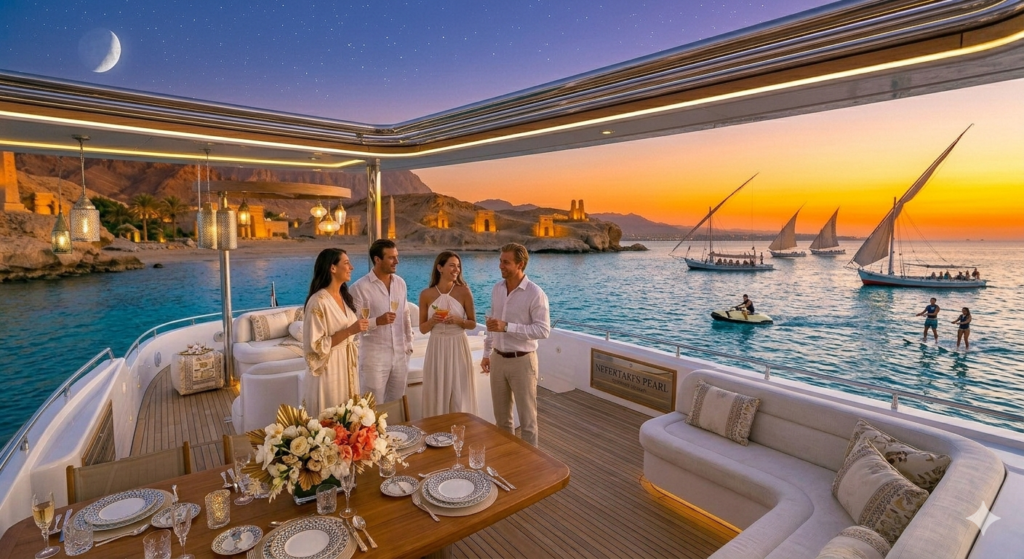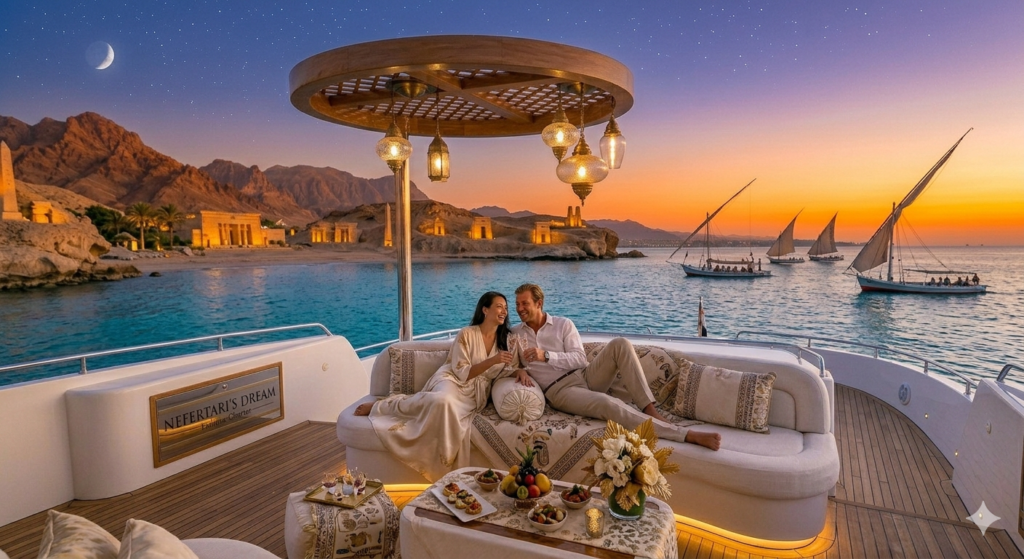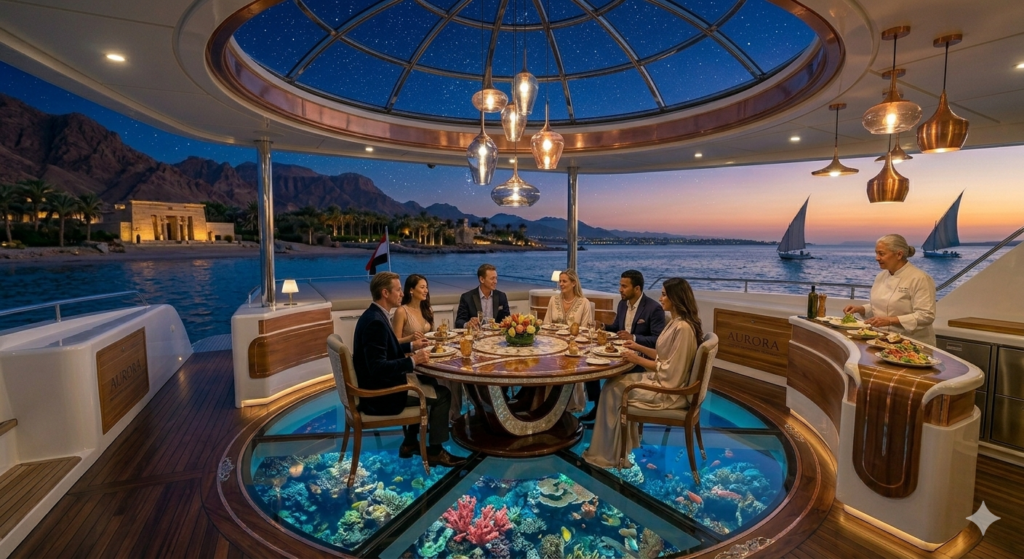
How to Select the Perfect Anchor Spot for a Lakeside Sunset Dinner at Lake of the Ozarks
There is a meaningful difference between a dinner on a boat and a lakeside sunset dinner on a private anchored yacht. The first is a meal that happens to take place on water. The second is an experience that the food is part of, where the setting, the light, the stillness of the cove, and the view from every seat at the table are as much a part of the evening as anything on the menu. The distance between those two experiences is almost entirely determined by one decision made before the food is even plated: where the boat is anchored. The anchor spot shapes everything that follows. It determines whether the water beneath you is flat and mirror-calm or restless with surface chop that makes every glass of wine a small act of concentration. It determines whether the sunset view from the dinner table is framed by the open Ozark horizon or blocked by a treeline that closes off the western sky. It determines whether the ambient noise around you is the gentle lap of water against the hull and the sound of a light evening breeze or the drone of recreational boat traffic on the main channel 200 feet away. Get the anchor spot right, and the dinner becomes the kind of experience your guests describe for years. Get it wrong, and the best catering in Missouri is working against the environment rather than with it. This guide covers everything that goes into selecting the perfect anchor spot for a lakeside sunset dinner at Lake of the Ozarks, from the practical criteria that determine cove quality to the specific environmental variables that change by season, time of day, and wind direction. Whether you are working with a professional charter captain on a private dinner cruise or simply wanting to understand what makes an anchored dinner experience work at its best, this is the framework that experienced LOTO captains use when choosing where to stop. The Five Criteria That Define a Perfect Anchor Spot for a Sunset Dinner Every anchor spot decision for an evening dinner experience on Lake of the Ozarks involves evaluating the same five core criteria. A cove that scores well on all five delivers the conditions that make a lakeside sunset dinner genuinely extraordinary. A cove that scores well on three but poorly on two creates compromises that affect the experience in ways that guests notice even if they cannot immediately identify the cause. Criterion One: Water Calmness and Vessel Stability The most fundamental requirement for a dinner anchor spot is a water surface that remains calm enough throughout the meal that the vessel stays stable and the table setting stays in place. Surface chop from wind, from boat wake, or from the thermal water movement that certain cove geometries produce in the evening hours creates a dining experience that feels physically unsettled and psychologically uncomfortable regardless of how beautiful the view is. Coves with narrow entrances relative to their interior area provide the best natural wind and wake protection on Lake of the Ozarks. The narrow entrance acts as a buffer that dissipates the energy of surface waves before they reach the interior of the cove, while the wider interior provides enough space for comfortable anchoring with adequate swing room. Coves that open directly onto the main channel or face into the prevailing southwest wind direction at LOTO provide significantly less natural protection and should be evaluated carefully during the initial cove selection process rather than discovered as a problem after the anchor is set and the appetizers are already on the table. Criterion Two: Sunset View from the Dinner Position A lakeside sunset dinner derives a significant portion of its value from the visual experience happening around and above the table as the meal progresses. The anchor spot needs to provide an unobstructed westward view from the primary dining position on the vessel so that the golden hour light, the sunset colors, and the Ozark horizon are visible to guests throughout the meal without requiring them to turn awkwardly in their seats or stand to see around an obstruction. This means evaluating the treeline height and density on the western and southwestern edges of any candidate cove. A cove with a tall, dense treeline closing off the western sky below 30 degrees of elevation blocks the most visually dramatic portion of the sunset, the final 20 to 30 minutes when the sun is at or below the treeline height and the sky fills with the warmest and most intensely colored light of the entire evening. An ideal dinner anchor cove has a low or interrupted western treeline that gives the open Ozark sky full visibility from the vessel’s dining deck from at least 45 degrees above the horizon down to the water surface. Criterion Three: Distance from Boat Traffic Main channel boat traffic creates two distinct problems for an anchored dinner experience: wake and noise. Wake from passing recreational vessels on the main channel at LOTO can reach a cove anchoring position in reduced but still noticeable form, producing the surface movement that disrupts vessel stability and table settings described above. The engine and stereo noise from recreational traffic creates an ambient noise floor that competes with dinner conversation and disrupts the quiet, private atmosphere that defines a great lakeside dinner experience. The ideal dinner anchor spot is positioned far enough from the main channel that both wake and noise from passing traffic are reduced to imperceptible levels. On Lake of the Ozarks, this typically means anchoring in a cove whose entrance is set back at least 200 to 300 feet from the main channel edge, allowing enough distance for wake energy to dissipate and noise to attenuate before reaching the vessel. During peak season weekends in July and August, even coves with adequate setback distance may experience occasional traffic from recreational vessels exploring the lake’s coves, which is why evening departures timed for the post-peak-traffic window after 6:30 PM improve the