
What Raft Up Means at Party Cove
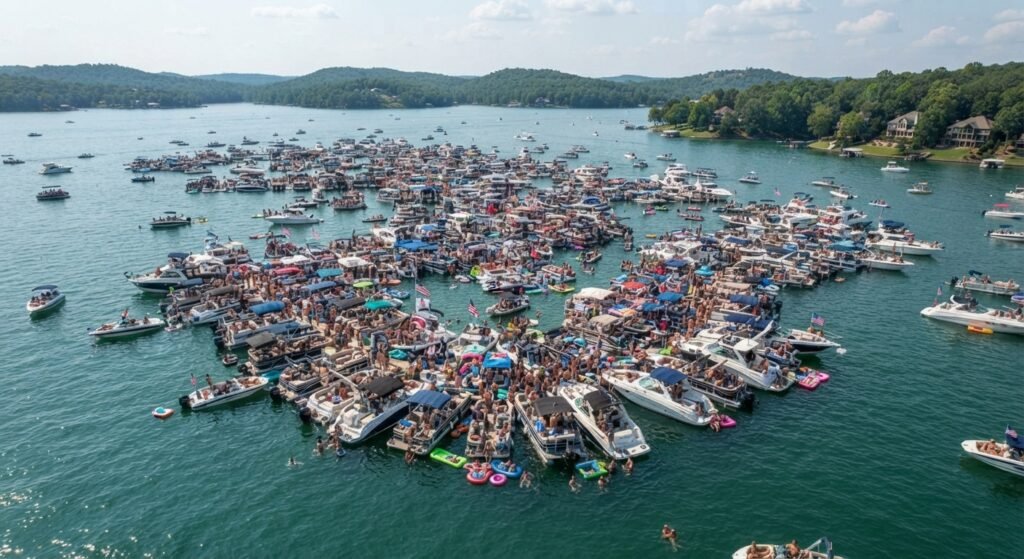
Raft up is the term boaters use for tying multiple boats together on the water. At Party Cove, this is the whole point of the visit. Boats line up side by side and connect with ropes. This creates one large floating platform for the whole group.
The idea sounds simple, but doing it safely takes some skill. A raft up can include just two boats or dozens of boats at once. Larger raft ups need more care and coordination. Everyone involved plays a part in keeping the group safe.
This guide focuses on the exact steps needed to raft up the right way. It covers gear, technique, anchoring, and common mistakes to avoid. By the end, first time visitors should feel confident joining any raft up at Party Cove.
Party Cove is known for huge raft ups during busy weekends. Hundreds of boats can end up connected in one afternoon. This makes learning the right technique even more important. A safe raft up keeps the fun going without any accidents.
New visitors are often surprised by just how organized a good raft up can be. Experienced boaters usually approach slowly and communicate before tying on. This simple courtesy helps the whole group stay relaxed and safe from the very start.
Why Safety Matters When Rafting Up
Tying boats together adds real risk if done the wrong way. Loose ropes can let boats drift apart suddenly. Waves from passing boats can rock the whole raft. A poor setup can lead to bumped hulls or injuries.
Party Cove gets crowded fast on holiday weekends. Boats sit close together with limited space to move. This means small mistakes can affect many boats at once. Careful tying and anchoring protects everyone nearby, not just your own group.
Safety also matters for swimmers in the water. Many guests jump in to swim between boats. A loose or unstable raft up puts swimmers at greater risk. Following safe steps keeps both boats and people protected all day.
Children and less experienced swimmers deserve extra attention around a raft up. Adults should keep a close eye on anyone moving between boats. A stable, well tied raft makes the whole swimming area feel much safer for the group.
Boats and Gear You Need Before You Raft Up
Having the right gear makes tying up much easier. Fenders are the most important item to bring along. These cushions sit between boats and prevent hull damage. Without fenders, boats can scratch or dent each other quickly.
Strong dock lines are just as important as fenders. Ropes should be long enough to tie multiple knots if needed. Weak or short ropes often fail under pressure from waves. Always check ropes for wear before heading out to the cove.
An anchor built for the lake floor is also key. Party Cove has a mix of sand and mud on the bottom. A proper anchor holds the raft steady even with wind or waves. Boats without a solid anchor risk drifting into others nearby.
A basic first aid kit is worth keeping on board as well. Small scrapes or bumps can happen even with careful planning. Having supplies ready saves time and keeps the day running smoothly for the whole group.
A whistle or small air horn is also a smart addition to any boat. These simple tools help signal nearby boats quickly if something needs attention. Small extras like these often make a big difference during a busy day at the cove.
Step by Step Guide to Tying Up Safely
Start by approaching the raft up slowly and carefully. Sudden movements can startle nearby boats and swimmers. Communicate with the group you plan to join before getting close. A quick chat helps everyone prepare for your arrival.
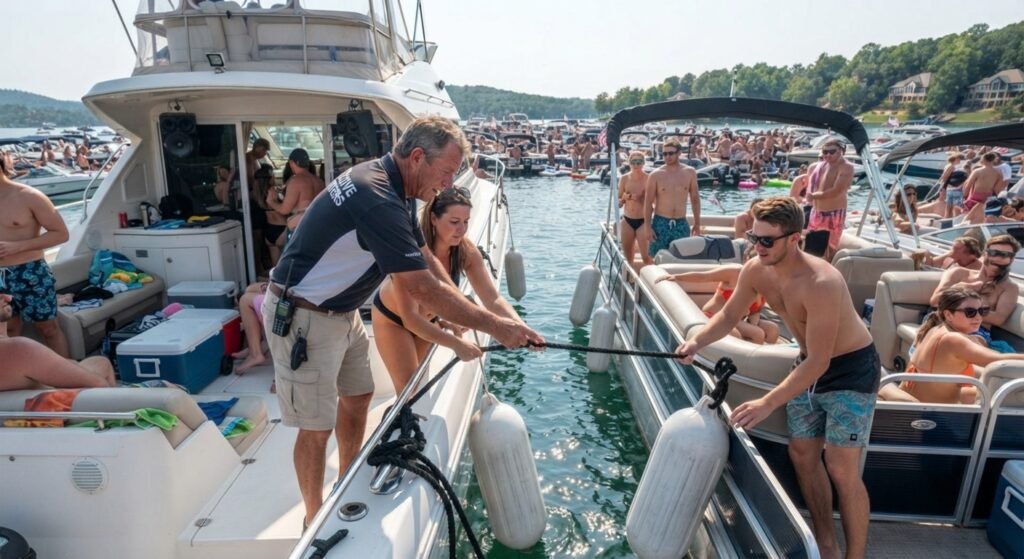
Once close, line up your boat parallel to the others. Position fenders along the side that will touch the next boat. This protects both hulls from bumps during the tie up process. Move slowly until the boats are gently touching.
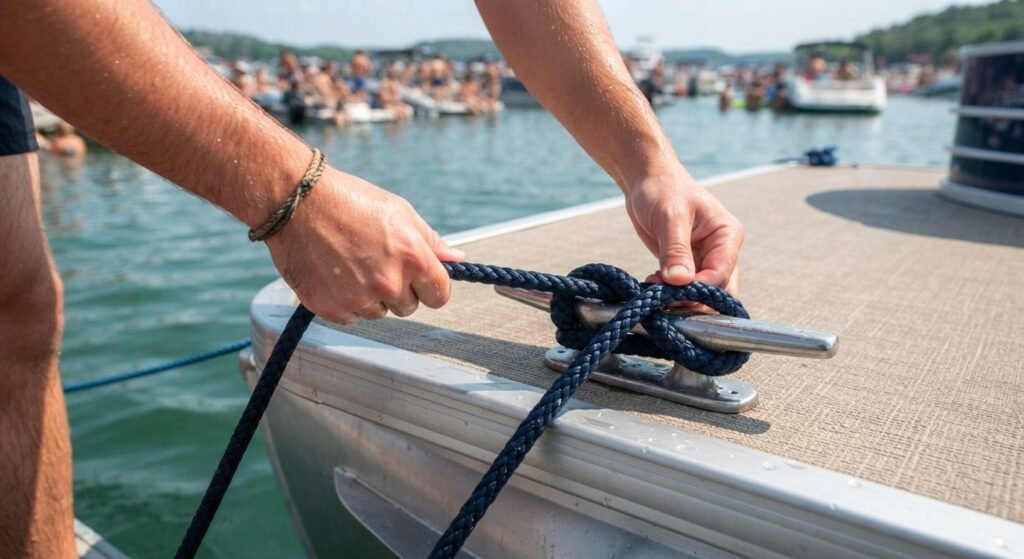
Next, secure the bow line to the neighboring boat first. This keeps the front of your boat steady and controlled. Then secure the stern line in the same careful way. Double check both knots before letting go of the boat.
A simple cleat hitch knot works well for most raft up situations. It holds firmly under pressure but can still be released quickly if needed. Learning this one knot well is often enough for most boaters at Party Cove.
Finally, check the tension on both lines. Lines should be snug but not overly tight. Too much tension can pull boats together too hard. Leave a little slack so the boats can move naturally with the waves.
Once tied, walk through the setup one more time before relaxing. Confirm that fenders are still in the right position. A quick final check gives everyone confidence that the raft up is secure for the rest of the day.
Anchoring Tips for a Strong and Safe Raft
A strong anchor is the foundation of any safe raft up. Drop the anchor before tying additional boats to your own. This keeps the entire raft from drifting during the day. Always check that the anchor has properly set before continuing.
Wind direction plays a big role in anchoring at Party Cove. Boats should face into the wind whenever possible. This reduces strain on ropes and anchors throughout the day. Ignoring wind direction can lead to a raft that slowly drifts off course.
It helps to recheck the anchor periodically during a long day. Waves from passing boats can loosen an anchor over time. A quick check every hour or two prevents unwanted surprises. This simple habit keeps the whole raft up secure until it is time to leave.
Choosing a spot with slightly deeper water can also help. Shallow areas near the shoreline are more likely to shift with wave action. A slightly deeper anchor point often holds better throughout a busy afternoon.
Common Mistakes to Avoid When Rafting Up
One common mistake is skipping fenders entirely. Boats without fenders often end up with scratched or damaged hulls. This is one of the easiest mistakes to avoid with just a little preparation. Always keep a full set of fenders ready before joining a raft.
Another mistake is tying knots too quickly without checking them. Loose knots can slip free during a busy afternoon. This can send boats drifting into others without warning. Taking a few extra seconds to double check knots prevents this problem.
Overcrowding the raft is also a common issue. Adding too many boats to one small area increases risk for everyone. It is often safer to start a new small raft nearby. Spreading out slightly makes movement and swimming much safer for all guests.
Ignoring weather changes is another mistake worth avoiding. Sudden wind shifts can put extra strain on ropes and anchors. Keeping an eye on the sky throughout the day helps guests react early if conditions change.
Rules and Safety Practices at Party Cove
Local water patrols keep an eye on Party Cove during busy weekends. Boaters are expected to follow basic safety rules while rafting up. Life jackets should stay on board for every passenger. Speed limits near the cove protect both swimmers and anchored boats.
Alcohol is common at Party Cove, but safety should still come first. Boat operators are encouraged to stay alert even while relaxing. Designating a sober person to help with lines and anchoring is a smart choice. This keeps the raft up process steady and controlled.
Respecting nearby boats is part of safe rafting culture. Leaving enough space between different raft groups reduces the risk of collisions. Being mindful of swimmers moving between boats also helps prevent accidents. Simple courtesy keeps the entire cove safer for everyone.
Following patrol instructions without hesitation is also important. Officers on the water are there to keep every visitor safe. Cooperating quickly with any guidance helps the entire cove run smoothly during busy weekends.
What to Do If Something Goes Wrong While Rafting Up
Even with careful planning, small problems can still happen on the water. A rope may slip, or a boat may drift slightly out of place. Staying calm is the first and most important step. Quick, clear communication with nearby boats solves most small issues fast.
If a line comes loose, slowly reduce engine power before making adjustments. Sudden movements can make the situation worse for everyone nearby. Signal to the connected boat before retying any lines. This keeps the whole raft steady while repairs are made.
If a boat drifts too close to another, gentle steering usually solves the problem. Avoid sharp turns in a crowded raft up area. Fenders should always stay in place to absorb any accidental contact. A slow, careful response prevents small issues from becoming bigger ones.
In more serious situations, water patrol boats are usually nearby during busy weekends. Waving for attention or using a marine radio can bring quick help. Knowing this support exists gives guests extra peace of mind. Most issues at Party Cove are minor and easily managed with a calm approach.
Best Times to Raft Up Safely at Party Cove
Morning hours tend to offer calmer water for setting up a raft up. Fewer boats are moving through the cove early in the day. This makes anchoring and tying lines much easier for everyone involved. Arriving early also means a better choice of open space.
Midday and afternoon bring heavier boat traffic and larger crowds. Waves increase as more boats pass through the cove. Raft ups formed later in the day may need extra attention to ropes and anchors. Staying alert during these busier hours helps prevent small mishaps.
Weekday visits are usually calmer than weekend holidays. Smaller crowds make it easier to practice safe rafting techniques. First time visitors may find weekdays a more comfortable way to learn the process. Busy holiday weekends are better suited to guests who already feel confident on the water.
Checking the weather forecast before heading out is always a smart step. Calm, clear days make rafting up much easier and safer overall. Planning around good weather helps guests enjoy a smoother experience from start to finish.
Why a Charter Captain Makes Rafting Up Easier
Booking a yacht or pontoon charter removes much of the stress from rafting up. A trained captain already knows the safest way to approach a crowd. This experience helps guests avoid common mistakes first time visitors often make. It also means one less thing for the group to worry about.
Captains understand wind patterns and anchoring spots better than most visitors. They know which areas of Party Cove tend to be calmer. This knowledge helps guests enjoy a smoother and safer raft up experience. Guests can relax fully while the captain handles the technical details.
For groups celebrating a special occasion, this extra safety adds real value. Bachelorette parties, birthdays, and reunions all benefit from a stress free setup. A professional charter turns a tricky process into an easy part of the day. Guests get to focus on fun instead of ropes and anchors.
Even experienced boaters often prefer letting a captain handle the raft up. It frees up time to enjoy the music, the water, and the company of friends. This small choice can turn a good day at Party Cove into a great one.
Ultimately, learning to raft up safely adds real confidence to any trip on the water. Whether guests choose to learn the process themselves or rely on a captain, safety should always come first. A well tied raft up is what allows Party Cove to remain such a fun and welcoming tradition every summer.
Frequently Asked Questions
What does raft up mean at Party Cove?
Raft up means tying multiple boats together so they float as one connected group. Boats line up side by side and secure with ropes and fenders. This lets large groups gather closely without needing a dock. It is the main tradition that defines the Party Cove experience. Doing it correctly keeps everyone on board safe and comfortable.
What gear do I need to raft up safely?
You need fenders, strong dock lines, and a reliable anchor for the lake floor. A basic first aid kit and a whistle are also smart additions. Life jackets should always stay on board for every passenger. Having this gear ready before arriving saves time once you reach the cove. Preparation is the easiest way to avoid common problems.
How do I tie my boat to another boat safely?
Approach slowly and line up parallel with the other boat first. Position fenders along the side that will touch the neighboring boat. Secure the bow line first, then the stern line, checking each knot carefully. Leave a small amount of slack so the boats can move naturally. This method keeps both boats steady and protected throughout the day.
Why is anchoring important before rafting up?
A strong anchor keeps the entire raft from drifting during the day. Wind and waves can slowly push an unanchored group off course. Facing into the wind reduces pressure on ropes and anchors. Rechecking the anchor every hour or two adds extra security. Good anchoring is the foundation of a safe and enjoyable raft up.
What are common mistakes people make when rafting up?
Skipping fenders is one of the most common mistakes boaters make. Tying loose knots without double checking them is another frequent issue. Overcrowding a small raft area also increases risk for everyone nearby. Ignoring sudden weather changes can add unexpected strain on lines. Avoiding these simple mistakes makes the whole experience much safer.
Is it safe to swim near a raft up?
Swimming near a raft up is common, but caution is still important. A stable, well tied raft reduces movement that could affect swimmers. Adults should always keep an eye on children swimming between boats. Staying aware of nearby boat traffic adds another layer of safety. A secure raft up makes swimming much more enjoyable for everyone involved.
What should I do if something goes wrong while rafting up?
Stay calm and communicate clearly with nearby boats right away. Reduce engine power slowly if a line comes loose or a boat drifts. Avoid sudden movements, since they can make the situation worse. Water patrol boats are usually nearby during busy weekends if help is needed. Most issues are minor and can be handled with a calm, careful approach.
Does booking a charter make rafting up easier?
Yes, a professional captain already understands safe rafting techniques at Party Cove. They know how to anchor properly and approach a crowd with confidence. This removes stress for guests who have never rafted up before. It also allows the whole group to relax and enjoy the day fully. Many visitors say this makes their entire Party Cove trip smoother.
Final Thoughts
Learning how to tie up safely in the raft up at Party Cove turns a fun tradition into a worry free experience. Good gear, careful technique, and steady anchoring make all the difference on a busy day. Small habits like checking knots and watching the weather help protect both boats and swimmers.
For guests who prefer a simpler option, booking a yacht or pontoon charter takes the guesswork out completely. A trained captain handles the anchoring and rafting so guests can focus on enjoying the water. Whether learning the process firsthand or letting a professional take the lead, safety is what keeps Party Cove fun for everyone.