
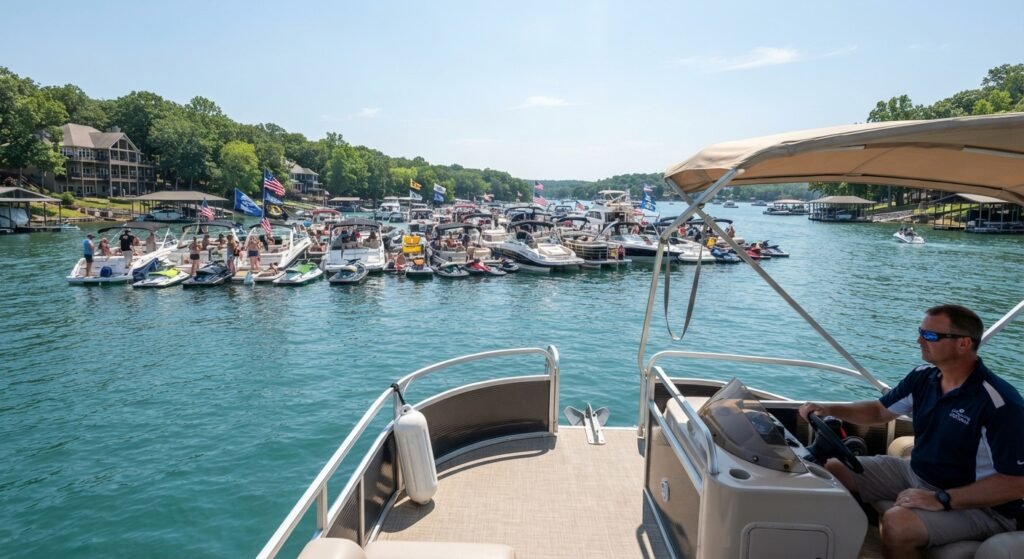
There is a specific kind of nervousness that hits the first time you approach a crowded raft up line at Lake of the Ozarks. Dozens of boats are already tied together, people are watching from every deck, and your hull is worth more than the awkward moment of asking to squeeze in. The good news is that joining a tie up line safely is a skill anyone can learn, and once you know the right technique, it becomes second nature. This guide walks through exactly how to join a boat tie up line at a place like Party Cove without putting a single scratch on your hull.
Why Tie Up Lines Require More Care Than a Normal Dock
Docking at a marina is predictable. The dock does not move, the space is usually marked, and you have a fixed structure to work with. A tie up line at a busy anchorage like Anderson Hollow Cove, better known as Party Cove, is a completely different environment. You are tying your boat to another boat, which means both vessels shift with wind, wake, and current at the same time. That constant, unpredictable movement is exactly what causes hull damage when people are not prepared.
Fiberglass hulls are especially vulnerable in this setting. Aluminum pontoon edges are sharp, and a fiberglass boat pressed against one without enough protection can end up with a deep gouge in seconds. The lake’s boating community has learned this the hard way over the years, which is why experienced boaters follow a consistent set of habits every time they raft up, regardless of how casual the day feels once they are anchored.
Gear Up Before You Even Approach the Line
The single biggest factor in avoiding hull damage is showing up prepared. Bring plenty of bumpers for your boat, because the boats around you often will not have enough of their own. Experienced Lake of the Ozarks boaters consistently note that rental boats in particular tend to show up without a single spare fender, which puts extra pressure on everyone else in the raft to compensate.
Rope matters just as much as bumpers. Have plenty of line on board before you leave the dock. You can never have too much rope for securing boats together, and running short in the middle of tying up is one of the most common and most avoidable mistakes boaters make. Keep a mix of shorter lines for close tie offs and at least one or two longer lines in case you need extra reach to a boat further down the raft.
Before you get anywhere near the line, walk your own deck and check where your cleats and rub rails sit relative to your hull’s widest point. Knowing exactly where your boat’s vulnerable spots are means you can position your fenders correctly the moment you start your approach, rather than fumbling with placement while already drifting toward another boat.
The Right Way to Approach and Position Your Boat
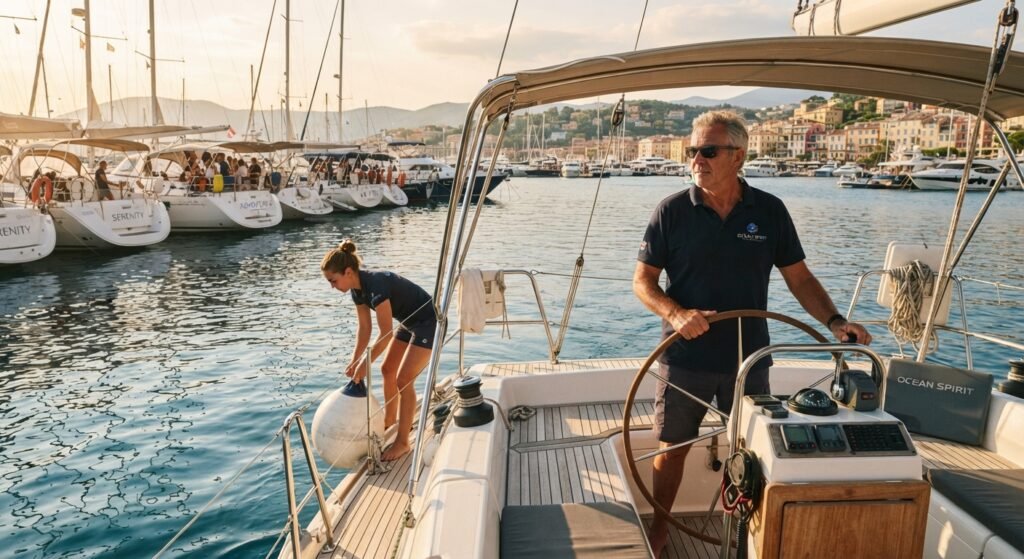
Speed is the enemy of a safe tie up. Enter coves below wake speed and motor gently through the cluster of boats, giving yourself time to assess the situation before committing to a spot. Rushing this part is where most hull damage actually happens, since a boat moving even slightly too fast has no room to correct if the current pushes it sideways at the wrong moment.
Once you have identified a spot, approach at the slowest possible speed that still gives you steering control. Idle in, watch how the boats around you are drifting, and time your final approach to match their natural movement rather than fighting against it. If the wind is pushing everyone in one direction, use that instead of trying to power against it, since fighting the current at low speed is what causes boats to bump harder than they should.
Communicate with the people on the neighboring boat before you get close. A quick word about which side you plan to tie to and where your fenders are positioned lets both crews prepare together rather than reacting at the last second. Most boaters on a busy tie up line are happy to help guide you in, especially if you ask clearly and give them a moment to get their own fenders adjusted first.
Fender Placement That Actually Protects Your Hull
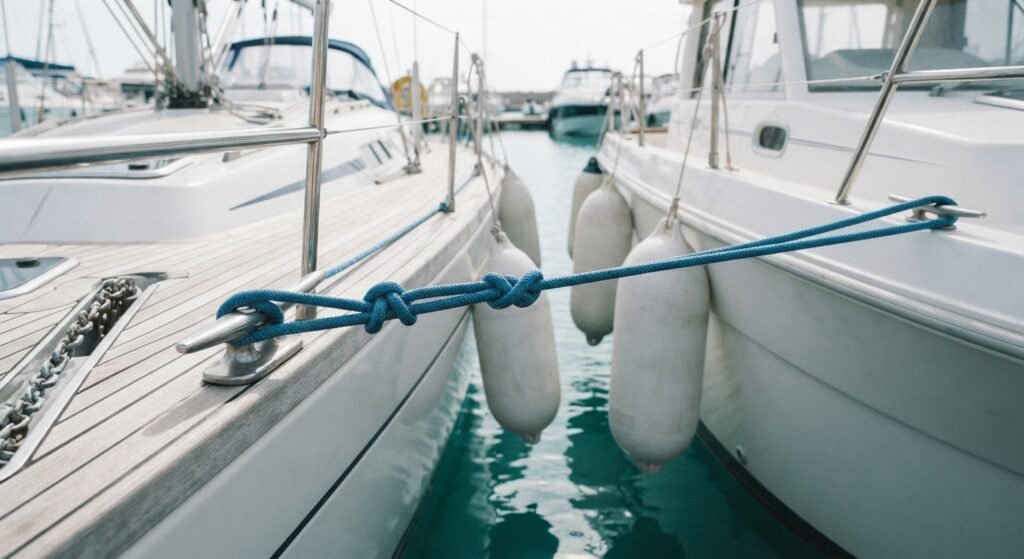
Fenders only work if they are placed correctly, and this is where a lot of first timers get it wrong. Position fenders at the widest point of your hull, since that is where contact is most likely to happen first. A single fender in the middle of your boat’s side does very little if the actual point of contact ends up being closer to the bow or stern.
For a proper raft up, use at least two to three fenders per side depending on your boat’s length, spaced evenly rather than clustered together. Larger boats or longer sessions in a crowded cove benefit from adding an extra fender at both the bow and stern corners, since these areas take unpredictable hits as boats shift and turn with the current throughout the day.
One detail experienced boaters take seriously is avoiding aluminum pontoon boats entirely if you are running fiberglass. The sharp edges on an aluminum pontoon’s corner can cut through a fiberglass hull’s gel coat even with fenders in place, since the contact point is a hard edge rather than a flat surface. If you must tie near a pontoon, double up your fenders on that side and check them frequently throughout the day, since they tend to shift out of position faster against an uneven aluminum edge.
Securing Your Lines the Right Way
Once your fenders are set, focus on how you actually tie off. Lines should run at a slight angle rather than straight across, giving the boats a bit of natural give as they shift with wind and wake rather than snapping taut and pulling hard against each other. A completely rigid tie up transfers every small movement directly into a jolt, which is exactly what causes fenders to slip and hulls to make contact.
Leave a small amount of slack in your lines rather than pulling everything perfectly tight. This might feel counterintuitive, but a little give lets the raft move naturally as a unit instead of every boat straining against its neighbor. Check your lines periodically throughout the day, since rope stretches slightly over time and knots can loosen as boats shift position in the water.
Always keep a knife or quick release option accessible near your tie up point. A sudden storm or an anchor that suddenly breaks loose can strain lines, and in that kind of situation it is often safer to cut free from the group quickly rather than risk a chain reaction of boats pulling against each other in worsening conditions.
Etiquette That Prevents Damage Before It Happens
Good etiquette on a tie up line is not just polite, it is a genuine safety practice. Be respectful of other people’s property, and take care of the boats tied next to you the same way you would want your own boat treated. This mutual respect is what keeps a crowded raft up functioning smoothly all day long, since everyone is watching out for everyone else’s hull rather than just their own.
Watch your wake as you approach or depart a crowded line, even if you feel like you are moving slowly. It is a long cove, and it can be tempting to kick a small wake, but even a modest wake moving through a tightly packed raft can cause enough sudden movement to snap a poorly placed fender out of position. The Water Patrol actively watches for this in busy anchorages, so slowing down protects both your hull and your wallet.
If you notice your neighbor’s fenders are poorly positioned or their lines look unsafe, a friendly word usually goes a long way. Most boaters appreciate a heads up rather than discovering a problem after their hull has already taken a hit, and this kind of shared awareness is part of what makes the Lake of the Ozarks raft up culture work as well as it generally does.
When Renting a Yacht, Let the Captain Handle This
If you are on a captained yacht charter for a day at Party Cove or any other busy anchorage, this entire process becomes someone else’s responsibility. A licensed captain with real experience on this lake knows exactly how to approach a raft up, where to position fenders, and how to read the current and wind before committing to a tie off. This is one of the clearest practical advantages of booking a captained charter over a self drive rental for a day built around joining a crowded tie up line.
For self drive renters, ask the rental company directly whether the vessel comes with enough fenders and line for a full day of rafting up. Many groups discover too late that their rental boat was equipped for a standard cruising day rather than a Party Cove style anchorage, and showing up short on gear puts unnecessary strain on the whole tie up line around you.
Frequently Asked Questions
How many fenders do I need to safely join a tie up line?
Most boats need at least two to three fenders per side for a proper raft up, positioned at the widest point of the hull. Larger boats or longer stays in a crowded cove benefit from adding extra fenders at the bow and stern corners, since these areas take unpredictable contact as boats shift throughout the day.
Is it safe to tie a fiberglass boat next to a pontoon boat?
It carries more risk than tying next to another fiberglass boat, since aluminum pontoon edges are sharp and can cut through gel coat even with fenders in place. If you must tie near a pontoon, double up your fenders on that side and check them frequently, since they tend to shift against the uneven edge.
What speed should I use when approaching a crowded tie up line?
Always approach below wake speed, idling in slowly and gently through the cluster of boats. Rushing the approach removes your ability to correct if wind or current pushes your boat sideways, which is when most hull contact and damage actually happens.
Should my tie up lines be tight or loose?
A small amount of slack is better than a perfectly tight line. Some give allows the raft to move naturally with wind and wake instead of every boat straining hard against its neighbor, which reduces the sudden jolts that can knock fenders out of position and cause hull contact.
What should I do if a storm rolls in while I am tied up in a raft?
Keep a knife or quick release option within reach at all times. If an anchor breaks loose or wind picks up suddenly, it is often safer to cut free from the group quickly rather than risk a chain reaction of boats pulling against each other in worsening conditions.
Do rental boats usually come with enough gear to join a tie up line?
Not always. Rental boats, especially at busy anchorages like Party Cove, frequently show up without enough fenders or rope, which puts pressure on the rest of the raft to compensate. Ask your rental company directly whether the boat is equipped for a full day of rafting up before you head out.
Is it better to book a captained charter for a day centered around joining a tie up line?
Yes, especially for boaters unfamiliar with rafting up. A captain experienced on Lake of the Ozarks knows how to approach a crowded line, position fenders correctly, and read the current before committing to a spot, which removes the guesswork and risk for anyone new to this kind of anchoring.
How do I know if I am causing damage to a neighboring boat’s hull?
Watch for any grinding, scraping, or repeated hard contact points where your fenders are not fully covering the gap between the two hulls. If you hear or feel contact, adjust your fenders immediately or add an extra one at that point, and always ask your neighbor if their boat feels secure as conditions change throughout the day.
Final Thoughts
Joining a boat tie up line at Lake of the Ozarks does not have to be a stressful moment, even in a crowded anchorage like Party Cove. The boaters who glide into a raft without a scratch are not lucky, they are simply prepared. They show up with enough fenders and rope, they approach slowly and communicate clearly, and they respect the boats around them just as much as their own.
Once you have gone through the process a few times, it stops feeling like a test and starts feeling like second nature. You learn to read the current, judge the right amount of slack in a line, and spot a poorly protected hull before it becomes a problem. That confidence is exactly what turns a nervous first approach into an easy, routine part of a great day on the water. Take the time to prepare before you leave the dock, move slowly once you arrive, and your hull will thank you at the end of the day.