
Anchoring a large yacht is not the same as dropping a hook from a small fishing boat. The vessel is heavier. It draws more water. It swings a wider arc on the anchor rode. It needs more room, more depth, and more natural protection from wind and wake to sit comfortably through the night or through an afternoon swim stop.
Lake of the Ozarks has over 1,100 miles of shoreline and hundreds of coves scattered across its 54,000 acres. Some of those coves are perfect for a large yacht. Others are too shallow, too exposed, or too congested to be practical. Knowing which coves offer the right combination of depth, protection, and space is what separates a comfortable anchoring experience from a frustrating or unsafe one.
This guide covers the safest coves to anchor a large yacht at Lake of the Ozarks. You will know which areas to prioritize, what to look for when evaluating any cove, and how to set up for a safe and comfortable stay whether you are anchoring for an afternoon or spending the night.
What Makes a Cove Safe for a Large Yacht at Lake of the Ozarks
Before naming specific locations, it is worth understanding what characteristics define a safe anchorage for a large vessel. Not every sheltered-looking cove delivers what a big boat actually needs. Evaluating each of these factors before you commit to an anchorage saves you from a bad night on the water.
Adequate depth throughout the swing radius is the first requirement. A large yacht drawing 4 to 5 feet of water needs a minimum of 8 to 10 feet at the anchor position to provide safe clearance at any point in its swing arc. The swing radius is determined by the length of anchor rode deployed. A vessel with 80 feet of rode out can swing in a circle with an 80-foot radius. Every point within that circle needs adequate depth. Anchoring at 15 feet in the center of a cove that rises to 4 feet at its edges can result in grounding when wind shifts the vessel to the shallow side of its swing.
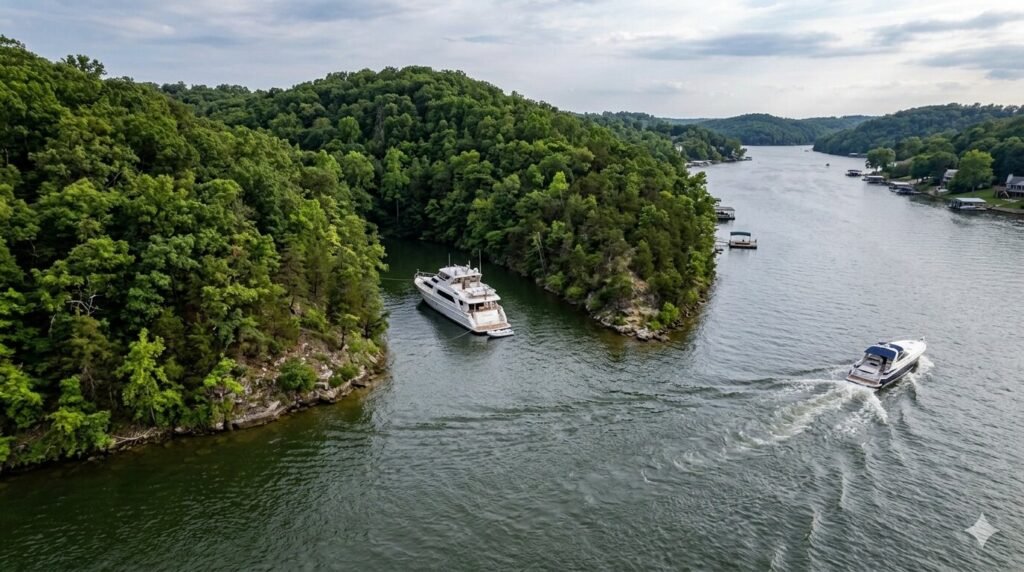
Protection from wind and wave action defines how comfortable an anchorage will be. A cove that opens directly to the main channel receives the full force of traffic wake and wind-driven chop. A cove with a narrow entrance and high bluff or tree-covered banks on multiple sides creates a natural windbreak and blocks the majority of passing wake. Bluff-lined coves are particularly effective at wind protection because the rock faces deflect rather than absorb wind energy. These are consistently among the most comfortable anchorages for large vessels on this lake.
Room to maneuver into and out of the cove matters significantly for a 50 foot vessel. Some coves on Lake of the Ozarks are narrow at their entrance and open up inside. Others are wide at the entrance and quickly narrow toward the back. A large yacht needs adequate turning radius to enter, position for anchoring, and exit safely. Coves that require sharp turns in confined spaces with shallow margins are not appropriate for large vessel anchorage regardless of their other qualities.
Distance from high-traffic areas affects both comfort and safety. Coves adjacent to busy marinas, waterfront bars, or sections of the main channel with heavy traffic receive constant passing wake. That wake rolls into the cove entrance and creates a persistent rolling motion that makes for an uncomfortable experience. Coves situated away from the highest traffic corridors deliver significantly more rest and relaxation whether you are anchoring for an afternoon or overnight.
Bottom composition affects anchor holding ability. Lake of the Ozarks has a mix of muddy, sandy, and rocky bottom conditions depending on location. Muddy and sandy bottoms provide the best holding for most anchor designs. Rocky bottoms are more challenging. A fluke-style anchor struggles on hard rock. A claw or plow design handles varied bottom conditions better. Bluff-lined coves often have rocky bottom near the cliff faces and softer substrate in the cove interior. Positioning your anchor in the softer interior substrate while using the bluff for wind protection gives you the best of both characteristics.
Absence of submerged hazards is essential, particularly in less-frequently visited coves. Lake of the Ozarks was formed by flooding a river valley. Submerged timber, old fence lines, and flooded infrastructure exist in some sections. Using a depth finder at low speed to scan the cove before anchoring identifies bottom irregularities that might snag your anchor or damage your running gear during the swing.
The Best and Safest Anchoring Coves by Lake Section
Lake of the Ozarks is too large and too varied to describe as a single entity. The right anchoring cove depends partly on where you are operating on the lake and what your overall itinerary looks like. Here is a breakdown of the best large vessel anchoring options by section of the lake.
Lower Lake | Mile Marker 1 Through Mile Marker 18
The lower lake section closest to Bagnell Dam has the deepest water on the entire lake. The main channel here exceeds 100 feet in depth. However, the lower lake is also the most commercially developed section. Cove anchoring in the immediate vicinity of the dam strip and the Lake Ozark city area means proximity to marina activity, waterfront businesses, and boat traffic that runs through the evening.
The coves in the Ha Ha Tonka State Park area on the south shore of the lower lake are worth noting. This section of the lake borders one of Missouri’s most beautiful state parks. The bluffs and forested shoreline of the Ha Ha Tonka area provide dramatic natural protection. Several coves along this south shore have adequate depth for large vessel anchoring with the bonus of a protected and scenic setting. The natural beauty here is exceptional. The park’s rock formations and spring-fed streams are visible from the water and create a backdrop that is unlike anything else on this lake.
Coves in the Mile Marker 10 through 18 range on the protected south shore begin to offer more distance from the primary commercial traffic concentration near the dam while still maintaining the excellent depth that characterizes the lower lake. These coves benefit from the full depth of the original Osage River channel running nearby. Bottom depth in many coves in this range exceeds 20 feet well into the interior.
Mid-Lake | Mile Marker 18 Through Mile Marker 32
The mid-lake section surrounding Osage Beach is the busiest and most commercially active part of Lake of the Ozarks. The coves in the immediate Osage Beach corridor near Shady Gators and Backwater Jacks are popular destinations but they receive significant traffic throughout the day and into the evening on weekends. Large vessel anchoring in the most congested parts of the Osage Beach corridor is possible but the experience is social rather than peaceful.
Coves on the protected sides of points and peninsulas throughout the mid-lake section offer meaningfully better anchoring conditions than coves directly adjacent to the main entertainment corridor. Moving even a half mile off the primary traffic lanes into a well-chosen cove delivers a dramatically different experience. The water calms. The wake subsides. You are still within easy reach of mid-lake amenities but separated from the constant motion of the main traffic zone.
The Grand Glaize Arm off the Osage Beach area offers anchoring opportunities that benefit from the arm’s natural protection. The geometry of the Grand Glaize Arm creates a buffer from main channel wake in its upper sections. Depth in the Grand Glaize Arm channel is adequate for large vessels through most of its length. The Grand Glaize Bridge is a well-known landmark and the sections above the bridge in the upper arm become progressively calmer and more secluded.
Party Cove near Mile Marker 28 deserves specific mention for large vessel anchoring. The cove itself is large and well-known. Depth in the anchoring zone ranges from 8 to 20 feet depending on position within the cove. For a large yacht, anchoring in the deeper sections toward the cove entrance rather than the shallow far interior is the correct approach. Party Cove is an exceptional anchoring experience during the day for groups who want the full Lake Ozark social scene. For overnight anchoring, peak weekend nights are extremely active. Weeknight anchoring near Party Cove delivers the location without the peak weekend noise level.
Upper Mid-Lake | Mile Marker 32 Through Mile Marker 42
This section of the lake is where large vessel anchoring becomes genuinely exceptional. Traffic drops significantly beyond Mile Marker 32. The scenery improves dramatically. The Hurricane Deck area in this section offers some of the most spectacular bluff-lined coves on the entire lake.
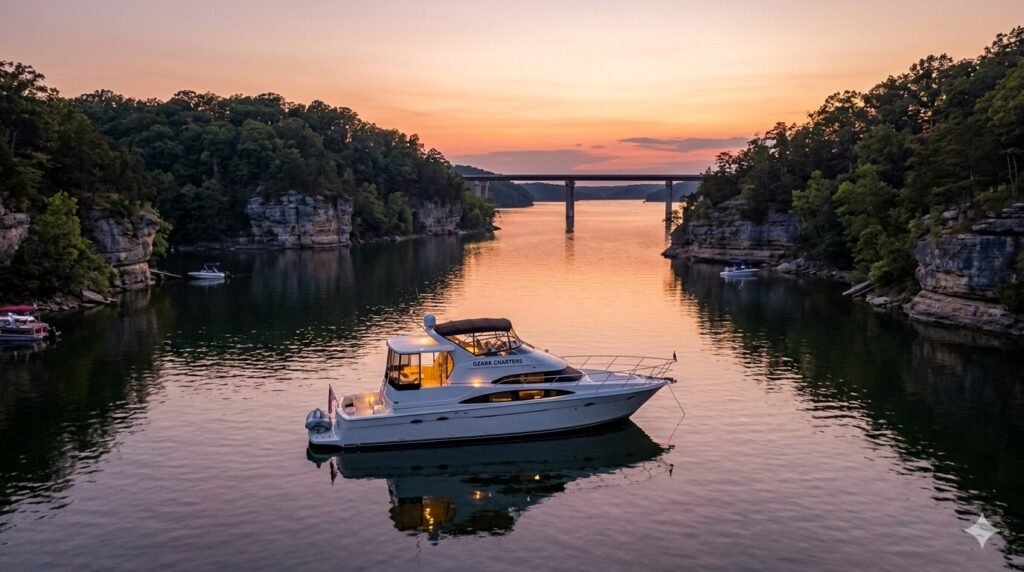
Bluff coves in the Hurricane Deck region are the gold standard for large yacht anchoring on Lake of the Ozarks. The rock bluff formations that make this area visually stunning also create outstanding natural wind protection. The bluffs rise steeply from the water on one or more sides of many coves in this section. Wind that crosses the open lake from the southwest hits these bluff faces and deflects upward rather than rolling into the cove. The result is calm water inside the cove even when the main channel outside is showing chop.
Depth in the bluff coves near Hurricane Deck drops quickly from the bluff face due to the steep underwater topography that mirrors the steep terrain above water. Many of these coves have 25 to 40 feet of depth within comfortable anchoring distance of the bluff face. This depth is ideal for large vessel anchoring. You can set a proper anchor with comfortable scope and swing without any concern about reaching shallow water at the edges of your swing arc.
The coves on both the north and south shores of the Hurricane Deck peninsula offer different orientations and protection profiles. North-facing coves provide better protection from the dominant southwest wind patterns. South-facing coves offer stunning views toward the upper lake sections and excellent morning light. Exploring this area with a depth finder active gives you multiple excellent anchoring options within a relatively small geographic area.
Upper Lake | Mile Marker 42 and Beyond
The upper lake sections beyond Mile Marker 42 are the quietest and most secluded parts of Lake of the Ozarks. Boat traffic here is a fraction of what you encounter in the mid and lower lake. The shoreline is more natural and undeveloped. The experience of anchoring in these upper sections feels like a completely different lake.
Gravois Mills area coves in the upper Osage Arm offer calm protected anchoring with good depth along the original Gravois Creek channel sections. The Gravois Arm is a quiet destination. Morning hours in this section of the lake are extraordinarily peaceful. The water is calm. Wildlife is active on the shoreline. The contrast with the busy mid-lake Party Cove scene could not be more complete.
Lynch Hollow and the surrounding coves in the upper lake sections provide classic protected anchorage for large vessels. These coves have adequate depth along their channel sections and natural protection from the wooded and bluff shoreline. The atmosphere here is genuinely remote-feeling despite the fact that marina services are accessible within a reasonable cruise.
Climax Springs area and the upper reaches of various Osage Arm tributaries offer exploration opportunities for properly equipped large vessels with experienced captains familiar with these sections. Depth monitoring becomes more important in the furthest upper lake reaches, but the sections with adequate depth deliver the most solitary and scenic anchoring experiences available on the entire lake.
The Niangua Arm off the upper lake provides its own set of protected anchoring coves. The Niangua Arm follows the original Niangua River channel and maintains adequate depth for large vessels through its lower and mid sections. Coves branching off the Niangua Arm in these sections offer excellent protection and reasonable depth. The upper Niangua sections require more careful depth monitoring for vessels drawing over 3 feet.
How to Evaluate Any Cove Before You Anchor a Large Yacht
Knowing the general areas with good anchoring potential is useful. Knowing how to evaluate any specific cove in real time is what keeps you safe when you are actually on the water.
Approach at idle speed. Never drive a large yacht at cruise speed into an unfamiliar cove. Approach slowly with depth finder active from the moment you leave the main channel. This gives you time to read the depth as it changes and react before reaching a hazardous section. A large yacht at idle speed that encounters 6 feet of water can reverse out easily. The same yacht at moderate speed will ground before you have time to react.
Scan the full swing radius before committing to an anchor position. Once you have identified a potential anchoring spot based on depth and protection, motor through the surrounding area at idle speed before dropping the hook. Check the depth at the edges of your intended swing arc. Identify any bottom irregularities or shallow sections that your vessel could reach during a wind shift. This pre-anchor survey takes five to ten minutes and eliminates the most common large vessel anchoring mistakes.
Look at the cove entrance geometry. A cove with a narrow entrance between rocky points has limited wake intrusion but also limited maneuvering room on entry and exit. A cove with a wide open entrance has more room but less wake protection. For a large yacht, the entrance width should be at least twice the vessel length to allow comfortable entry and exit with reasonable maneuvering margin.
Check wind direction against cove orientation. A cove that opens to the southwest is not well protected from the dominant southwest wind direction that characterizes most Lake of the Ozarks storm systems. A cove opening to the north or northeast with high banks on its southern and western sides provides the best protection from prevailing weather. Use a compass heading to understand which way the cove opens and compare that to the current and forecast wind direction before you commit.
Test the anchor hold before you settle in. After deploying your anchor, let out appropriate scope and reverse gently to set the hook. Watch your position relative to fixed shoreline reference points. If you drift significantly during the reversal, the anchor is dragging. Pull it and reset. Only when a proper hold is confirmed should passengers be allowed to relax, swim, or settle in for the evening. A dragging anchor discovered at 2 AM in a dark unfamiliar cove is a significantly more stressful situation than one discovered immediately after deployment in daylight.
Why a Captained Charter Makes Cove Selection Effortless
For guests chartering a large yacht at Lake of the Ozarks, all of the cove evaluation knowledge described in this guide is the captain’s responsibility. You do not need to become an expert in Lake of the Ozarks cove depth profiles and wind protection geometry to have a perfect anchoring experience. You need the right captain.
A USCG certified captain from Yacht Rental Lake Ozark knows this lake’s coves with a depth of familiarity that only comes from extensive time on the water. They know which coves have the right depth for the specific vessel they are operating. They know which coves stay calm when the main channel is choppy. They know the coves that offer the best combination of natural beauty, protection, and depth for overnight stays. They have anchored in these coves across different seasons, different water levels, and different weather conditions.
When you book a captained charter for an overnight or multi-day experience at Lake of the Ozarks, the captain selects anchoring spots that are appropriate for the vessel size, the weather forecast, and your group’s preferences. If you want a dramatic bluff cove setting in the Hurricane Deck area, the captain knows exactly which coves in that section offer adequate depth for a large yacht. If you want a quieter upper lake experience near Gravois Mills or Lynch Hollow, the captain knows how to get there and where the best holding ground is in those sections.
The result is a seamless anchoring experience. You are involved in deciding what kind of experience you want. The captain translates that preference into a specific, safe, and beautiful location that delivers exactly what you are looking for. That partnership between guest preference and professional local knowledge is what makes a Yacht Rental Lake Ozark captained charter consistently exceptional.
Frequently Asked Questions
What is the minimum depth needed to anchor a large yacht safely at Lake of the Ozarks?
A large yacht drawing 4 to 5 feet of water needs a minimum of 8 to 10 feet of depth at the anchor position to provide adequate clearance throughout its swing arc. In practice, anchoring in 12 to 20 feet of water is the ideal range for most large vessel charter situations at Lake of the Ozarks. This depth provides comfortable clearance above the draft, allows proper anchor scope without excessive rode, and ensures the vessel remains safely afloat if any anchor drag occurs.
Which section of Lake of the Ozarks has the best large yacht anchoring coves overall?
The upper mid-lake section in the Hurricane Deck area between approximately Mile Marker 32 and Mile Marker 42 offers the best combination of depth, natural protection, scenery, and distance from high-traffic zones. The bluff-lined coves in this section are considered the gold standard for large vessel anchoring on Lake of the Ozarks by captains with extensive experience on this lake.
Can I anchor a large yacht overnight in the coves at Lake of the Ozarks?
Yes. Overnight anchoring is legal on Lake of the Ozarks in most open water areas. You must display a white 360-degree anchor light from sunset to sunrise. You must maintain proper sound signal capability. You must stay clear of restricted zones, private property, and designated swim areas. With proper preparation and a well-chosen cove, overnight anchoring in a large yacht at Lake of the Ozarks is not only legal but genuinely one of the best experiences this lake offers.
Are the coves near Party Cove appropriate for large yacht anchoring?
Party Cove itself at approximately Mile Marker 28 can accommodate large yacht anchoring in its deeper entrance sections. The far interior of Party Cove is shallower and less appropriate for vessels with significant draft. The primary consideration for large vessel anchoring near Party Cove is the high weekend traffic and noise level. For daytime anchoring during the lake’s famous social scene, the cove works well. For overnight anchoring, weeknight visits deliver a dramatically calmer experience.
What anchor type works best in Lake of the Ozarks coves?
The bottom composition varies by cove. Muddy and sandy cove interiors favor fluke-style anchors which set quickly and hold well in soft substrate. Rocky bottom sections more common near bluff faces favor claw or plow style anchors that can find purchase in uneven hard substrate. For large yacht anchoring in Lake of the Ozarks bluff coves, a quality plow or claw anchor handles the varied bottom conditions most reliably. Your captain will have the appropriate anchor system for the vessel and typical Lake of the Ozarks conditions.
How does lake level affect cove anchoring for large yachts at Lake of the Ozarks?
Lake level directly affects available depth in every cove on the lake. All depth figures are referenced to standard pool level. When lake level is below normal pool, coves that are marginally deep enough for a large vessel at standard pool may become too shallow. Always check current Army Corps of Engineers pool level data before planning a large vessel anchoring trip. Your captain at Yacht Rental Lake Ozark incorporates current lake level into every anchoring decision automatically.
What should I do if wind shifts during the night while anchored in a Lake of the Ozarks cove?
A wind shift changes the direction your vessel points on the anchor and may shift you toward a shallower or less protected part of the cove. Before settling in for the night, verify that your swing radius remains safe in all wind directions by checking depth at the full extent of your rode in multiple compass directions. If a wind shift occurs overnight that moves your vessel toward a hazardous position, the captain will reposition to a safer location within the cove or move to a different anchorage entirely.
Is the Gravois Mills area good for large yacht anchoring at Lake of the Ozarks?
Yes. The coves in the Gravois Mills area of the upper Osage Arm offer calm and protected anchoring with good depth along the channel sections. This area is significantly less trafficked than the mid-lake Osage Beach corridor. It delivers a quieter and more natural anchoring experience. The tradeoff is distance from mid-lake amenities and entertainment. For guests prioritizing peace, scenery, and solitude over proximity to waterfront bars and marinas, Gravois Mills area coves are an excellent choice for large vessel anchoring.
Does Yacht Rental Lake Ozark recommend specific coves for overnight anchoring on multi-day charters?
Yes. Our captains select anchoring locations based on the vessel size, current lake conditions, weather forecast, water level, and the guest group’s preferences for their overnight experience. On multi-day charters, the captain typically proposes an itinerary that incorporates different anchoring locations each night to show guests multiple sections of the lake. Guests are always welcome to express preferences for particular areas and the captain works to accommodate those preferences within safe navigation parameters.
Find Your Perfect Anchorage at Lake of the Ozarks
Lake of the Ozarks rewards the boater who takes time to understand it. The bluff-lined coves of the Hurricane Deck area are waiting with calm water, dramatic scenery, and the kind of depth that makes large vessel anchoring genuinely comfortable. The upper lake sections near Gravois Mills and Lynch Hollow offer solitude that feels miles away from the weekend crowds of the main lake social scene. The mid-lake coves off the Grand Glaize Arm put you within reach of Osage Beach entertainment while providing a sheltered retreat from the main channel traffic.
Every one of these anchoring experiences is accessible through a captained charter with Yacht Rental Lake Ozark. Our captains know these coves. They know where the deep water is, which bluffs provide the best wind protection, and how to position a large yacht for a comfortable and safe overnight stay in any section of this lake.
Whether you are planning a romantic overnight escape, a multi-day exploration of the full lake, or a group celebration that ends with stars over a quiet bluff cove, the right anchorage makes the experience extraordinary.
Reach out to Yacht Rental Lake Ozark today. Tell us what you are looking for in an anchoring experience. Our team will match you with the right vessel, the right captain, and the right coves to make your time on Lake of the Ozarks genuinely unforgettable.