
There is a spot on the far reaches of Lake of the Ozarks that feels like stepping into a different decade entirely. The Swinging Bridges near Brumley are two historic wood planked suspension bridges hanging over the Grand Auglaize Creek arm, and the sandbar and shallow water beneath them have quietly become one of the lake’s most charming and lesser known boating destinations. This guide covers what you need to know before anchoring here, how to swim safely in the area, and how to plan the trip so it becomes one of the best stops of your entire lake day.
What the Swinging Bridges Area Actually Is
The bridges themselves date back to 1931, the very same year Union Electric completed Bagnell Dam and created Lake of the Ozarks. Built by engineer Joseph A. Dice, the larger of the two structures is officially known as the Grand Auglaize Bridge but is almost universally called the Big Swinging Bridge by locals and visitors alike. It hangs directly over the point where Grand Auglaize Creek meets the lake, and its wood plank deck and cable suspension design make it feel like a genuine piece of engineering history rather than a typical roadside attraction.
The area gained National Historic Place status in 2020, which speaks to how unique this structure really is. In recent years the bridge has gone through a period of closure and repair after inspectors discovered structural concerns with its anchoring system, and the local community rallied to preserve it rather than let it be torn down. Checking current bridge status before your trip is a smart step, since access and safety conditions can shift depending on ongoing maintenance work, but the sandbar and swimming area below the bridges remain a beloved boating destination regardless of the bridge’s exact walking status at any given time.
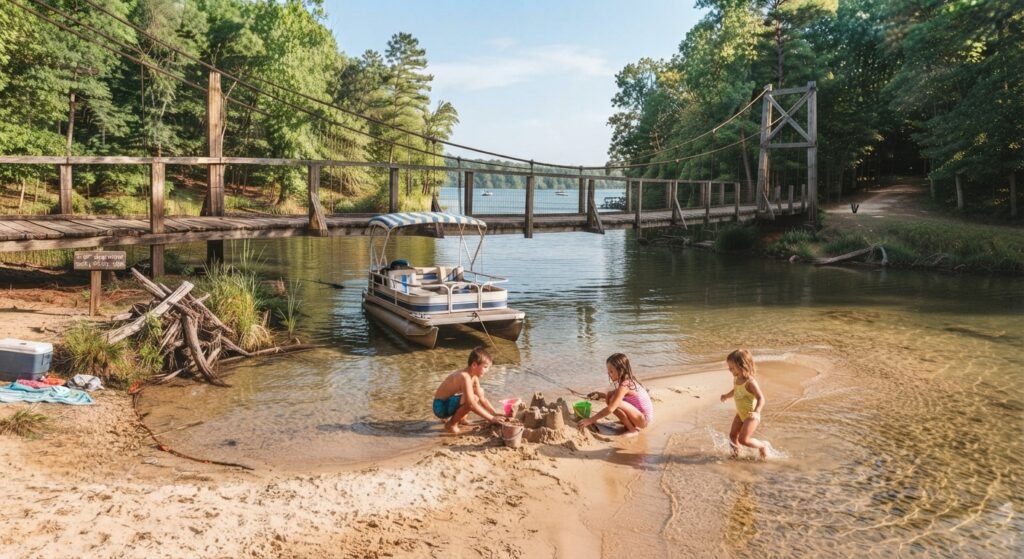
Beneath the bridges, the creek widens into a small park area with a natural sandbar and shallow water access. Kids are often found stacking rocks or building sandcastles right on the sandbar during a typical summer afternoon, and the whole scene has a distinctly rural, quiet charm that stands in sharp contrast to the busier, more commercial stretches of the lower main channel further down the lake.
Getting There by Boat and What to Expect Along the Way
Reaching the Swinging Bridges area by water means traveling into the more remote, upper reaches of Lake of the Ozarks, well beyond the busy commercial corridor near Bagnell Dam and Osage Beach. The area sits along the Grand Auglaize Creek arm, which branches off from the lake’s main system in the eastern section near Linn Creek. By road, visitors typically reach the site by taking Highway 42 east from Osage Beach or State Road A east from Linn Creek onto Swinging Bridges Road, but boaters coming from the water follow the creek arm itself to reach the same destination.
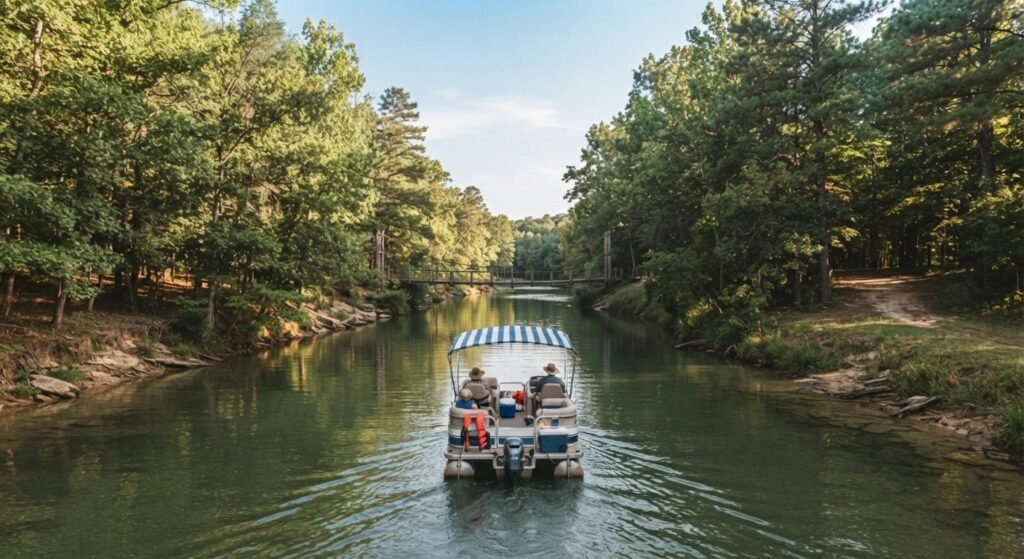
The journey by water into this arm is genuinely part of the appeal. As you leave the wider, more developed sections of the lake behind, the shoreline narrows and grows noticeably quieter, with dense Ozark forest lining the banks and far less boat traffic than you would find on the main channel during peak season. This transition gives the whole trip a sense of discovery, as though you are leaving the busy lake behind and entering a quieter, older version of the Ozarks.
Because this is a shallower creek arm rather than the deep main channel, navigating carefully and watching your depth becomes especially important as you approach the sandbar area. Boaters unfamiliar with this part of the lake should proceed at reduced speed once they enter the narrower creek section, since water depth can vary significantly depending on current lake levels and the natural silting that happens in these upper tributary arms over time.
Anchoring Tips for the Sandbar and Shallow Water
The sandbar beneath the Swinging Bridges offers a genuinely ideal spot for anchoring, but a few specific habits make the experience smoother and safer for your boat and your group. Approach the sandbar area slowly and at idle speed, giving yourself time to read the water depth visually before committing to your final anchoring position. The naturally shallow, sandy bottom here is generally forgiving, but a cautious approach always beats a rushed one in unfamiliar water.
Once you find a good spot, set your anchor firmly and give it a solid tug to confirm it has dug into the sandy bottom before you relax for the day. This area can see mild current depending on recent rainfall and creek flow, so a properly set anchor keeps your boat from slowly drifting away from your chosen spot while your group is busy swimming or exploring the sandbar on foot.
Water levels in this part of the lake can fluctuate more noticeably than the deeper main channel, particularly after periods of heavy rain or during drier stretches of summer. Checking current lake levels before your trip, which Ameren Missouri publishes regularly, gives you a better sense of what to expect when you arrive, since a lower than normal lake level can expose more sandbar and shallow water, while higher levels can shrink the usable swimming and standing area considerably.
Swimming Safety Tips for the Area
Swimming at the sandbar beneath the Swinging Bridges is one of the main draws of the entire trip, and the shallow, gentle water here makes it a genuinely great spot for families with kids. That said, a few sensible precautions keep the experience safe for everyone in your group. Depth can change quickly just a short distance from the sandbar itself, since the creek bed transitions from shallow sand into deeper water as it approaches the main body of the lake, so keeping younger or less confident swimmers closer to shore is a smart practice.
Always keep an eye on other boat traffic moving through the creek arm, even in this quieter section of the lake. While traffic here is far lighter than the main channel, boats do still pass through, and swimmers in open water should stay aware of their surroundings and avoid drifting too far from their anchored vessel or the sandbar itself.
If your group plans on tubing or fishing in the general area, which the water here supports well depending on current conditions, coordinate clearly with everyone in your group about who is swimming, who is boating, and where the safe swim zone actually is before anyone gets in the water. This kind of quick, simple communication prevents the kind of confusion that leads to accidents in shared water spaces.
Making the Most of a Full Day Trip to the Swinging Bridges
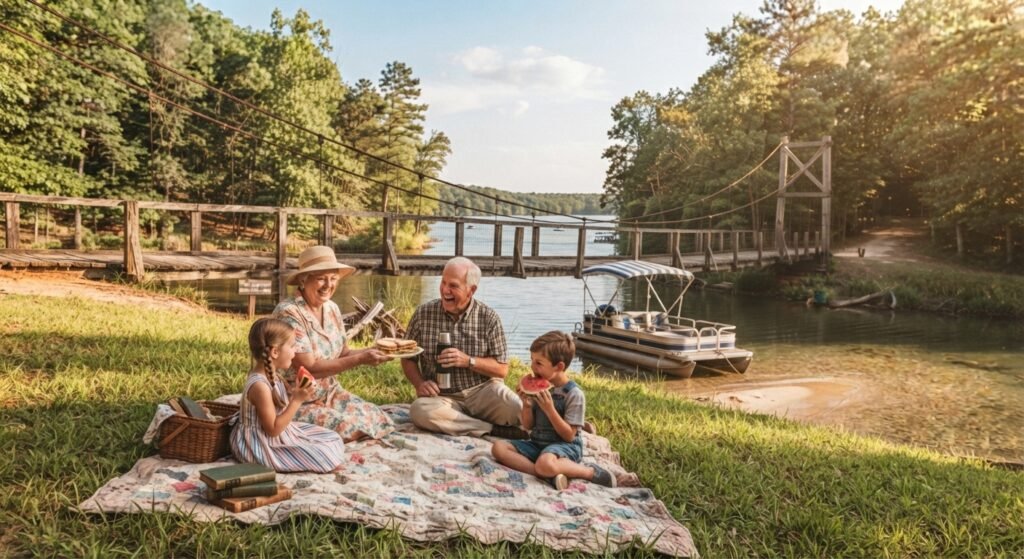
A trip to this part of the lake works best as a genuine day excursion rather than a quick stop, given how far it sits from the busier lower lake areas. Packing a picnic lunch turns the visit into a relaxed, unhurried outing, and many visitors specifically plan their trip around enjoying a meal at the small park area near the bridges before or after their time in the water.
If you want to actually walk across the historic bridges themselves, rather than just anchor and swim below them, confirm current access status before you go, since the structure has experienced closures for structural repair in recent years. Even during periods when pedestrian access to the bridge deck is limited, the sandbar and swimming area below typically remain open and enjoyable, so the trip is still worth making even if walking across the bridge itself is not currently possible.
For visitors without their own boat, a yacht or pontoon rental from a Lake Ozark based company can absolutely reach this part of the lake, though it requires more travel time than a typical lower lake day trip. A captained charter is especially useful for a destination like this, since a local captain who knows the creek arm’s depth changes and navigation quirks can get your group there safely and efficiently without the guesswork that comes with exploring unfamiliar shallow water on your own.
Frequently Asked Questions
Where exactly are the Swinging Bridges located at Lake of the Ozarks?
The bridges sit over the Grand Auglaize Creek arm near Brumley, Missouri, reachable by road via Highway 42 from Osage Beach or State Road A from Linn Creek onto Swinging Bridges Road. Boaters reach the same destination by traveling up the Grand Auglaize Creek arm from the main lake system.
Is it safe to anchor a boat near the Swinging Bridges sandbar?
Yes, the naturally shallow, sandy bottom here is generally forgiving and well suited for anchoring. Approach slowly, set your anchor firmly, and be aware that water depth can shift depending on recent rainfall and current lake levels, so a cautious approach is always the smart choice.
Can I still walk across the Swinging Bridges?
Access has varied in recent years due to structural repairs discovered on the bridge’s anchoring system. Always check current status before your trip, since the bridge has experienced periods of closure for safety reasons even though local efforts have worked to preserve and restore the historic structure.
Is the swimming area at the Swinging Bridges good for kids?
Yes, the shallow sandbar area beneath the bridges is popular with families, and kids are often seen wading and playing in the sand on a typical summer day. Depth does increase a short distance from the sandbar, so keeping younger swimmers closer to shore is a sensible precaution.
How far is the Swinging Bridges area from the main part of Lake of the Ozarks?
It sits in one of the more remote upper sections of the lake system, along the Grand Auglaize Creek arm well away from the busy lower lake corridor near Bagnell Dam and Osage Beach. Expect a longer, quieter cruise compared to a typical lower lake day trip, with narrowing water and a noticeably more rural, forested shoreline along the way.
What should I bring for a boat trip to the Swinging Bridges?
Pack a picnic lunch, sunscreen, plenty of drinking water, and a reliable anchor suited for a sandy bottom. Since this is a more remote part of the lake with no nearby marinas or restaurants, bringing everything your group needs for the day is essential before you leave the dock.
Can I fish near the Swinging Bridges area?
Yes, the creek arm supports fishing depending on current water conditions and height, and many visitors combine a fishing stop with their swimming and sandbar time in the same trip. Checking current lake levels beforehand gives you a better sense of what conditions to expect on arrival.
Should I book a captained charter to visit this part of the lake?
A captained charter is a smart choice for this destination, since the shallower creek arm and its depth changes are less familiar territory than the main channel. A local captain who knows this stretch of water can navigate safely and get your group there efficiently without the trial and error of exploring unfamiliar shallow water alone.
Final Thoughts
The Swinging Bridges area offers something genuinely different from most of what Lake of the Ozarks is known for. Instead of crowded coves, waterfront bars, and busy marinas, this quiet corner of the Grand Auglaize Creek arm gives boaters a slower, more historic slice of Ozark life, complete with a beautiful natural sandbar, gentle swimming water, and a piece of nearly century old engineering hanging quietly overhead. It is the kind of destination that rewards a little extra travel time with a genuinely memorable and peaceful experience.
Whether you make the trip specifically to see the historic bridge, to let the kids play on the sandbar for an afternoon, or simply to explore a quieter part of the lake away from the main channel crowds, a little preparation goes a long way. Check the current bridge status before you go, watch your depth carefully as you navigate the creek arm, anchor with care, and bring everything your group needs for a full day away from the busier parts of the lake. For boaters willing to venture a bit further off the beaten path, the Swinging Bridges area stands out as one of the most rewarding and genuinely unique stops the entire Lake of the Ozarks has to offer.