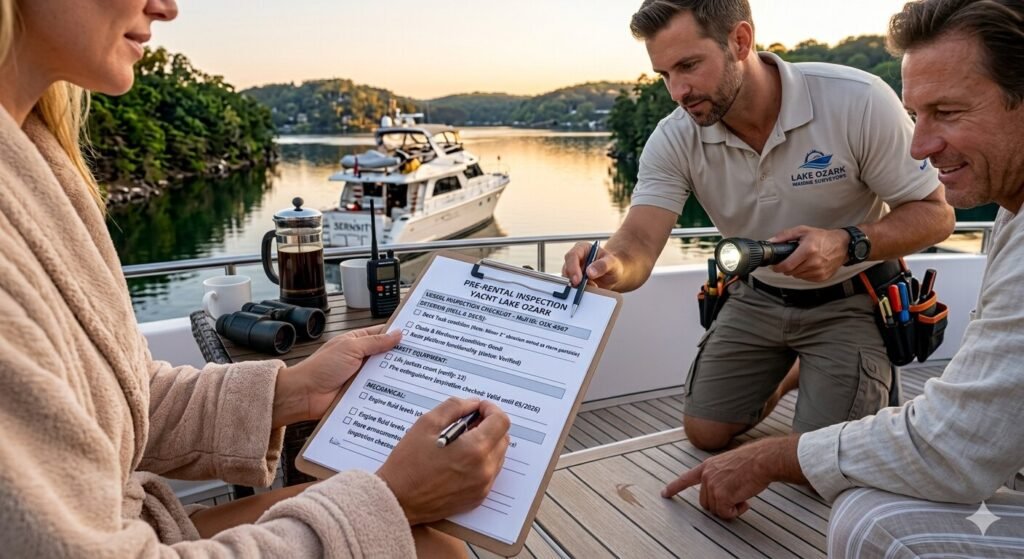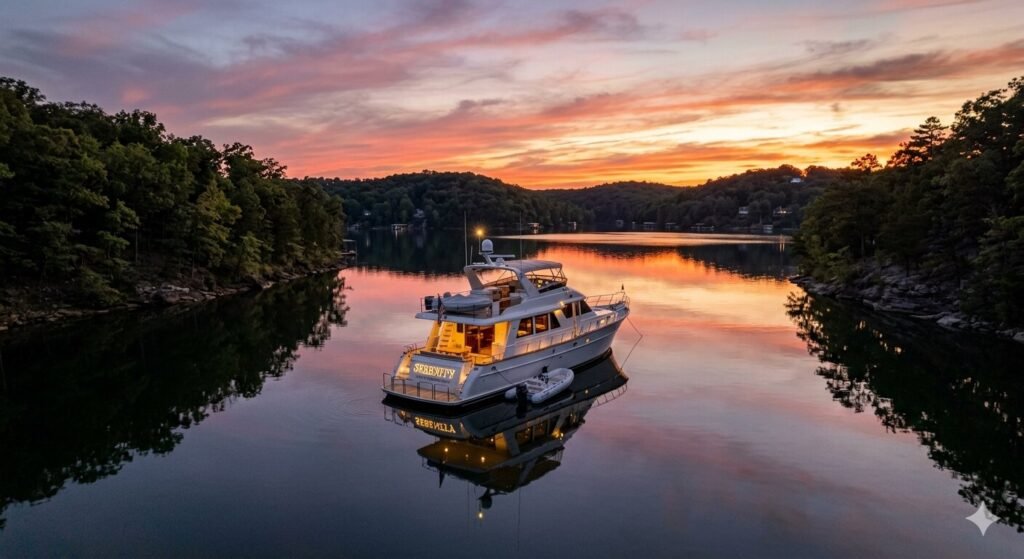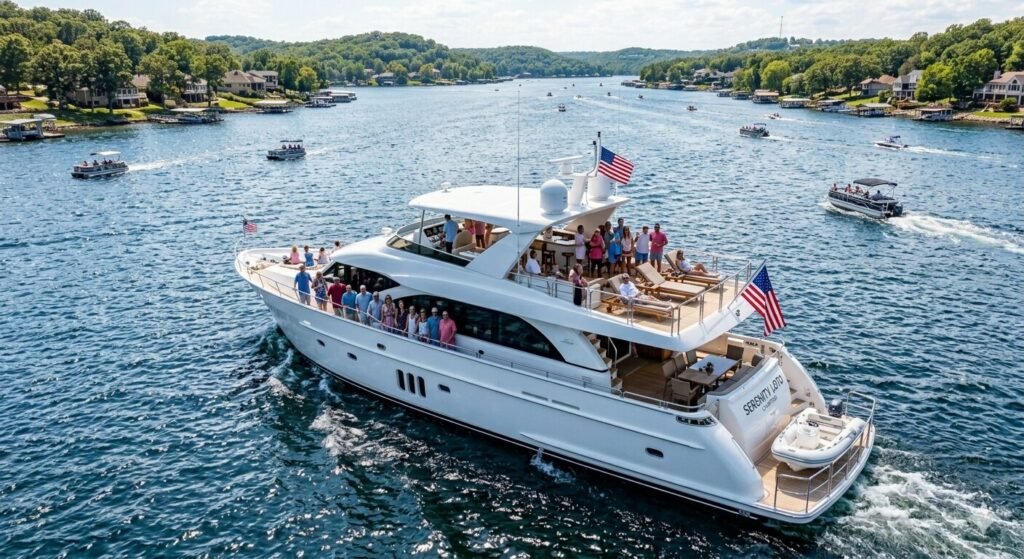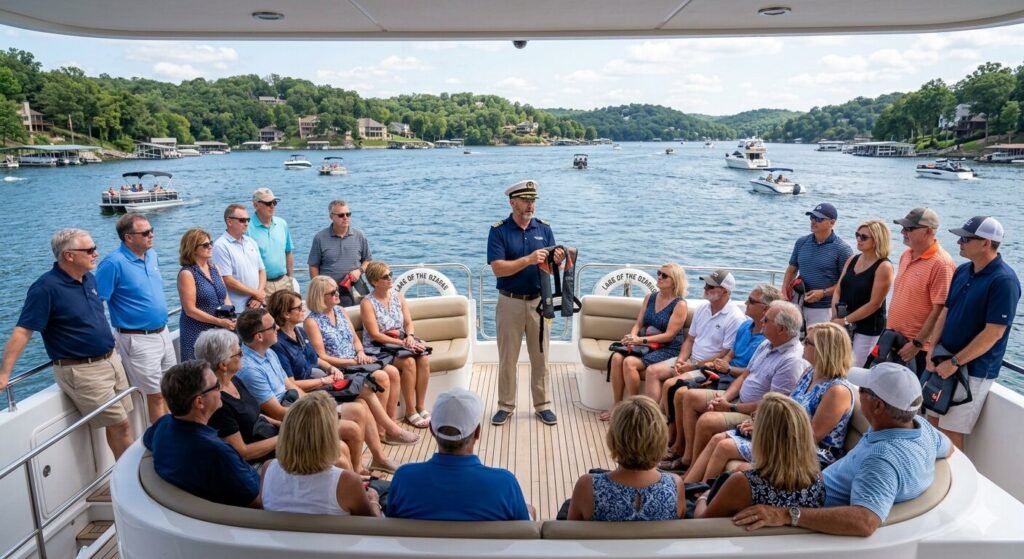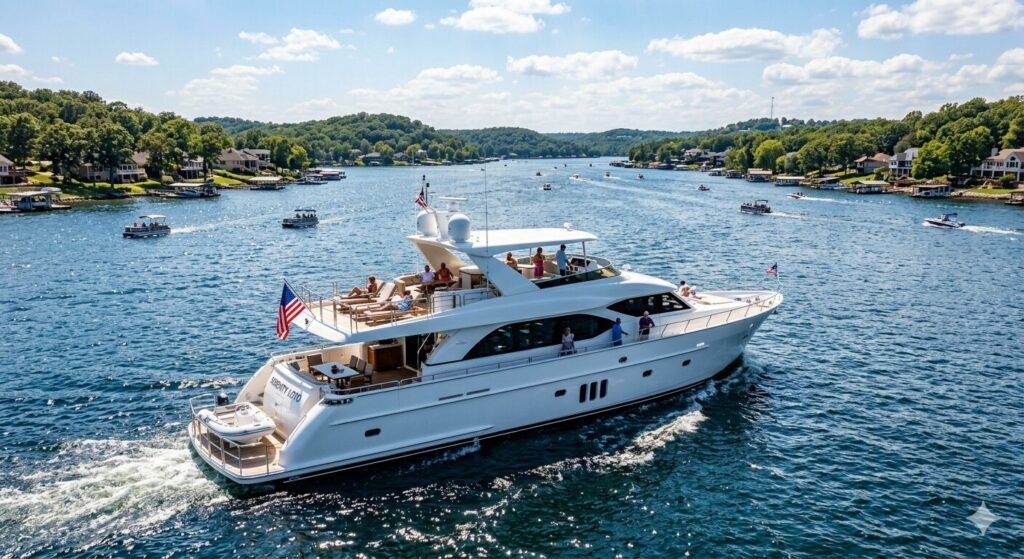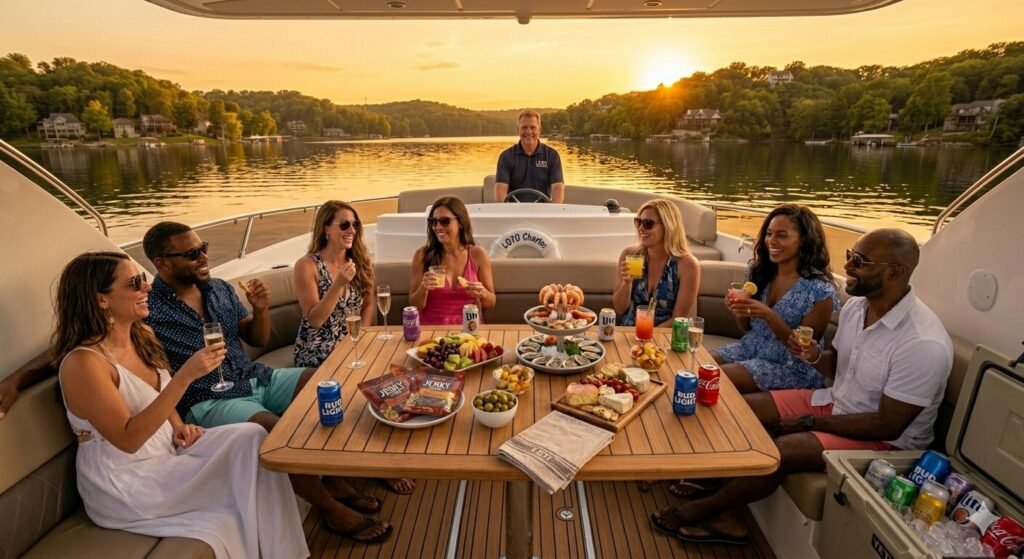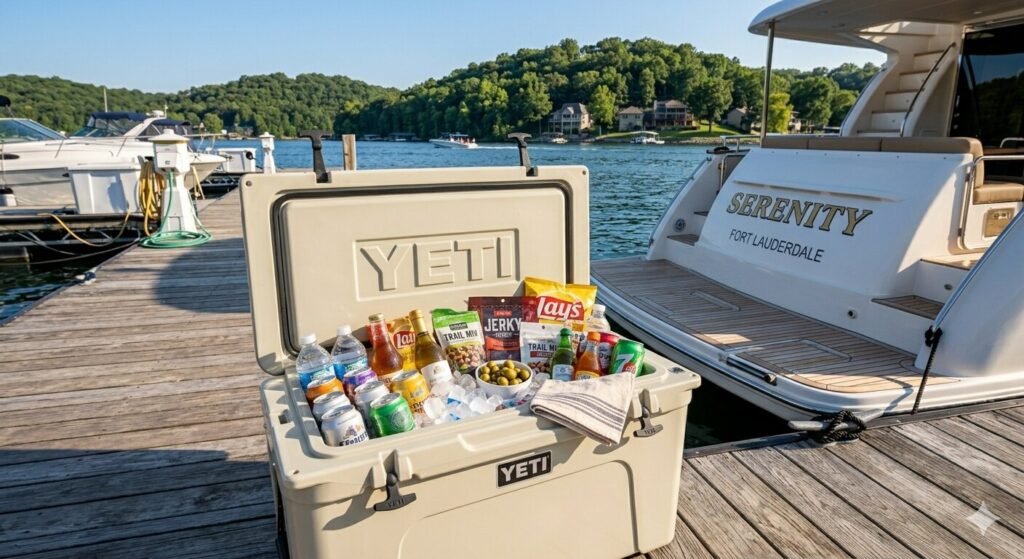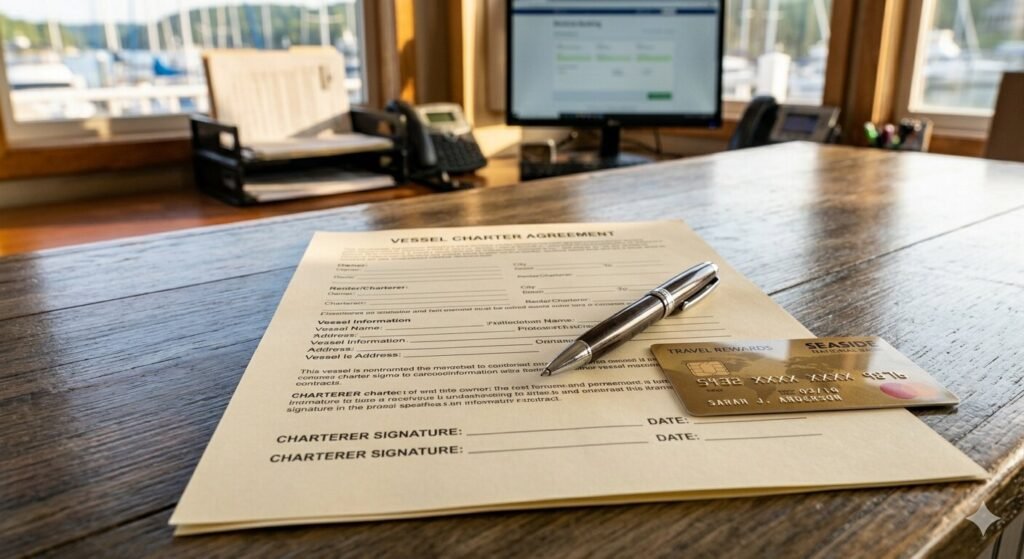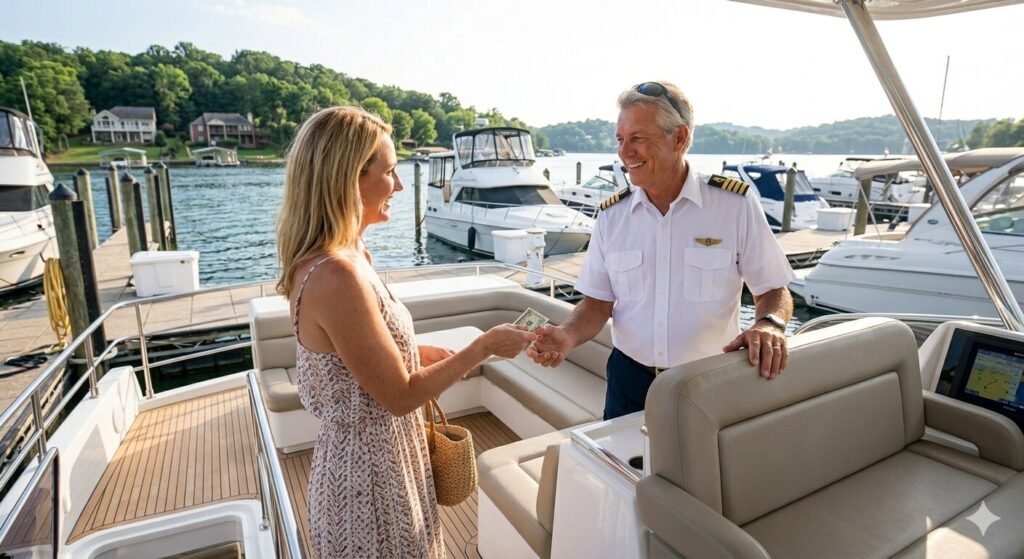

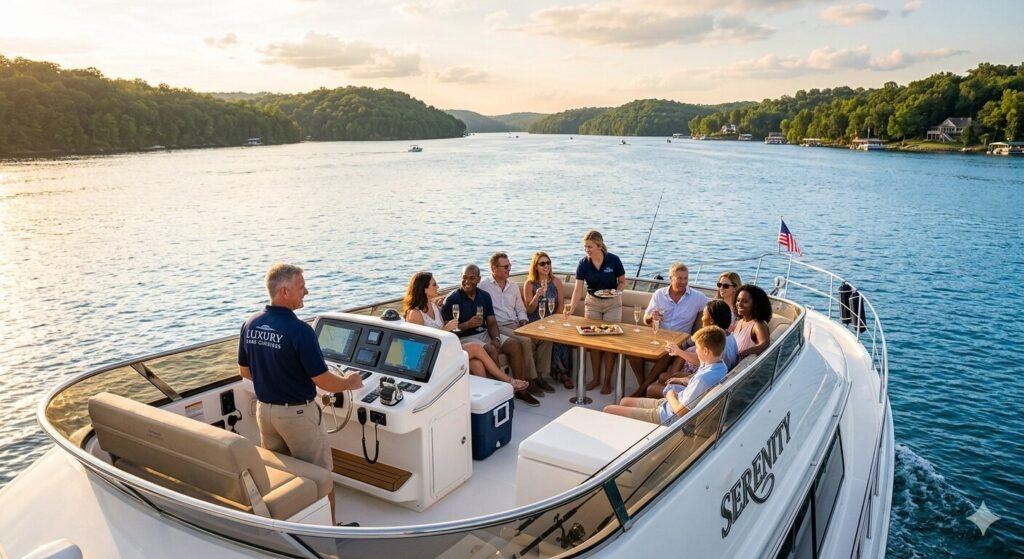
What Is Included in a Full Service Crewed Yacht Charter at Lake of the Ozarks?
Lake of the Ozarks is one of the most spectacular boating destinations in the entire Midwest. The lake stretches across more than 54,000 acres of open water. It winds through bluffs, coves, and shoreline that goes on for over 1,100 miles. People come here for the energy, the scenery, and the freedom that only comes from being out on the water. A full service crewed yacht charter is the highest level of experience this lake has to offer. It is not just renting a boat. It is having a professional team take care of everything while you focus entirely on enjoying yourself. But many guests are not sure exactly what that means in practice. What do you actually get? Who is on board? What is handled for you and what do you need to bring yourself? This guide answers every one of those questions. By the end, you will know exactly what to expect from a full service crewed yacht charter at Lake of the Ozarks and why it is the best way to experience this lake. What a Full Service Crewed Yacht Charter Actually Means A crewed charter is fundamentally different from a bareboat rental. With a bareboat rental, you take the vessel and operate it yourself. With a full service crewed charter, a professional team comes with the boat. That team is there for the entire duration of your charter. They handle everything related to the operation and management of the vessel so you never have to think about it. The word full service means exactly that. Nothing is left for you to figure out on your own. The crew handles navigation, docking, anchoring, safety, and all onboard operations. Your only job is to show up and enjoy the experience. That is a fundamentally different kind of day on the water compared to any other option available on Lake of the Ozarks. Full service crewed charters are popular for a wide range of occasions. They are chosen for private celebrations, anniversary trips, birthday weekends, corporate events, bachelorette and bachelor parties, family gatherings, and romantic getaways. The common thread across all of these is that the guests want to be present in the moment. They do not want to worry about operating a vessel, reading charts, or managing logistics. The crew exists to make that possible. At Yacht Rental Lake Ozark, our full service crewed charters are built around one idea. You deserve a seamless experience from the moment you step on board to the moment you step off. Everything in between is handled by people who know this lake and know how to deliver a genuinely exceptional day on the water. The Captain | Your Expert on the Water Every full service crewed charter begins with the captain. The captain is the most important person on board. They are a licensed and experienced maritime professional. They know Lake of the Ozarks with a level of depth and detail that only comes from spending significant time navigating its waters. Your captain handles all navigation for the entire duration of your charter. They know every section of the lake. They know the main channel, the coves, the no-wake zones, and the areas worth exploring. They know where the best swimming spots are. They know the afternoon patterns on the water and how to route around heavy traffic. They know when weather is building and where to take shelter if conditions change. The captain is also your safety officer. They are trained in emergency procedures and first aid. They ensure that all required safety equipment is on board, properly stowed, and immediately accessible if needed. Missouri State Water Patrol regulations require specific safety standards for vessels on Lake of the Ozarks. Your captain is responsible for meeting every one of those standards. You do not need to think about compliance at all. It is handled completely. Beyond navigation and safety, the captain is a resource. They know the lake’s history, landmarks, and character. They know which coves are ideal for anchoring. They know the story behind Bagnell Dam, the energy of Party Cove, the scenery at Hurricane Deck, and what the upper Osage Arm looks like at golden hour. If you want to know something about the lake, ask your captain. The knowledge they bring adds a layer of richness to the experience that a self-operated rental simply cannot provide. The captain also manages the itinerary in real time. You may have a general plan before you board. But conditions on the lake change. The captain reads those conditions constantly. They adjust the route when needed. They time arrivals at destinations for the best experience. They make judgment calls that improve your day without you ever knowing a decision was made. That invisible expertise is exactly what full service means. The Crew | Onboard Service That Makes the Difference In addition to the captain, a full service crewed charter includes dedicated crew members. The crew size varies depending on the vessel and the nature of the charter. Larger yachts and larger guest groups typically include more crew members to ensure that service levels remain high throughout the trip. The crew handles everything related to your comfort and enjoyment while on board. They assist guests with boarding and disembarking. They manage seating and help guests move around the vessel safely. They handle food and beverage service. They set up and clean up throughout the charter. They respond to guest requests promptly and professionally. Attentive onboard service is one of the things guests consistently mention as a highlight of their crewed charter experience. There is something genuinely luxurious about being on a beautiful yacht on Lake of the Ozarks with a crew who anticipates what you need before you have to ask. Drinks are refreshed. Food is ready at the right time. Music is adjusted. Umbrellas go up when the sun gets strong. The level of attention creates an atmosphere that you simply cannot create on your own. The crew also handles