Guides

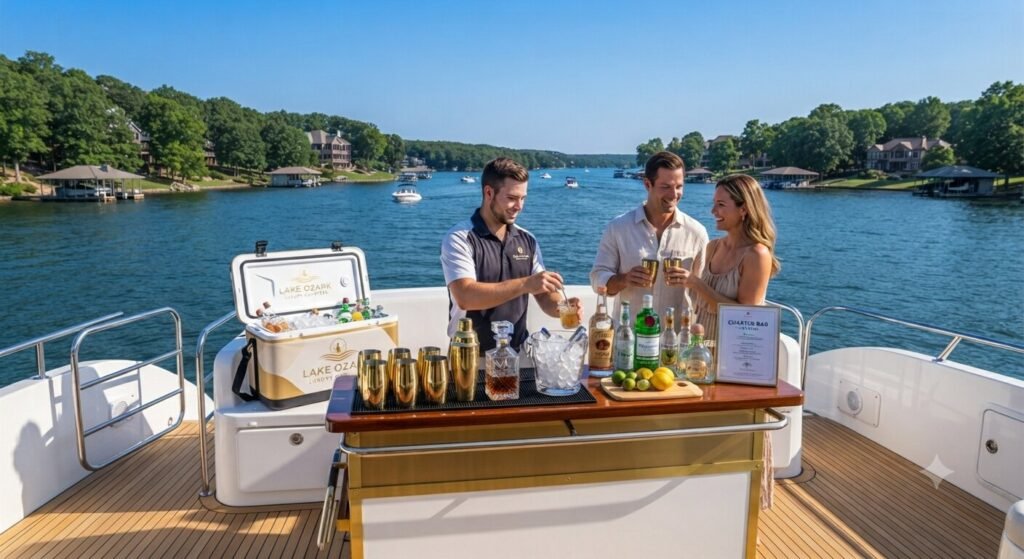
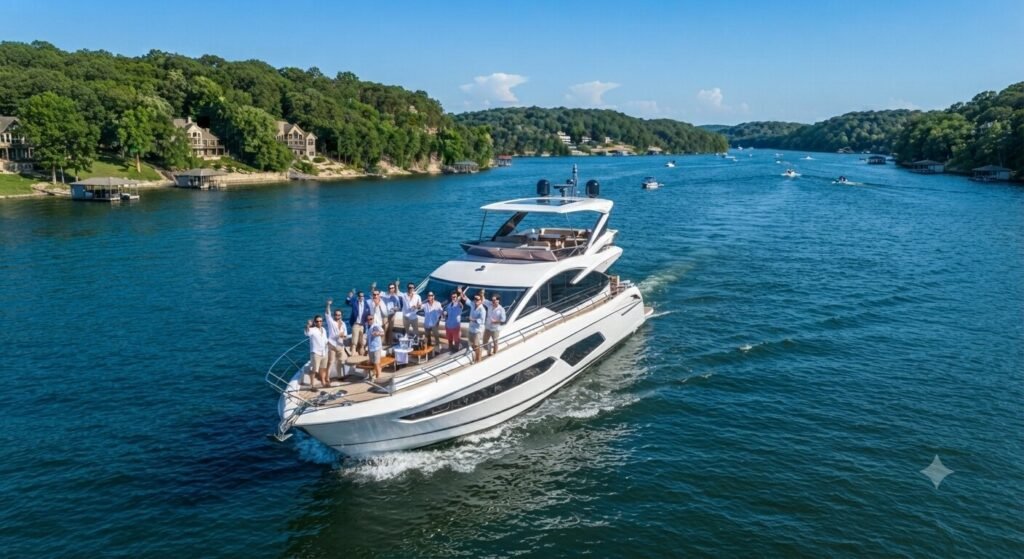
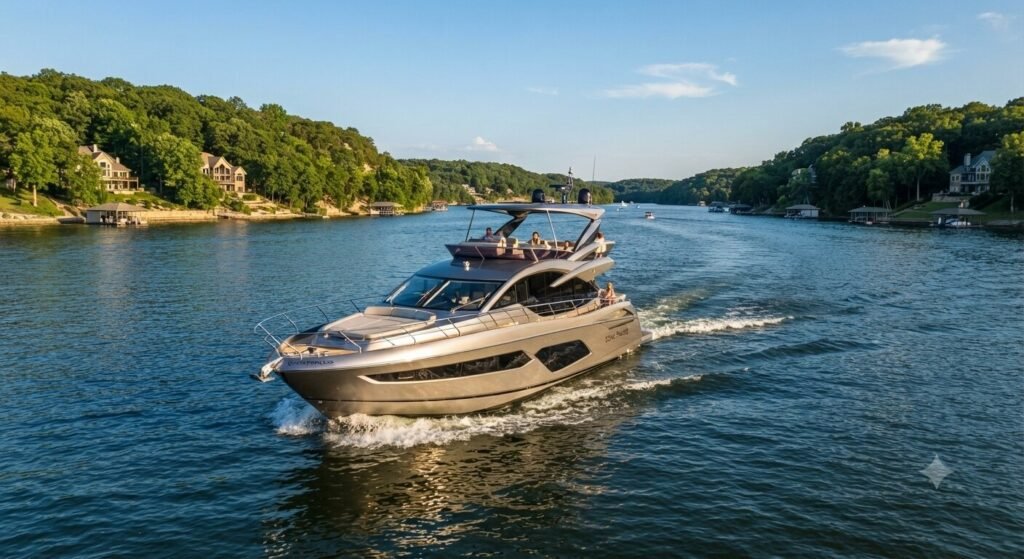
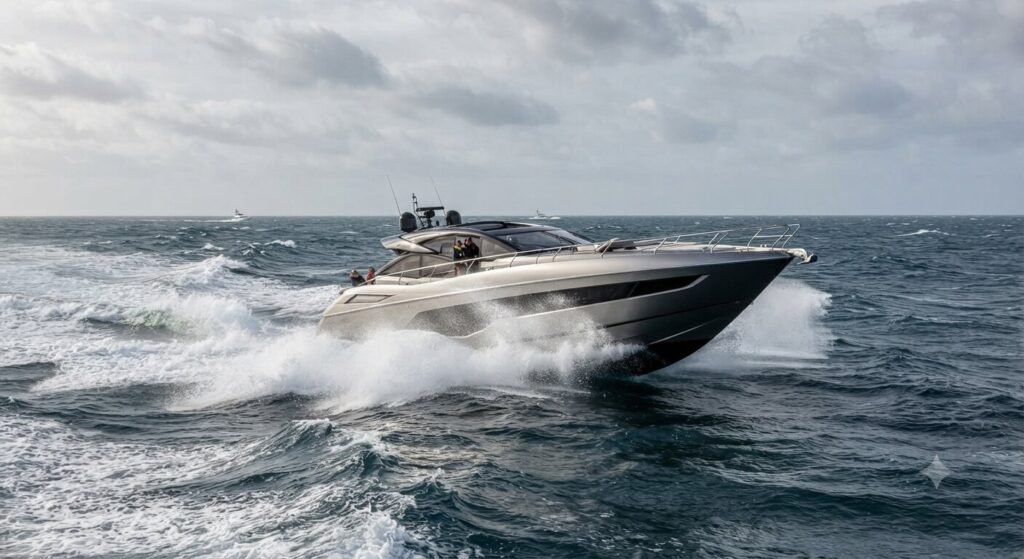
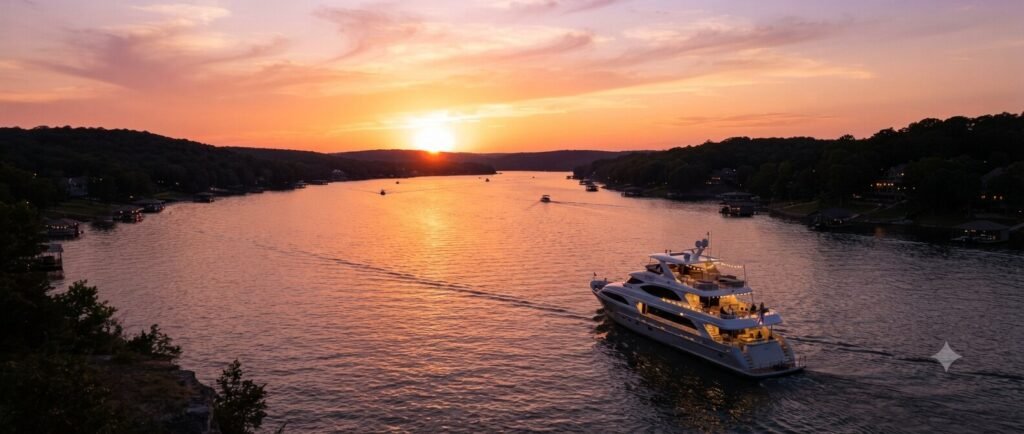
Luxury yacht charter cruising on Lake of the Ozarks on a sunny summer day
Guides

How Far in Advance Should You Book a Lake of the Ozarks Yacht Charter?

Planning a trip to Lake of the Ozarks takes real effort. You have to sort out travel, accommodations, and activities all at once. But one thing that catches most visitors completely off guard is how fast private yacht charters get booked up, especially during the summer months. Whether you are planning a sunset cruise past Bagnell Dam, a private party near Party Cove, or a full-day luxury tritoon rental, your booking window matters more than you might think. Getting the timing right means the difference between landing your perfect boat and settling for whatever is left. This guide covers everything you need to know about when to book, how peak season affects availability, and what to do if your trip is coming up fast. Read this before you make any plans. Why Booking Early Is So Important at Lake of the Ozarks Lake of the Ozarks is one of the most visited inland lakes in the entire Midwest. Every summer, millions of visitors come here from Missouri and beyond, and a huge portion of them want the same thing you do: a private boat on the water. The number of quality charter boats available on any given weekend is limited, and demand consistently outpaces supply from June through August. The lake itself stretches over 1,150 miles of shoreline, with hotspots like Osage Beach, Bagnell Dam, Backwater Jacks, and the world-famous Party Cove drawing massive crowds. On a busy summer Saturday, the water near these areas is packed. Every group wants a private yacht or luxury pontoon to anchor in, cruise from, or use as a floating party base. That competition for boats is real, and it starts weeks before you ever arrive. Premium charters, larger boats, and specialty packages like bachelorette cruises or corporate outings fill up the earliest. If you are hoping for a multi-hour private yacht experience with a specific itinerary, those slots are not available forever. Charter companies like Yacht Rental Lake Ozark plan their entire schedule weeks in advance, and once a date is claimed, it is gone. The earlier you reach out, the more options you have. The Ideal Booking Window: How Far Ahead Should You Plan? For peak summer weekends between Memorial Day and Labor Day, the ideal booking window is 4 to 8 weeks in advance. This gives you the best selection of boats, the most flexibility with your itinerary, and enough time to customize your experience with add-ons like themed setups, catering coordination, or multi-stop cruises. Booking in this window also means you can compare options and ask questions without feeling rushed. For holiday weekends such as 4th of July, Labor Day, or Memorial Day, the window shifts significantly. You should be booking 8 to 12 weeks ahead for these dates, without exception. These are the most in-demand days on the entire lake calendar. Boats near Party Cove and the Osage Beach stretch are claimed months in advance by groups who know exactly what they want. If you are planning something special for a holiday weekend, treat it like booking a wedding venue and move fast. For weekday charters or shoulder season trips in May or September, the timeline is more relaxed. Two to three weeks of lead time is usually enough to secure a quality boat with your preferred time slot. These periods also tend to offer better pricing, more availability, and a less crowded lake experience overall. If your schedule has any flexibility at all, shifting your trip away from peak weekends can open up a lot more options. Peak Season vs. Off-Season: What Availability Actually Looks Like During summer peak season from June through August, weekends are gone first and gone fast. Saturday slots, especially afternoon and sunset departures, are the most requested time blocks across all charter types. By the time most people start seriously shopping for a boat rental, the best Saturday options for that same month are already taken. This is not an exaggeration. It is a consistent pattern that plays out every single summer at Lake of the Ozarks. Holiday weekends operate on an entirely different level of demand. The 4th of July weekend is the single busiest stretch of the entire boating season at Lake of the Ozarks. Boats near Shady Gators, Party Cove, and Backwater Jacks are reserved so far in advance that waiting until June to book a July 4th charter is already too late in most cases. Groups that want premium experiences near the most popular spots on the lake lock in their reservations as early as February and March. Spring and fall shoulder seasons tell a completely different story. From mid-April through May and again from September into October, the lake is still beautiful, the water is still warm enough to enjoy, and charter availability opens up considerably. You can often book a luxury tritoon or private cruise just one to two weeks out during these months. Prices tend to be more flexible, the lake is less crowded, and the overall experience can actually be more enjoyable for guests who prefer a relaxed pace over a peak-season party atmosphere. Group Events and Special Charters Need Even More Lead Time Bachelor and bachelorette parties are among the most popular charter types at Lake of the Ozarks, and they come with specific setup requirements that take planning. Decorations, themed packages, coordinating arrival times for multiple guests, and planning stops at spots like Shady Gators or Backwater Jacks all require communication between you and the charter team well before your date. For summer weekends, 6 to 8 weeks minimum is the right timeline for these events. Corporate charters and team outings have a similar need for early coordination. These events often involve larger groups, specific catering or beverage arrangements, and customized itineraries designed around the team’s goals. Companies that plan annual outings on the lake know to get their charter locked in by April or May for summer dates. Waiting until 2 or 3 weeks before a corporate event during peak season

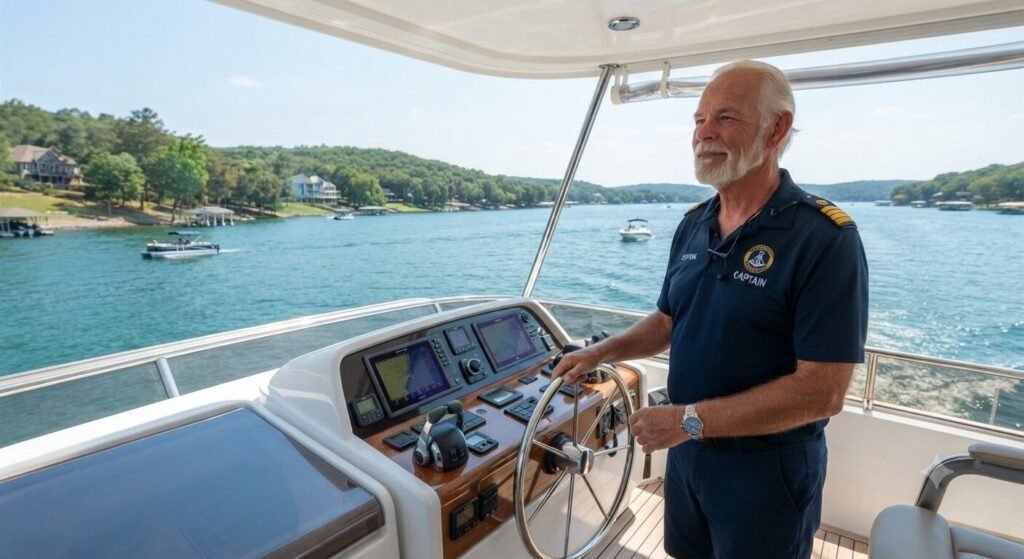
Licensed captain steering a captained pontoon boat rental at Lake of the Ozarks Missouri
Guides

Things to Know Before Booking a Captained Boat in LOTO

Lake of the Ozarks is one of Missouri’s most beloved water destinations. Every summer, thousands of visitors come here to get out on the water, soak up the sun, and make memories that last a lifetime. For many of those visitors, a captained boat rental is the smartest and most enjoyable way to experience everything LOTO has to offer. But here is something most people do not think about until the day of their trip. A captained boat charter is not the same as renting a jet ski or picking up a paddleboard. It is a full experience that involves planning, communication, and a few important decisions upfront. When you know what to expect before you book, your entire day on the water becomes smoother, safer, and more fun. This guide covers everything you need to know before booking a captained boat at Lake of the Ozarks. Whether this is your first time on the lake or you are a returning visitor looking to try something new, reading this first will save you time, stress, and money. What a Captained Boat Rental Actually Means and Why It Changes Everything A lot of people hear the term “captained boat rental” and assume it just means someone drives the boat for you. That is part of it, but the real value goes much deeper than that. When you book a captained charter at Lake of the Ozarks, you are hiring a licensed, experienced professional who knows this lake intimately. Your captain understands the water conditions, the no-wake zones, the best swimming spots, the busiest traffic areas, and the hidden coves that most tourists never find on their own. That local knowledge alone is worth every penny of the charter price. A first-time visitor trying to navigate a 54,000-acre lake with over 1,100 miles of shoreline can feel completely lost without that guidance. Beyond navigation, your captain handles all the logistics that would otherwise eat into your enjoyment. Docking, anchoring, monitoring weather changes, managing fuel levels, and ensuring everyone onboard stays safe are all part of what a professional captain does throughout the trip. You do not have to think about any of that. You just get to be fully present with your group, whether you are celebrating a bachelorette party, hosting a corporate outing, or simply spending a summer afternoon on the water with family. At Yacht Rental Lake Ozark, every captain on our team is Coast Guard licensed and has extensive experience on LOTO specifically. They know the best route to Party Cove, the safest way to approach Bagnell Dam for sightseeing, and the quieter stretches near Osage Beach where you can anchor and swim in peace. Booking a captained rental means you get all of that expertise built into your day automatically. Choosing the Right Boat for Your Group Size and Type of Experience One of the most important decisions you will make when booking a captained charter is choosing the right vessel. This choice affects comfort, capacity, amenities, and the overall feel of your day on the water. Luxury pontoon and tritoon boats are the most popular choice for larger groups at Lake of the Ozarks. These boats offer wide open deck space, plush seating, onboard sound systems, and a smooth, stable ride even when the water gets a little choppy. If you are planning a birthday trip, a family reunion day on the lake, or a bachelorette or bachelor party cruise, a tritoon is almost always the best fit. There is plenty of room for everyone to move around, set up a cooler, and enjoy the day without feeling cramped. For a more intimate and upscale experience, a private yacht charter delivers a completely different atmosphere. Smaller groups looking for a refined outing, whether it is a romantic anniversary cruise, a small executive retreat, or an elegant sunset cruise along the lake, will find that a yacht charter provides the premium environment to match the occasion. The onboard experience feels more exclusive, and the amenities tend to be more high-end compared to a standard pontoon rental. If your group plans to spend the day hopping between lakeside bars and restaurants like Backwater Jacks and Shady Gators, a pontoon charter gives you the flexibility and deck space to keep the energy going all day long. Your captain will know exactly how to plan the route so you spend maximum time enjoying the stops and minimum time in transit. The key takeaway here is to book based on your actual group size and the type of experience you want. Do not just pick the biggest boat available or the cheapest option on the list. Think about what your group needs to have a genuinely great day, and book accordingly. Our team at Yacht Rental Lake Ozark is always happy to help you match the right vessel to your occasion before you confirm your reservation. What Is Included in Your Charter and What You Need to Bring Yourself This is the section that saves most people from an unpleasant surprise on the day of their trip. Understanding exactly what your charter package includes, and what it does not, is essential before you finalize your booking. Most captained boat charters at Lake of the Ozarks include the captain’s services, fuel for the duration of the trip, all required safety equipment such as life jackets and first aid kits, and basic onboard amenities like a cooler and a Bluetooth sound system. These are the core components of a standard rental package, and you can generally expect them to be covered regardless of which vessel you choose. What is typically not included in the base charter price is food, alcohol, any special water sports equipment, and gratuity for your captain. These are things most guests prefer to handle on their own anyway, but it is important to know upfront so you can plan and budget properly. If you want to bring a fully stocked cooler with drinks and snacks for the group, you

Woman in sun hat and swimsuit cover-up on a luxury yacht rental at Lake Ozark Missouri
Guides

What to Wear on a Luxury Yacht Charter in Missouri

Planning a luxury yacht charter at Lake of the Ozarks is exciting. But figuring out what to wear? That part trips most people up. The wrong outfit can ruin your day. Slippery shoes, wrong fabrics, or too little sun protection makes things uncomfortable fast. This guide covers everything you need to dress smart and look great on the water in Missouri. Comfort Is the Foundation: Outfits, Swimwear, and Cover-Ups On a luxury yacht charter, you want to look the part. But comfort always comes first. Missouri summers are hot and humid. The sun on open water feels even more intense. Wind picks up without warning. Your outfit needs to handle all of that. The smartest approach is to build your entire outfit around your swimwear. Most guests on a Missouri yacht charter plan to swim, lounge, or both. For women, a one-piece or bikini works perfectly. Pair it with a lightweight cover-up, swim dress, or kaftan that looks polished on deck while protecting your skin between dips. Quick-dry fabric is the best choice here. For men, board shorts or swim trunks are the standard. A lightweight rash guard or linen shirt on top adds sun protection and gives a cleaner, more put-together look. Heavy cotton shorts are a bad idea because they stay wet for hours and become uncomfortable quickly. Choose bold colors or prints if you want photos to stand out on the water. Solid neutrals like white, navy, and coral look clean and classic against the blue Missouri lake backdrop. UV-protective swimwear rated UPF 50 or higher is worth the investment, especially for longer charters or full-day rentals near Party Cove or Gravois Mills. Think light fabrics, secure footwear, and smart layering. That combination works for nearly every Lake of the Ozarks charter experience. Whether it is a sunset cruise near Bagnell Dam, a private party charter out of Osage Beach, or a laid-back afternoon on the Upper Osage Arm, dressing right from the start makes everything more enjoyable. The Right Shoes and What to Carry on Board Footwear is the single most important clothing decision you will make before stepping on a yacht. The wrong shoes create real safety risks on a wet deck. Non-slip, closed-toe boat shoes or deck shoes are the correct choice. Brands like Sperry and Merrell make purpose-built options that grip wet surfaces and protect your feet. High heels damage deck surfaces and cause falls. Flip flops offer zero grip and slip off with no warning. Bare feet are slippery when wet and uncomfortable around deck hardware. None of those options belong on a yacht. If you plan to swim during your Lake of the Ozarks yacht rental, bring water shoes as a second pair. They protect your feet when entering and exiting the water near docks or popular coves around Gravois Mills and Hurricane Deck. Keep them in your bag until you need them so they do not take up deck space. For everything else you bring on board, pack light and pack smart. A small dry bag or waterproof tote is the best vessel for your belongings. It protects everything from water, spray, and lake humidity. Inside it, carry a change of dry clothes for after swimming, a microfiber towel, extra sunscreen, lip balm with SPF, hair ties or clips for windy conditions, and a reusable water bottle. Avoid bringing large backpacks, hard-sided cases, or anything oversized. Storage space on a yacht is limited. Leave valuables like expensive jewelry or designer bags at the dock. Water, motion, and sunscreen are not kind to fine accessories, and there is no need to take the risk. Sun Protection, Layering, and Evening Charter Style Missouri sun reflecting off open water is intense. Sun protection is not optional on a Lake of the Ozarks charter. It is part of your outfit. Before you even step on the boat, apply SPF 30 or higher reef-safe sunscreen to all exposed skin. Reapply every 90 minutes throughout the day. A wide-brim hat with a strap keeps direct sun off your face and neck, and the strap ensures wind does not take it. Polarized UV400 sunglasses reduce glare off the water dramatically and protect your eyes during long hours on deck. A long-sleeve UV shirt is worth adding for guests with sensitive skin or for anyone booking a full-day rental during peak summer months near Shady Gators or Backwater Jacks. A lightweight neck gaiter or sun buff is a practical alternative that covers your neck without overheating you. Layering becomes especially important for longer charters, evening rentals, or sunset cruises. Lake of the Ozarks temperatures can drop noticeably once the sun goes down, even in July. A thin zip-up hoodie or windbreaker should always be in your bag. A lightweight linen button-down shirt is one of the most versatile pieces you can bring. It breathes during hot afternoon hours and adds just enough warmth when the breeze picks up after dark near open stretches of the lake around Hurricane Deck. For a corporate charter or upscale private event, you can step things up slightly without going formal. Women can wear a wrap dress or linen jumpsuit. Men can wear chinos and a collared shirt. Keep it one step above casual. You are still on a boat, so heavy denim or wool fabrics are a mistake. They absorb moisture and become heavy and uncomfortable fast. Missouri weather changes quickly. Always bring one more layer than you think you will need. That small extra item in your bag makes a big difference at the end of a long evening on the water. Seasonal Outfit Adjustments for Missouri Yacht Charters Lake of the Ozarks sees distinct seasonal changes throughout the year. Your outfit choices should reflect the time of year you are booking your charter. In spring from March to May, water is cooler and air temperatures vary a lot during the day. Mornings can sit between 50 and 60 degrees before warming up by midday. A fleece layer or light

Yacht charter pricing breakdown at Lake Ozark
Guides

Do Yacht Rentals in Lake of the Ozarks Include Fuel Costs?

Planning a day on Lake of the Ozarks is exciting. But before you book, one question always comes up. Does the rental price include fuel? It is a fair question. And the honest answer is: it depends on the company and the type of rental. This guide breaks it all down. You will know exactly what to expect before you spend a dollar. What Most Yacht and Boat Rentals Include (and What They Do Not) Most yacht rentals at Lake of the Ozarks do not include fuel in the base price. This is standard across the industry. You rent the vessel. You pay for the fuel you use. Here is what a typical rental package usually covers: A captain or crew is often included with luxury charters. Basic safety gear is always included. The boat itself, the time block, and any standard onboard amenities are part of the deal. What is usually not included by default: Fuel is the biggest one. Some companies also charge for extended hours, added destinations, or special requests like stopping at Backwater Jacks or cruising past Bagnell Dam. Always read the rental agreement carefully. Ask before you book. How Fuel Costs Are Calculated for Lake Ozark Rentals Fuel pricing at Lake of the Ozarks works in a few different ways depending on who you book with. Option 1: You pay at the pump Some rental companies send you out with a tank and expect you to return it full. You stop at a lakeside fuel dock and pay current pump prices. This is common with self-drive pontoon and tritoon rentals. Option 2: Fuel deposit system Other companies charge a fuel deposit upfront. They refund whatever you do not use when you return. This is a clean system and easy to manage. Option 3: All-inclusive charter pricing Some luxury yacht charters and fully crewed boats include fuel in the total package price. This is more common with private sunset cruises, corporate charters, and multi-day rentals. The operator handles everything. You just enjoy the ride. Option 4: Fuel surcharge billed after A few operators add a fuel surcharge after your trip based on actual usage. This is less common but does happen. Ask your rental company directly if this is their policy. At Yacht Rental Lake Ozark, we are transparent about fuel from the start. No guessing. No surprises at the end of your day. Why Fuel Costs Matter More on a Yacht Than a Regular Boat A standard pontoon at Lake Ozark sips fuel. A luxury yacht or large tritoon uses significantly more. If you are cruising out to Party Cove, looping around the Osage Arm, or heading down toward Shady Gators, those miles add up. A longer day on the water means more fuel burned. Here is a rough idea of what to expect: A smaller tritoon might use 5 to 8 gallons per hour at cruising speed. A larger yacht can burn 15 to 25 gallons per hour or more. Fuel prices at lakeside docks generally run higher than at land stations. If you are planning a full day out, fuel can easily add $100 to $300+ to your total cost. It is a real number. You deserve to know it upfront. All-Inclusive vs. Fuel-Separate Rentals: Which Is Better? Both options have their place. It depends on what you want. All-inclusive pricing is great when you want zero surprises. You agree on a price. You go out. You come back. Done. This works best for private charters, bachelor and bachelorette parties, corporate events, and sunset cruises where you want to relax completely. Fuel-separate pricing gives you more flexibility. If you plan to anchor and hang out near Party Cove for most of the day, you will burn less fuel than someone who is constantly cruising. You pay for what you actually use. Neither option is wrong. The key is knowing what you are getting before you sign. For guests who want a premium, stress-free experience on Lake of the Ozarks, our fully crewed yacht charters are the better fit. Everything is handled. You focus on enjoying the lake. Questions to Ask Before You Book Any Boat Rental at Lake Ozark Do not skip this step. A two-minute conversation can save you a headache later. Here are the most important questions to ask your rental company: Is fuel included in the price? Get a yes or no. No gray area. If not, how is fuel charged? Deposit, pump, or surcharge? Know the method. What is the average fuel cost for a full-day rental? A good company will give you an honest estimate. Is there a fuel cap or maximum charge? Some charters cap fuel costs in the contract. Are there other fees not listed in the base price? Ask about gratuity, cleaning fees, dock fees, and any add-ons. At Yacht Rental Lake Ozark, we answer all of these questions before you ever book. Transparency is how we operate on this lake. How to Get the Best Value on Your Lake of the Ozarks Rental Knowing the fuel policy is just one part of getting good value. Here are a few more tips. Book early. Peak season on Lake Ozark fills up fast. Weekends around Party Cove and the Osage Beach area are especially popular. Early bookings often get better rates. Choose the right vessel for your group size. A larger boat burns more fuel. If you have 6 people, you do not need a 12-person yacht. Right-sizing saves money. Plan your route before you go. If you know where you want to go, a good captain can plot an efficient path. Less aimless cruising means less fuel burned. Ask about package deals. Some rental companies offer bundled pricing for bar crawls, multi-stop cruises, or overnight charters that include fuel at a flat rate. Read reviews. Look for guests who mention pricing transparency. If people felt surprised by fees, that is a pattern worth noticing. Lake of the Ozarks is one of the best boating

Yacht rental pricing breakdown for a private charter at Lake of the Ozarks LOTO
Guides

What Is the Average Cost to Charter a Yacht at Lake of the Ozarks?

Planning a trip to Lake of the Ozarks and wondering how much a yacht charter will cost? You are not alone. This is one of the most common questions we hear from first-time guests and returning visitors alike. The short answer: a yacht charter at Lake of the Ozarks typically costs between $500 and $3,000 or more, depending on the type of trip, boat size, and what is included in your package. But the full picture is a little more detailed than that. Let us walk you through everything you need to know so you can plan your trip with confidence. Yacht Charter Pricing at Lake of the Ozarks | The Honest Breakdown There is no single fixed price for chartering a yacht at LOTO. Costs vary based on several key factors. Hourly rentals are the most flexible option. Most charters run between $150 and $400 per hour, depending on the vessel type and season. This option works well for sunset cruises, short group outings, or a quick spin around Party Cove. Half-day charters typically cover 3 to 4 hours. Expect to pay anywhere from $600 to $1,200. This is a popular option for bachelor and bachelorette groups. Full-day charters run 6 to 8 hours and usually range from $1,200 to $2,500 or more. Full-day packages are ideal for corporate outings, large celebrations, or multi-stop lake bar crawls that include stops at spots like Backwater Jacks and Shady Gators. Multi-day charters are available for extended stays. These are custom-priced based on duration, vessel, and services requested. What Type of Yacht or Boat Affects the Price? The boat you choose has a big impact on the total cost. Luxury tritoons and pontoons are the most popular option on Lake of the Ozarks. They are spacious, stable, and perfect for groups. Rental rates for a premium tritoon typically start at $150 to $250 per hour. Larger private yachts offer more space, premium amenities, and a true luxury experience. These vessels come at a higher price point, often starting around $250 to $400 per hour or more. Custom or specialty boats used for themed events, wedding charters, or corporate events may be priced separately. Always ask for a custom quote if your event has unique requirements. What Is Usually Included in a Yacht Charter Package? Understanding what is and what is not included helps you avoid surprises. Most charter packages at Yacht Rental Lake Ozark include the captain and crew, fuel, safety equipment, and use of the vessel for the reserved time. Many packages also include onboard music systems, coolers, and Bluetooth speakers. Add-ons that may cost extra include catering and food service, custom decorations, premium sound systems, water sports equipment, and professional photography. Always ask what is included before you book so you can compare packages accurately. Some providers also offer bring-your-own-beverage (BYOB) options, which can help keep your total cost lower. How Group Size Affects Your Charter Cost Group size plays a direct role in the total cost of your charter. Smaller boats accommodate 6 to 10 people. These are more affordable and easier to book on short notice. Larger yachts and party boats can handle 20 to 30 guests or more and are priced accordingly. Here is an important tip: cost per person often drops as your group size increases. A charter that costs $1,500 for a full day split among 20 guests comes out to just $75 per person. That is comparable to a nice dinner out. For bachelor and bachelorette parties, birthday celebrations, and corporate events, larger group charters often provide the best overall value on Lake of the Ozarks. Seasonal Pricing | When You Book Matters Like most lake destinations, Lake of the Ozarks has peak and off-peak seasons. Peak season runs from Memorial Day through Labor Day. During this time, demand is highest, especially around the Party Cove area, near Bagnell Dam, and along the Osage Beach shoreline. Prices during peak season are at their highest. Shoulder season (early May and September through October) offers more competitive pricing and greater availability. If your dates are flexible, booking outside of peak summer weekends can save you a meaningful amount. Booking in advance also helps. Last-minute peak-season bookings often come at a premium or may not be available at all. Hidden Costs to Watch Out For A few things are often not included in the base charter price. Gratuity for the captain and crew is customary and typically ranges from 15 to 20 percent of the total charter cost. This is separate from the charter fee. Fuel surcharges may apply on longer or more active charters. Ask your provider upfront. Cancellation fees vary by provider. Review the cancellation policy before you book, especially during peak summer weekends near LOTO. Docking fees at stops like marinas or lakefront restaurants may also be charged separately depending on your itinerary. Is Chartering a Yacht at Lake of the Ozarks Worth the Cost? For many guests, a yacht charter is one of the best investments they make for their trip. Consider this: you get exclusive access to a private vessel, a professional captain who knows Lake of the Ozarks well, a custom itinerary, and an experience that no hotel or restaurant can replicate. Whether you are floating near Bagnell Dam, anchoring at Party Cove, or cruising past the coves near Osage Beach, the views and memories are unmatched. For groups splitting the cost, a yacht charter is often more affordable than people expect. It is also a uniquely personal experience. You control the pace, the stops, and the atmosphere. Tips for Getting the Best Value on Your Charter A few simple steps can help you get more for your money. Book early. Peak summer weekends fill up fast. Booking 4 to 6 weeks in advance, or earlier for large groups, gives you more options. Ask about package deals. Many providers offer bundled packages for events like bachelorette charters, sunset cruises, or corporate outings that include extras at a lower combined rate.

Luxury yacht rental at Lake of the Ozarks Missouri on a sunny summer day
Guides

How to Rent a Yacht at Lake of the Ozarks for the First Time

Lake of the Ozarks is one of Missouri’s most popular destinations for water lovers. The lake stretches over 1,150 miles of shoreline. That makes it one of the largest lakes in the entire Midwest. Every summer, thousands of visitors come here to enjoy the water. Some rent pontoons. Some book fishing boats. But many people are now choosing something more exciting: a private yacht rental. If you have never rented a yacht before, the whole process might feel overwhelming. What kind of boat do you need? How much does it cost? What do you bring? This guide answers every question a first-timer needs to know. By the end, you will feel confident and ready to book your first yacht experience at Lake of the Ozarks. What Does “Yacht Rental” Mean at Lake of the Ozarks? A lot of people hear the word “yacht” and picture a massive ocean vessel. At Lake of the Ozarks, it means something different. Here, yacht rentals typically include luxury pontoons, tritoon boats, and larger private charter vessels. These boats are spacious, well-equipped, and perfect for groups. They come with comfortable seating, shade canopies, built-in coolers, Bluetooth speakers, and more. Most rentals also come with a licensed captain. That means you do not need any boating experience. The captain handles navigation. You just relax and enjoy the ride. This is very different from renting a basic boat on your own. A captained yacht charter is a premium, full-service experience. You show up and everything is handled for you. Step 1: Decide What Kind of Experience You Want Before you book anything, think about what you want from your time on the water. This will help you choose the right rental option. Are you celebrating something special? A birthday, bachelorette party, or anniversary calls for a private luxury charter. These rentals are fully customized for your group. You get the entire boat to yourselves. Do you want a relaxing scenic cruise? A sunset cruise or dinner charter is the perfect pick. You cruise along the lake while the sun goes down. Some packages even include food and drinks. Are you coming with a large group? Look for large group charters or party boat rentals. These boats can hold 12 to 20+ passengers comfortably. Is this a corporate outing? Many companies rent yachts for team-building events, client entertainment, or company celebrations. Ask about corporate event packages when you inquire. Knowing your purpose makes everything else easier. It helps you choose the right boat, duration, and add-ons. Step 2: Choose the Right Boat Size The size of the boat matters a lot. You want everyone to be comfortable, not cramped. Most first-time renters underestimate how many people they are bringing. Always count your full headcount before you contact a rental company. For small groups of 2 to 8 people, a luxury tritoon or pontoon works perfectly. These boats are smooth, stable, and easy to enjoy. They are great for couples, small families, or close friend groups. For medium groups of 8 to 14 people, look for a larger pontoon or mid-size charter yacht. You will want extra seating and deck space. For big groups of 15 or more, ask specifically about large group charter options. Not every company offers this, so check before assuming. Also think about whether you need shade and cover. If you are going out in the middle of a sunny afternoon, a shaded canopy boat is much more comfortable than an open deck. Step 3: Understand the Costs One of the most common questions first-timers ask is: how much does a yacht rental cost at Lake of the Ozarks? Pricing varies depending on several factors. These include the boat size, rental duration, number of passengers, and the time of year. Here is a general pricing range to help you plan: A 2 to 3-hour private charter for a small group typically starts around $400 to $700. A half-day rental of 4 to 5 hours for a larger group can range from $700 to $1,200 or more. Full-day charters for premium boats with a captain can go from $1,200 to $2,500+ depending on the season and boat type. Peak season runs from Memorial Day through Labor Day. Prices are highest during this window. If you have flexibility, weekday rentals are usually cheaper than weekends. Always ask about what is included. Some packages include a licensed captain, fuel, and basic amenities. Others charge separately. Get a full breakdown before you confirm. Step 4: Know What to Look for in a Rental Company Not all rental companies are the same. Choosing the right one makes a huge difference in your overall experience. Here is what to look for when comparing options: Licensed and insured captains. This is non-negotiable. Any reputable company will provide a USCG-licensed captain with every charter. Do not book with anyone who cannot confirm this. Clear pricing with no hidden fees. Ask for a full quote upfront. Some companies add fuel surcharges, cleaning fees, or tip recommendations after the fact. Know what you are paying before you book. Good reviews. Check Google reviews, TripAdvisor, and social media. Look for recent reviews that mention punctuality, cleanliness, and how the captain treated guests. Flexibility and communication. A good rental company responds quickly and is happy to answer your questions. If they are slow or vague before you book, expect the same during your trip. Local knowledge. A captain who knows Lake of the Ozarks well is a big advantage. They know where to stop, what to avoid, and how to make the trip memorable. Step 5: Book in Advance (Especially in Summer) This is one of the most important tips for first-time renters. Lake of the Ozarks gets very busy from May through September. Popular dates, especially holiday weekends like Fourth of July and Labor Day, can book out weeks or even months in advance. Do not wait until the last minute. If you have a specific date in mind, book it as early as possible.

Guides

How to Coordinate Water Taxi Pickups From Your Anchored Yacht at Lake of the Ozarks

You found the perfect cove. The anchor is set. The water is warm. Your group is relaxed and having the best day on the lake. Then someone realizes they need to get back to the marina early. Or the group wants to hit a lakeside restaurant for dinner without moving the whole boat. Or a few people want to continue the party at a bar on the water while others head back. This is exactly where a water taxi at Lake of the Ozarks changes everything. Water taxi services at LOTO allow people to get picked up directly from an anchored boat and transported to marinas, restaurants, bars, and resorts around the lake. It is a genuinely useful service. But coordinating a pickup from an anchored location in a large lake with limited cell coverage and constantly moving boats takes more planning than most people expect the first time they try it. This guide covers everything you need to know to make water taxi coordination at LOTO smooth, reliable, and stress-free every time. How Water Taxi Services Work at Lake of the Ozarks Before getting into coordination logistics, it helps to understand how LOTO water taxi services actually operate. Lake of the Ozarks water taxis are private boat operators that transport passengers between locations on the lake. They are not publicly scheduled services with fixed routes and timetables. They operate on demand, similar to a rideshare service but on the water. You contact them, give them your location and destination, agree on a pickup time, and they come to you. Most LOTO water taxi operators work across the full lake. They pick up from marinas, docks, restaurants, and anchored boats. They drop off at any accessible waterfront location. Some operators specialize in specific areas of the lake. Others cover the full 54,000 acre lake depending on demand and staffing. Pricing is typically based on distance and group size. A short pickup from a nearby cove to a waterfront restaurant costs less than a cross-lake transport from the upper Osage arm to the Bagnell Dam area. Get a price confirmation before you commit to a pickup to avoid surprises. Water taxi demand at LOTO peaks on summer weekends, particularly Friday evenings through Sunday afternoons. Booking in advance is strongly recommended during peak season. Operators who are available on a Tuesday in June may be fully booked by 10am on a Saturday in July. Knowing how the service works gives you a realistic framework for coordinating pickups from your anchored position. The key variables are your exact location, your cell signal, your timing, and how clearly you can communicate both your position and your group’s needs to the operator. Pinpointing and Communicating Your Exact Anchored Location This is where most water taxi coordination problems start. Telling a water taxi operator you are “in a cove off the main channel near the 54 mile marker” is not a useful location description. LOTO has over 1,150 miles of shoreline. There are dozens of coves near any given mile marker. A vague description leads to a frustrated operator circling the wrong area and a delayed pickup that the whole group blames on the taxi service. Share your exact GPS coordinates. This is the single most reliable way to communicate your anchored location. Open the maps app on your phone, drop a pin on your current position, and share that pin directly with the water taxi operator via text message. Google Maps and Apple Maps both allow location sharing with a single tap. The operator plugs the coordinates into their chart plotter and navigates directly to you. Use What3Words for simple location sharing. What3Words is a location app that divides the entire world into three-meter squares and assigns each one a unique three-word address. Your exact anchored position might be something like “table.bright.morning.” Share those three words with the water taxi and they can find your precise location without needing to interpret coordinates. Many LOTO water taxi operators are familiar with this system. Know your mile marker reference. Lake of the Ozarks mile markers run from Bagnell Dam outward along the main channel. Local boaters and water taxi operators use mile markers as primary reference points. Knowing your approximate mile marker gives the operator a fast orientation to your area before they zoom into your exact coordinates. Describe visible landmarks near your position. After sharing your GPS pin, add a brief verbal description of what makes your anchorage visually identifiable. A red dock nearby. A yellow buoy at the cove entrance. A distinctive rock formation on the shoreline. A cluster of other boats anchored nearby. These visual references help the operator confirm they have found the right location even before they can read your exact coordinates on their plotter. Take a screenshot of your position on your chart plotter or navigation app before cell signal drops if you know you are heading into a low-coverage area. Having a saved screenshot of your coordinates means you can text the image to the water taxi even without a live map connection. Dealing With Cell Coverage at LOTO and Staying Reachable Cell coverage at Lake of the Ozarks is uneven. Some coves have strong signal. Others have one bar. A few popular anchoring spots have essentially no usable data connection. Check your signal immediately after anchoring. Do not wait until you need to call a water taxi to discover you have no service. As soon as the anchor is set, check your signal strength. If it is weak, do any required coordination calls and texts immediately while you still have whatever signal exists before activity on the boat drains any remaining data capacity. Carrier matters at LOTO. Verizon generally provides the broadest coverage across the Lake of the Ozarks area based on consistent reports from local boaters. AT&T has reasonable coverage in developed sections but drops out in upper lake coves. T-Mobile and other carriers vary. If you are chartering a yacht for a multi-day LOTO trip, knowing

Guides

Tips for Safe Diving Off the Bow of a Mid Size Express Cruiser at Lake of the Ozarks

Tips for Safe Diving Off the Bow of a Mid Size Express Cruiser at Lake of the Ozarks There is a specific feeling that comes with standing on the bow of a mid size express cruiser at Lake of the Ozarks. The boat is anchored. The water below is clear and warm. The cove is quiet. Your group is watching. And you are about to jump. For a lot of people, bow diving is one of the purest joys of a LOTO boat day. It is simple. It is exhilarating. It never gets old. And on a mid size express cruiser with a proper bow deck, the launch point is genuinely impressive. But bow diving also carries real risks. Every season at Lake of the Ozarks, water-related injuries happen on boats. Many of them are preventable. Most involve people who thought they were being careful but skipped one critical step. This guide covers everything you need to know to make bow diving safe, repeatable, and genuinely enjoyable on your Lake of the Ozarks cruiser day. Understanding the Risks Before You Jump Most bow diving accidents at LOTO do not happen because people are reckless. They happen because people are uninformed. Shallow water is the single biggest risk. Lake of the Ozarks has enormous variation in bottom depth depending on exactly where you anchor. A cove that looks deep from the surface may have a rock shelf or a gravel bar four feet down. Diving head-first into four feet of water from a cruiser bow deck causes catastrophic injuries. Spinal injuries from shallow water dives happen every summer across American lakes. Many result in permanent paralysis. Submerged hazards are invisible from the surface. Tree stumps, old dock pilings, rock formations, and submerged debris exist throughout Lake of the Ozarks. The lake was created by flooding an entire river valley in 1931. There is a lot of history on that lake bottom. A clear, inviting surface gives no indication of what sits two feet below it in certain areas. Boat positioning errors create propeller hazards. If the boat swings on its anchor after a diver enters the water, the stern and the running gear can move toward the swimmer. Even with the engine off, a moving boat hull near a swimmer in the water is a serious danger. Height increases risk when depth is unknown. The bow deck of a mid size express cruiser sits significantly higher above the water than a swim platform. That height adds speed to any entry. A feet-first entry at high speed into unexpectedly shallow water can cause serious leg and spine compression injuries even without a head impact. Understanding these risks is not meant to discourage bow diving. It is meant to make sure that every jump you take is one where the risks have been properly assessed and controlled. Checking Water Depth: The Step You Cannot Skip This is the most important section in this entire guide. Before anyone dives or jumps from the bow of a cruiser at Lake of the Ozarks, you must verify the water depth at the exact entry point. Not approximately. Not based on how it looks. Exactly. Use a depth sounder or fish finder. Most mid size express cruisers have a chart plotter or depth sounder at the helm. Before anchoring for a swim stop, motor slowly through the area and read the depth display. Look for consistent readings across the area where swimmers will enter the water. Look for any sudden depth changes that might indicate a shelf or a submerged structure. The minimum safe depth for a feet-first jump from a cruiser bow is ten feet. This accounts for the height of the bow deck above the water surface, the entry speed of a standing jump, and the depth a body penetrates below the surface on entry. Ten feet is the conservative minimum. Twelve feet or more is better. For a head-first dive, minimum depth is twelve feet absolute minimum. Most water safety organizations recommend fifteen feet or more for head-first entries from elevated platforms. A head-first dive from a cruiser bow deck that is five or six feet above the water surface requires more depth clearance than most people intuitively estimate. Use a swim noodle or weighted line as a manual depth check. If your depth sounder shows adequate depth but you want physical confirmation, tie a weight to a length of rope marked at one-foot intervals. Lower it from the bow to touch the bottom. Read the depth manually. This takes two minutes and provides absolute certainty about the depth at your exact entry point. Check depth after the anchor sets. Boats move on anchor lines. The bow swings. Your entry point after anchoring may be different from the point you checked while motoring through. Do a final depth check from the bow position after the anchor is set and before anyone gets in the water. At Lake of the Ozarks specifically, be aware that some popular anchoring coves have rock shelves and gradual bottom rises that are well-known to locals but surprising to visitors. The upper arms of the lake near rocky shorelines are particularly prone to sudden depth changes. Areas that appear to be in ten to twelve feet of open water can have a rock shelf at five or six feet that is completely invisible from the surface. Bow Deck Assessment on a Mid Size Express Cruiser Not all bow decks are the same. The specific configuration of your cruiser affects how safe and practical bow diving actually is. Mid size express cruisers in the 28 to 38 foot range typically have a forward bow deck that is four to seven feet above the waterline depending on the hull design and load. This is a significant height. It puts the entry speed and body penetration depth in a range that demands proper water depth beneath. Check the bow deck surface. A wet bow deck is slippery. Most express cruisers have some

Guides

How to Set Up a Floating Beer Pong Game Behind a Party Tritoon at Lake of the Ozarks

How to Set Up a Floating Beer Pong Game Behind a Party Triton at Lake of the Ozarks Every great Lake of the Ozarks party day has a moment. The moment when the music is right, the water is warm, the cove is calm, and someone sets up something that makes the whole group suddenly come alive. For a lot of groups at LOTO, that moment is the floating beer pong table. It sounds simple. Float a table off the back of the tritoon. Set up the cups. Play the game. But anyone who has actually tried it knows the reality is a little more complicated than that. The table drifts. The cups tip over every time a wake passes. Someone knocks the whole setup sideways getting off the swim platform. The balls disappear into the lake every five minutes. By the third round, people are more frustrated than entertained. A properly set up floating beer pong game is a different experience entirely. It stays stable. The cups stay put. The game actually works. And it becomes the centerpiece of a party day that people talk about long after the boat is back at the dock. This guide covers everything you need to do it right. Why a Party Tritoon at LOTO Is the Perfect Platform for Floating Beer Pong Not every boat works for a floating beer pong setup. A tritoon is genuinely the best platform for it at Lake of the Ozarks, and understanding why helps you set up the game to take full advantage of what the boat offers. A tritoon has three pontoon tubes instead of two. That third tube adds significant stability. The boat sits flatter on the water and resists rocking in wake conditions better than a standard pontoon. For a floating game that depends on stability, this matters enormously. A setup that would tip and slosh on a standard pontoon stays surprisingly level on a properly configured tritoon. Party tritoons have wide, flat sterns. Most party tritoon configurations include a rear-facing lounge section, a built-in swim platform, and a boarding ladder at the stern. This gives you a wide, accessible deployment zone for a floating game table right off the back of the boat. Players can stand on the swim platform, sit on the rear lounge, or wade in the water at the stern and still reach the table comfortably. The stern lounge configuration on most LOTO party tritoons puts players at roughly the right height relative to the water surface to play comfortably without needing to bend awkwardly or stretch to reach cups. The ergonomics of a tritoon stern are, almost by accident, close to ideal for floating pong. Lake of the Ozarks adds the final ingredient. The calm, sheltered coves on the Osage arm and the Grand Glaize area provide exactly the conditions a floating game needs. Minimal wake. Protected water. Depths of four to ten feet that allow easy wading for ball retrieval. And the general party energy of LOTO on a summer weekend that makes this kind of setup feel completely natural. The Gear You Need for a Proper Floating Beer Pong Setup Getting the right equipment before you leave the dock determines whether this works smoothly or turns into a frustrating mess. The Floating Beer Pong Table This is the most important piece. You have two main options. The first is a purpose-built floating beer pong table. Products like the GoPong Pool Party Pong Table and the Polar Whale Floating Beer Pong Table are specifically designed for water use. They are buoyant, relatively stable, and include cup holes that grip the cups and prevent them from tipping in mild water movement. They float at the right height for standing players and are sized to regulation beer pong dimensions. The GoPong table is the most widely used. It is durable enough for repeated lake days, bright enough to be visible in the water, and affordable enough that losing it overboard is not a catastrophe. The cup holes are the key feature. Standard beer pong cups placed on a flat floating surface tip over constantly. Cups seated in molded holes stay in place through all but the most significant wake. The second option is a DIY foam board table. A sheet of high-density foam pool float material cut to beer pong dimensions and reinforced with waterproof tape can work in very calm water. But it is less stable, lacks cup holes, and degrades faster than a purpose-built product. For a one-time setup on a perfectly calm day, it works. For regular LOTO use, invest in the real thing. Floating Balls and Ball Retrieval System Standard ping pong balls work fine on the table. But they disappear in the lake constantly. One missed shot and the ball drifts fifteen feet away before anyone can reach it. Use bright orange or yellow ping pong balls instead of white. They are dramatically easier to spot on the water surface. Keep a stock of at least twelve balls per table. Balls get lost. They get stepped on. They crack in the sun. Having plenty on hand means the game never stops because you ran out of balls. A small fishing net or pool skimmer on a telescoping pole is genuinely useful for ball retrieval. Mounted on the side of the tritoon or lying on the swim platform, it lets someone recover a drifting ball quickly without having to get in the water every five minutes. Some groups attach a floating ball tether system using thin monofilament line attached to each ball with a tiny clip. The line is long enough that balls can travel a reasonable distance off the table but short enough that they never drift out of easy reach. It looks unconventional but it works extremely well for groups that want uninterrupted gameplay. Tether Lines and Anchoring System for the Table The table needs to be anchored in position. An unanchored floating beer pong table drifts away from the boat constantly.

Guides

Understanding the Rules for Scuba Diving and Snorkeling at Lake of the Ozarks

Understanding the Rules for Scuba Diving and Snorkeling at Lake of the Ozarks Most people who visit Lake of the Ozarks think of it as a surface-level experience. Pontoon boats. Wakeboarders. Jet skis. Cold drinks on a floating island. But underneath all of that activity is a completely different world. And a growing number of visitors are discovering it. Scuba diving and snorkeling at Lake of the Ozarks is more popular than most people realize. The lake has submerged structures, interesting bottom topography, and in certain areas, decent visibility for freshwater diving. For anyone curious about what is actually beneath that surface, it delivers genuine rewards. But before you jump in with a mask or a tank, you need to understand the rules. Lake of the Ozarks has specific regulations that govern diving and snorkeling. Some are state law. Some are practical safety requirements. All of them matter. This guide covers everything you need to know before you get underwater at LOTO. Why People Dive and Snorkel at Lake of the Ozarks The honest answer is that Lake of the Ozarks is not a tropical reef. The visibility is not going to compete with the Red Sea or the Florida Keys. But that is not the point. LOTO has its own underwater character. The lake was created in 1931 when the Bagnell Dam was completed and the Osage River valley flooded. That means there is an entire submerged landscape down there. Old river channels. Rock formations. Submerged timber. And in some areas, the remnants of structures that existed before the lake filled. For divers who enjoy freshwater wreck and structure diving, this is genuinely compelling. For snorkelers, the shallow coves offer a look at the lake bottom that surprises most people. Bass, catfish, and other native Missouri fish species are regularly encountered at snorkeling depths in the calmer coves. Beyond the scenery, some people dive at LOTO for practical reasons. Recovering dropped items is a common reason. Anchors, jewelry, fishing gear, and occasionally boat equipment ends up on the lake bottom every season. Divers with the right skills and the right permissions recover these items regularly. Others dive to inspect their own boat hulls while anchored. A quick dive under the stern to check the propeller or the running gear is faster and more practical than hauling out at a marina. Whatever the reason, the activity is legitimate and growing at Lake of the Ozarks. But it comes with rules that every diver and snorkeler must follow. Missouri State Diving Regulations You Need to Know Missouri does not have an overwhelming body of specific scuba diving law. But the regulations that do exist are important and carry real consequences if ignored. The dive flag requirement is the most critical rule. Missouri state law requires that any diver or snorkeler in navigable waters must display a diver down flag on the surface above or near their dive location. This flag signals to boat operators that a diver is in the water. There are two accepted diver down flag types. The red flag with a white diagonal stripe is the traditional American diver down flag. The blue and white Alpha flag is the international maritime signal for a diver in the water. Both are recognized in Missouri. Most divers at LOTO use the red and white version since it is more widely recognized by recreational boaters who may not know the international signal. The flag must be visible and properly displayed. A small flag stuffed in a pocket or lying flat on the deck of your boat does not fulfill the requirement. It needs to be raised on a float, a dive buoy, or a pole where boat operators can see it clearly from a distance. Missouri law also establishes approach distance requirements for boat operators. Boats must stay a minimum of 100 feet away from a properly displayed diver down flag in open water. In channels where 100 feet is not possible, boats must slow to the minimum speed necessary for steerage only when passing near a diver down flag. Violating this requirement is a criminal offense under Missouri boating law. Divers must stay within 100 feet of their displayed flag in open water. In rivers and channels, that distance reduces to 50 feet. Drifting beyond your flag boundary increases your risk significantly because boats approaching from a distance may not see you. These rules apply to both certified scuba divers and snorkelers. Snorkeling does not exempt anyone from diver flag requirements. If you are in the water with a mask and fins at Lake of the Ozarks and boats are operating in the area, you need a flag displayed above you. Lake of the Ozarks Specific Rules and Considerations Beyond state law, there are practical and location-specific considerations that apply specifically to diving and snorkeling at LOTO. The Bagnell Dam area is off limits. The dam and the immediate surrounding area are restricted zones. The Army Corps of Engineers maintains strict no-access regulations around the dam structure itself. Diving anywhere near the dam is prohibited and carries serious legal consequences. Do not approach the dam by water for any reason. High traffic areas require extra caution and planning. The main channel of Lake of the Ozarks sees very heavy boat traffic during summer weekends. Diving or snorkeling in or near the main channel is extremely dangerous regardless of how well you display your flag. Fast boats, wake vessels, and inexperienced operators make the main channel a high-risk environment for anyone in the water. Cove diving is the only practical option for most recreational divers at LOTO. Choose a cove that is sheltered from main channel traffic. Confirm that the cove does not have active marina activity or boat mooring that creates constant vessel movement. Anchor your dive boat or yacht at the entry point of the cove to act as an additional warning to approaching boats. Private property underwater is a real issue at Lake of the Ozarks. The

Scroll to Top