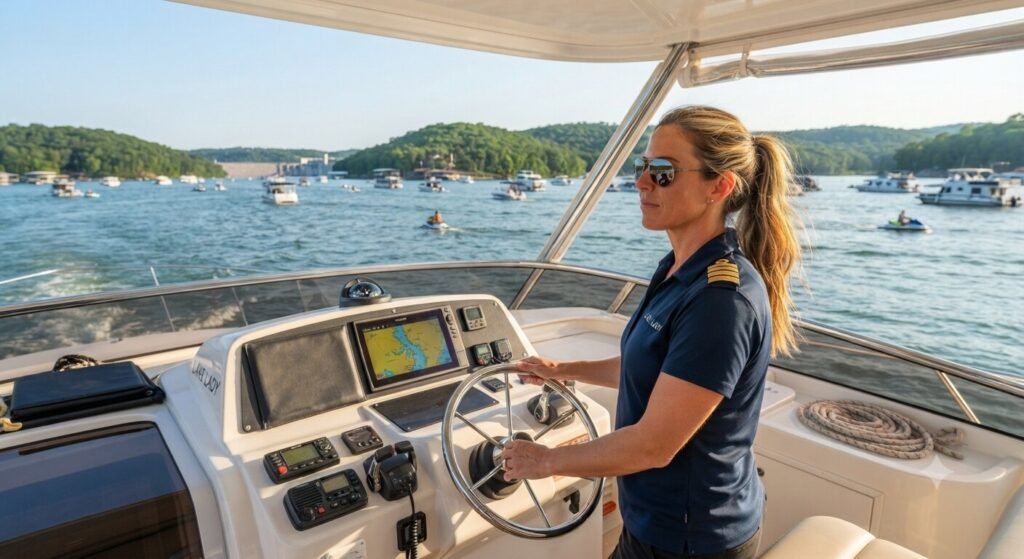

What to Do If a Bachelorette Gets Sea Sick on a Yacht
Sea sickness can happen to anyone. Even experienced boaters feel it sometimes. A bachelorette party should be full of joy, not discomfort. Knowing how to handle sea sickness keeps the celebration on track and helps the whole group relax instead of worry. This guide covers everything you need to know about sea sickness on a yacht. We will cover the causes behind it, the early warning signs, and proven remedies that actually work. You will also learn what your captain and crew can do to help before things get uncomfortable. By the end, your group will feel fully prepared for a smooth, fun trip on Lake of the Ozarks. Understanding Sea Sickness on a Yacht Sea sickness happens when your inner ear and eyes send mixed signals to your brain. The inner ear senses motion from the waves rolling under the boat. The eyes may not see the same motion, especially if a guest is sitting below deck or looking down at a phone. This mismatch confuses the brain, and that confusion is what triggers nausea and dizziness. It is a natural response, not a sign of weakness or poor health. Some people are simply more sensitive to this motion than others, and there is no way to predict who will feel it until they are on the water. Factors like anxiety, dehydration, and lack of sleep can all make sea sickness worse than it needs to be. Alcohol also increases the risk significantly, which matters a lot for bachelorette parties where drinks are often part of the fun. Understanding these triggers ahead of time helps your group prepare smarter before stepping onto the yacht, rather than reacting once someone already feels unwell. Weather and water conditions play a big role in how rough the ride feels. Choppy water on the Gravois Arm or open sections of Lake of the Ozarks can increase motion noticeably, especially on windy afternoons. Calmer coves near the Niangua Arm tend to feel much smoother and gentler for sensitive guests. Your USCG-certified captain knows the lake well and can often choose routes that avoid the roughest patches, especially if you mention ahead of time that someone in your group tends to get motion sick easily. Common Symptoms to Watch For Sea sickness symptoms often start small, which makes them easy to miss during a lively celebration. A guest might feel a little dizzy or grow unusually quiet compared to how energetic they were earlier in the day. They might step away from the group for a moment or stop joining in the music and dancing. These early signs matter, and it helps to check in gently with your bridal party throughout the trip rather than assuming everyone feels great the whole time. As symptoms grow stronger, nausea becomes more obvious, along with cold sweats or noticeably pale skin. Some guests feel suddenly tired and want to sit down or lie somewhere quiet. Headaches and repeated yawning can also show up as sea sickness continues to build in the background. None of these symptoms mean the trip is ruined, but catching them early makes every remedy far more effective and helps the person recover much faster. In more serious cases, vomiting can occur, which is simply the body’s way of responding to the ongoing motion confusion in the inner ear. It feels unpleasant in the moment, but it is rarely dangerous and usually passes quickly once the person gets fresh air and stillness. Staying calm as a friend or bridesmaid matters here, since panicking around the affected guest can actually make her feel worse. A steady, supportive response almost always helps the situation improve within minutes. What to Do Immediately If Someone Feels Sea Sick The first step is moving the person toward the center of the yacht. This area experiences the least motion compared to the front or back of the boat, since the front and rear tend to pitch and roll more with the waves. Less motion in that spot means less confusion for the inner ear, which can bring quick relief without needing any medicine or remedy at all. If seating is available near the center, guide her there right away and encourage her to sit rather than stand. Next, have her look directly at the horizon in the distance. Focusing on a fixed point helps the eyes and inner ear sync back up, which calms the confusing signals causing the nausea. Staring at a phone screen, reading a book, or looking down at drinks makes symptoms noticeably worse, so it is best to gently pause those activities until she feels steadier. Encourage her to keep her eyes up and her gaze steady on the shoreline or a distant point on the water. Fresh air also plays a major role in fast recovery. If she happens to be seated below deck or in an enclosed area, bring her out to an open deck space as soon as possible. Cool air combined with horizon focus often brings noticeable relief within just a few minutes. Encourage slow, deep breaths through the nose and out through the mouth, since this helps calm the nervous system and reduces the intensity of nausea considerably. Simple Remedies That Work on the Water Ginger remains one of the most trusted natural remedies for nausea, and it works especially well on boats. Ginger chews, ginger tea, or even a can of ginger ale can help settle an upset stomach within a short amount of time. Many charter companies allow guests to bring their own snacks and drinks, so packing a few ginger options ahead of time is a smart and simple move that costs almost nothing. Hydration matters just as much as any remedy you pack. Sipping water slowly and steadily helps the body manage nausea far better than gulping large amounts at once, which can sometimes make an upset stomach feel worse. It is best to avoid sugary drinks or too much alcohol if someone is already feeling unwell,